

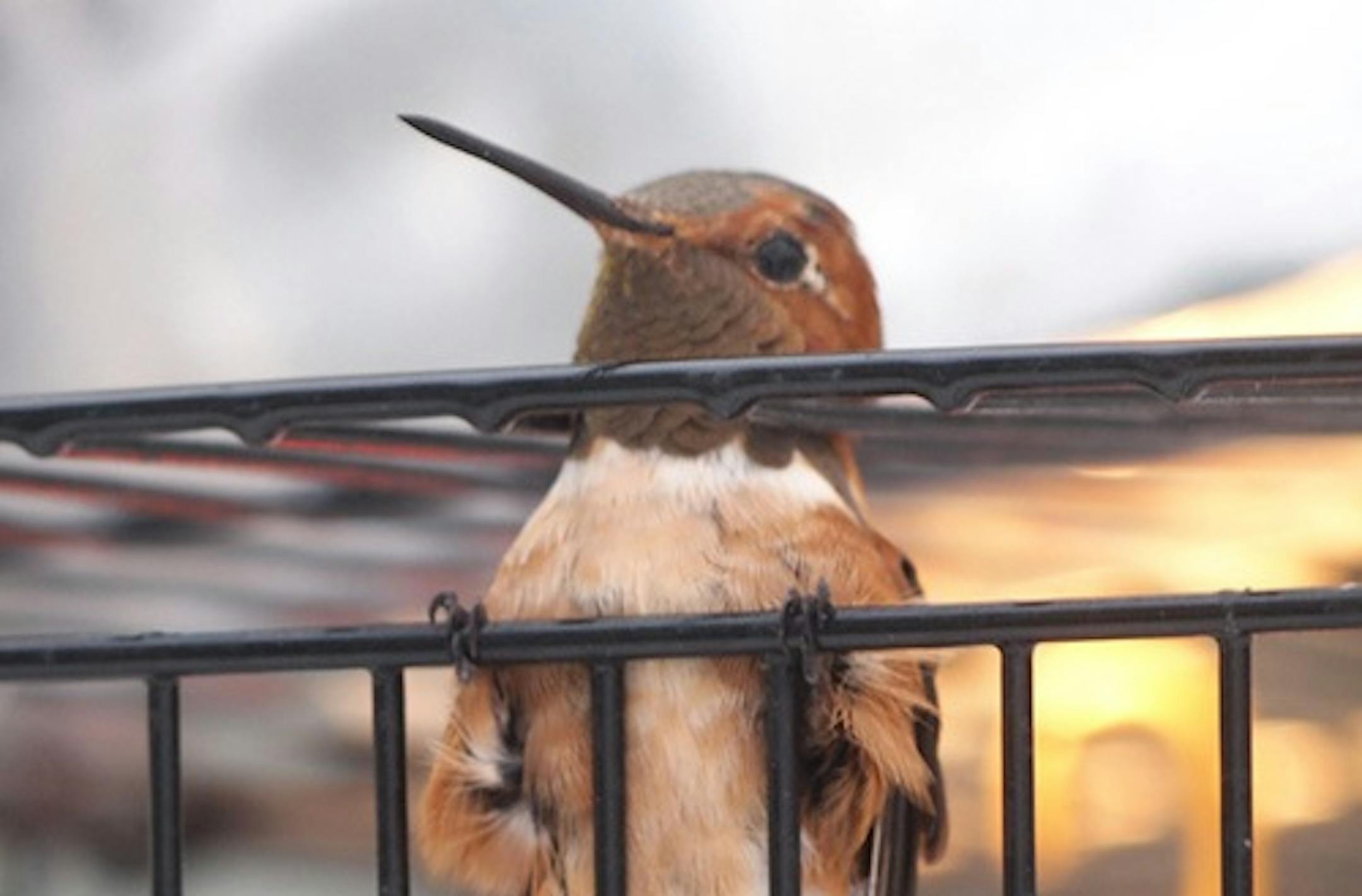
It's likely that a certain rufous hummingbird wouldn't be flying around Texas today, had not Terri Walls noticed it darting about her sugar-water feeder in St. Paul as temperatures plunged three weeks ago.
Walls, a U.S. Labor Department division director who calls herself "a bit of a bird-watcher," said Monday that she was happy to learn that the tiny rust-colored bird was flown south on a private jet and released Sunday in Texas by a wildlife rehabilitator.
"The January weather in November was not suited for that little hummingbird," she said. "I'm glad to hear that it's survived and in a warmer place."
Phil Jenni, executive director of the Wildlife Rehabilitation Center of Minnesota, said an anonymous person agreed to fly the bird on a scheduled flight to Austin, where it was met by a rehabilitator who found it to be healthy and later released it.
The wildlife center, the largest independent general wildlife hospital in the country, engaged experts and biologists from across the country on whether the bird should be taken south and if so, where it should be released.
The center settled on Texas rather than Arizona to take advantage of the Gulf Coast flyway, Jenni said, and got approval from Texas officials.
Many believe that the rufous, which typically resides in the Pacific Northwest and winters in Mexico and the southern United States, wound up in Minnesota because it was blown off course by the same weather system that brought the frosty weather.
Others argued that the bird wasn't lost at all and that it was well along its migratory journey when Walls intercepted it. The U.S. Fish & Wildlife Service said that it's usually best just to leave an animal alone.
![The wayward rufous hummingbird in his temporary quarters at the home of Jessika Madison-Kennedy. ] JEFF WHEELER • jeff.wheeler@startribune.com A rufous hummingbird showed up Tuesday at a backyard feeder in St. Paul backyard. A native of the Pacific Northwest, the species typically winters in Mexico. It was quickly captured and is in the care of Jessika Madison-Kennedy, avian nursery coordinator at the Wildlife Rehabilitation Center in Roseville, who will put it on a plane for](https://arc.stimg.co/startribunemedia/7UHMGOVZQMNM3SNR54YQZUIXA4.jpg?&w=1080)


