A lot has changed since Jeon Tae-il killed himself. In 1970, when the 22-year-old South Korean set himself alight to protest poor working conditions, his country received millions of dollars of foreign aid. Now it is the world's 11th-biggest economy. The statue that commemorates him in the capital, Seoul, is dwarfed by skyscrapers.
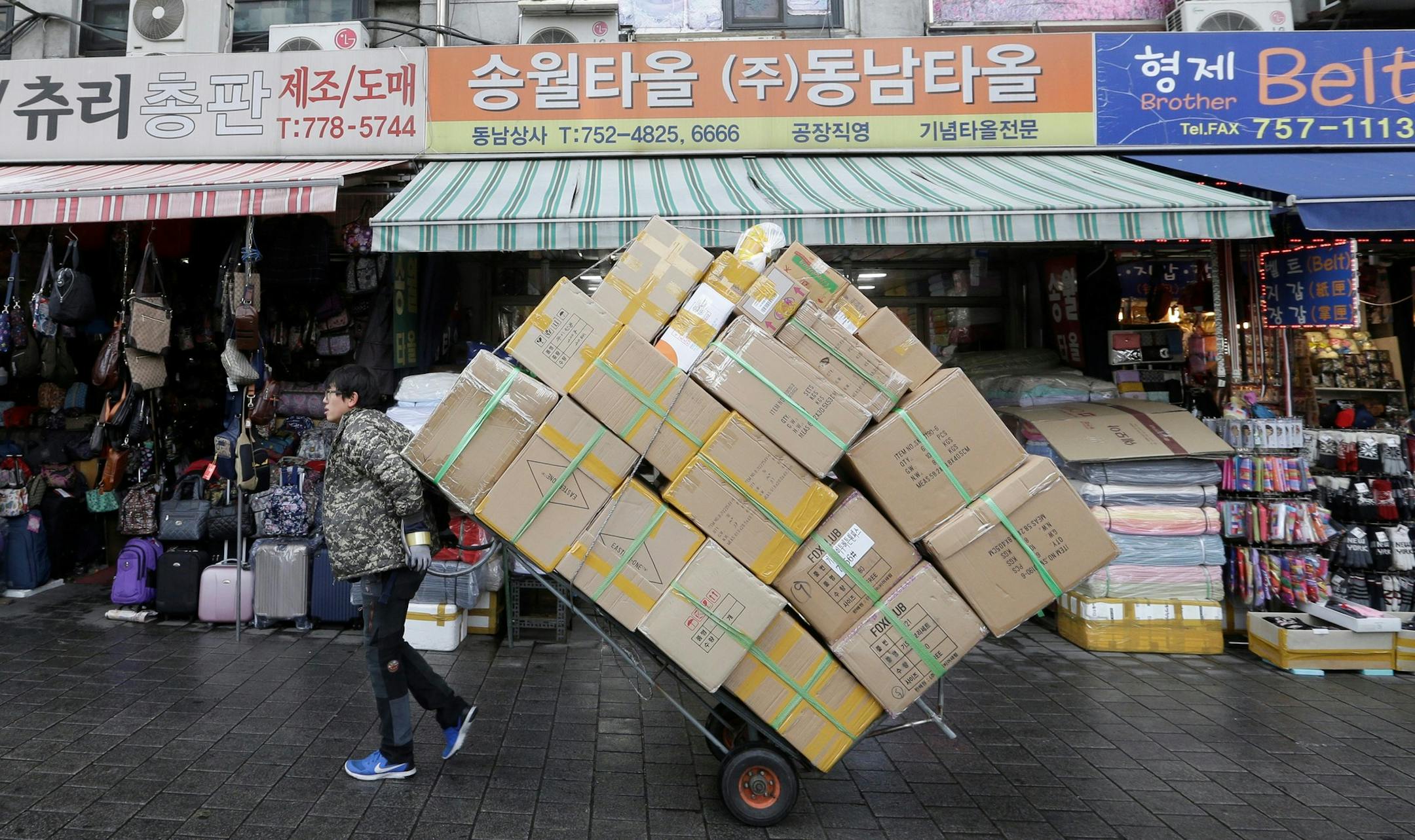
Yet his memory is often invoked by activists and politicians who argue that ordinary workers do not get their fair share. "He was a great man," said a market trader. "Things have improved a lot but our wages are still poor."
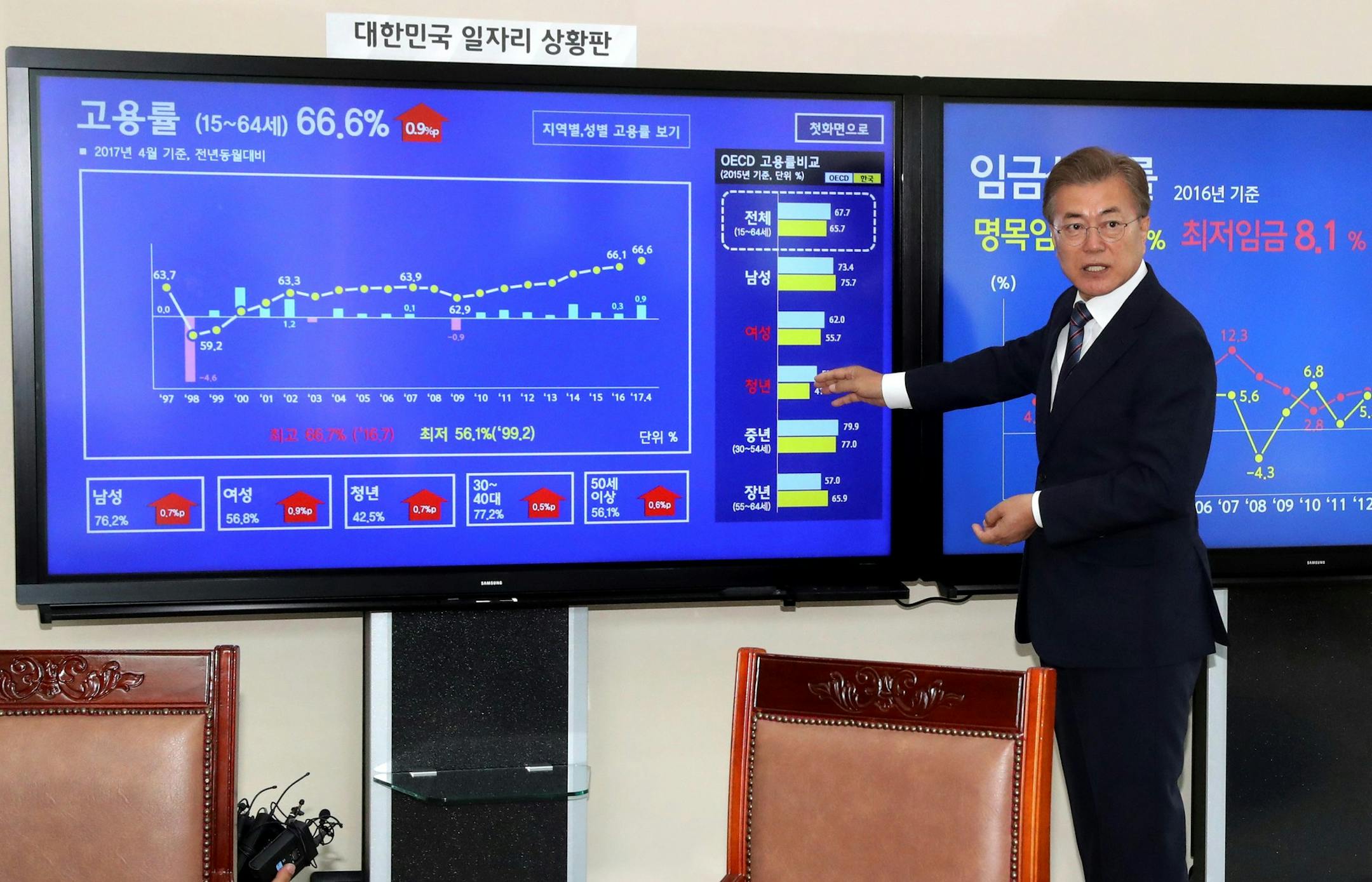
Moon Jae-in, the left-leaning president who took office in May, was elected in part on the promise of changing that. The centerpiece of his economic policy is a bold experiment in raising the minimum wage.
The first step is a 16.4 percent increase set for next year, the biggest rise since 2000. The difference is that in 2000 the economy was growing three times as fast as it is now. Even more ambitious is the sequence of increases planned for coming years, intended to produce a total rise of 55 percent by 2020.
South Korea's is far from the only government ratcheting up the minimum wage, but the others that have opted for such big increases have typically been those of wealthy cities or regions in rich countries, such as Seattle and Alberta. It is rare for an entire country to move so aggressively, especially one that relies on exports. If South Korea follows through as intended, its minimum wage will be roughly 70 percent of its median wage by 2020, well above the level in all other big economies.
On the face of things, the South Korean economy is doing well. Growth has averaged 3 percent annually over the past six years, a decent outcome for a period when global trade was sluggish.
Income per person is about two-thirds of those in the U.S., up from a third 25 years ago. The unemployment rate is just 3.6 percent.
But there are concerns: Donald Trump's threat to tear up a bilateral free-trade pact, foreign investors' jitters over the nuclear standoff with North Korea and Chinese economic retaliation in response to South Korea's deployment of a U.S. missile-defense system. There are also more lasting worries: high household debt, a rapidly aging population and stiffer competition from China in a range of industries.