

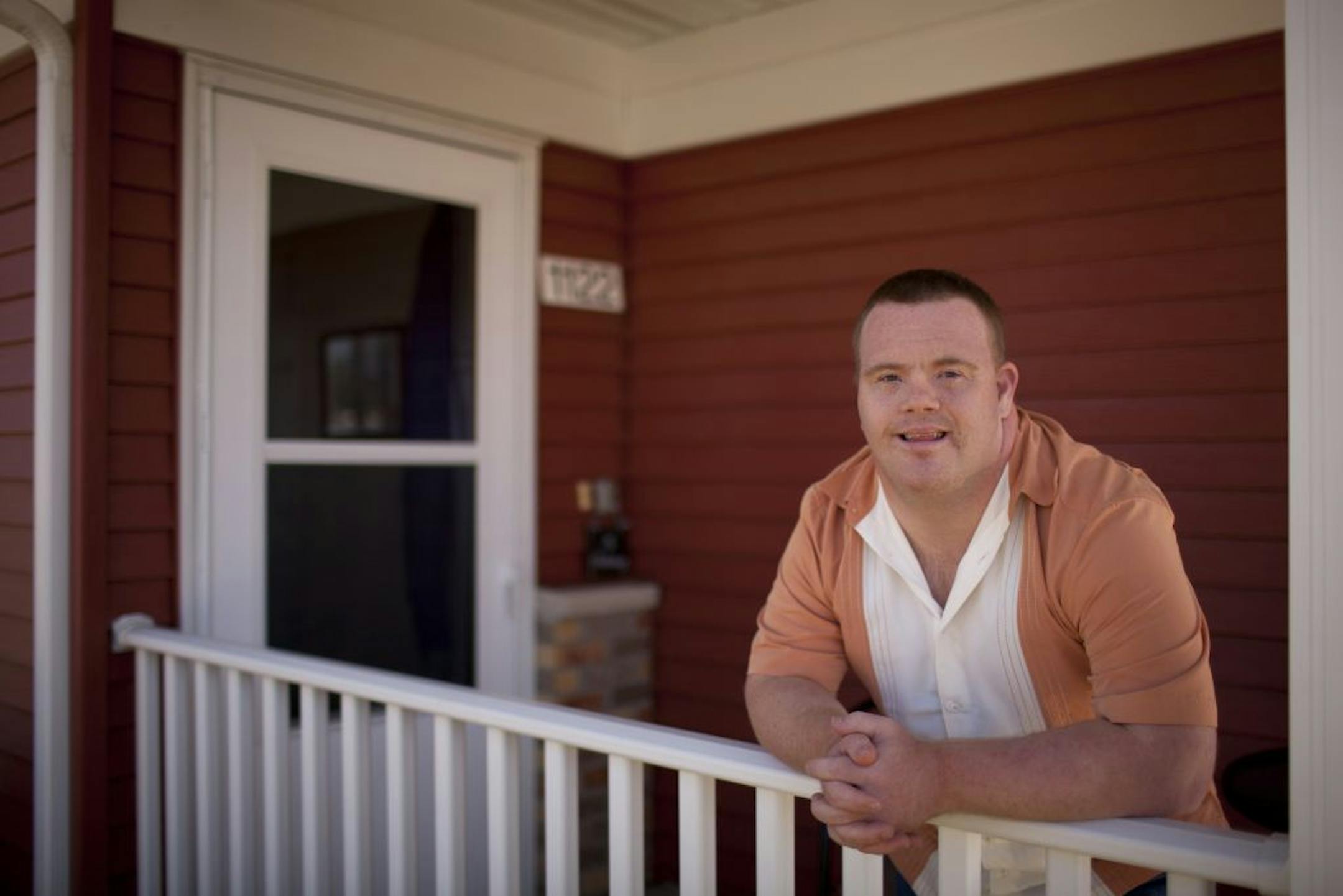
On a recent tour of his home, Jeremy Collins showed off his kitchen, his chair, his bed, his new shower.
It's a dream come true for the 31-year-old who has Down syndrome, and who had lived in group homes all of his adult life. Since April, he's lived on his own in a Coon Rapids townhouse, with a web of support that includes his parents, his caregivers and landlords, Anoka County and a technology company that all work together to help him be safe and continue to grow in independence and confidence.
The benefits go beyond what's good for Collins. Like other people with disabilities, he receives state and federal support to help cover the costs of his care. Right off the bat, he was able to spend more time without the help of a personal-care attendant; the shift from constant supervision to being independent 25 percent of the week meant an immediate 10 percent reduction in the costs borne by taxpayers. The percentages don't match up because group home residents shared staffing costs.
For the most part, Collins' 1,100-square-foot townhouse looks like any other in the Mary T. Villas Sand Creek development, a mixed community of single-level residences occupied by people with and without disabilities. But a closer look reveals a sensor on the front door that's activated if it's opened after 11 p.m., a security keypad required to turn on the stove, a motion sensor in the bathroom to give the alert if he's in there and motionless for more than 20 minutes, signaling a possible fall. There also is a sensor under his mattress, to detect a fall out of bed, and one in the cedar box where he keeps his medications, to alert his family if he forgets to take them.
The system is monitored round-the-clock by Mendota Heights-based Sengistix; an alert triggers a phone tree that, depending on the situation, could go to Mary T. Inc. maintenance staff or to Collins' parents, Dennis and Brenda, who live in Ham Lake, or on down a list of family and friends until someone can confirm the call and check in with Collins by telephone.
There have been several false alarms, triggered, for example, when he opened the door to watch a late-night lightning storm. But it's been easy to check in by phone, his parents said.
Sengistix has similar contracts in place in several Minnesota counties, wiring single- and multiple-unit dwellings to help people with a variety of disabilities who are overserved in a group home but need some help to live independently, said account executive Drew Beaulieu.
The arrangement was only possible with buy-in from all parties -- Collins' family, Mary T. Inc., Sengistics, Anoka County and Collins' caregivers, through St. David's Center. Anoka County Commissioner Carol LeDoux met recently with Collins and his family.


