

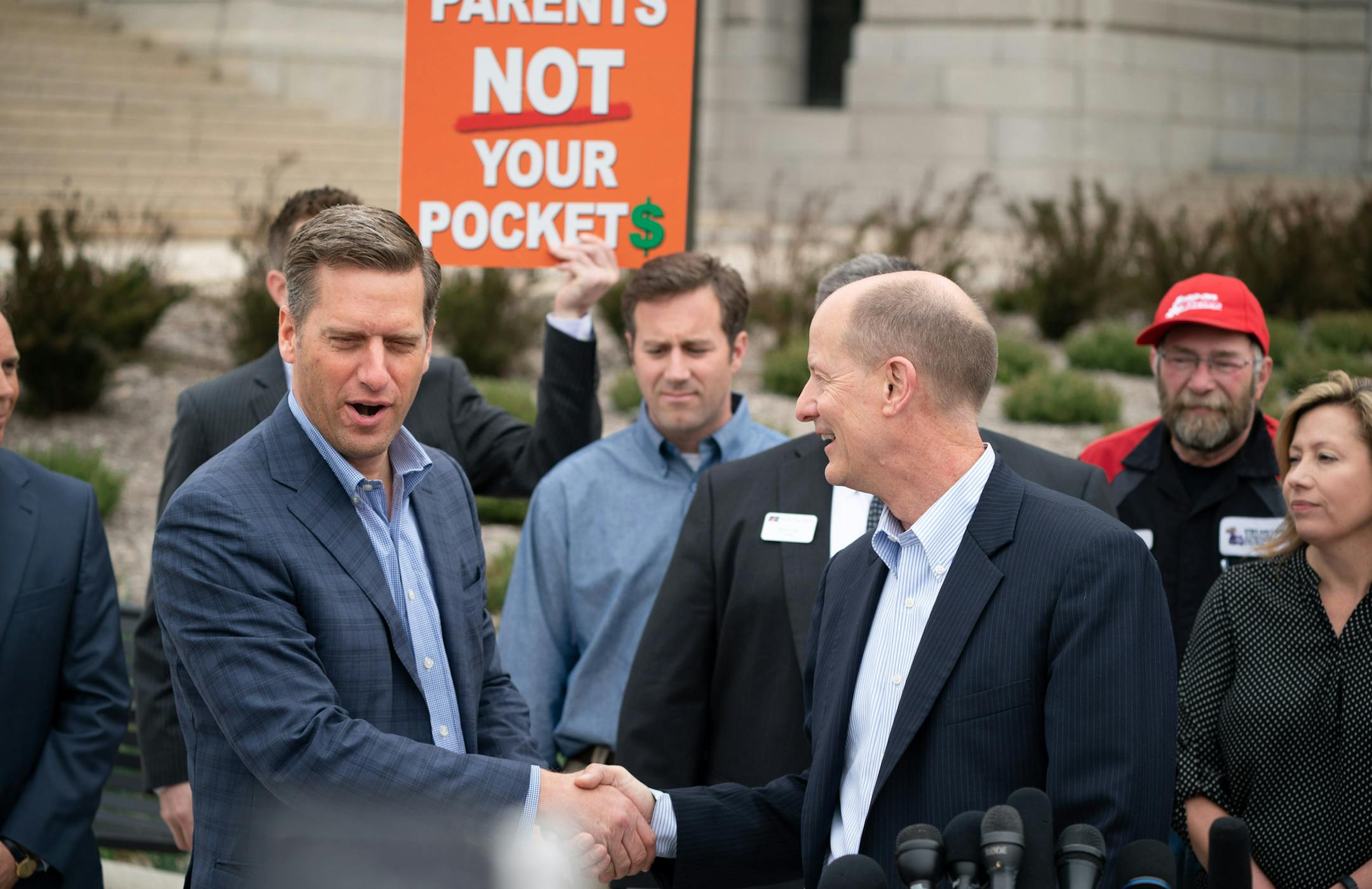
Republican legislative leaders said Monday they are hoping for a change of heart from DFL Gov. Mark Dayton on his promise to veto big tax-cut and spending bills that they sent him in the final hours of the legislative session.
"It's an indisputable fact that if he vetoes these bills, he will be inflicting harm and chaos on literally millions of Minnesotans," said Rep. Jim Knoblach, R-St. Cloud, the chairman of the House Ways and Means Committee. GOP leaders said Dayton will find many provisions he likes in the bills, and that they hope he considers the negative consequences of vetoing them.
Dayton has been resolute in vowing to veto both a tax bill and a hefty catchall bill with nearly 1,000 pages of spending and policy changes; he has two weeks in which to decide for sure. Dayton cited a long list of what he called examples of Republicans caving to interest groups.
A measure to protect seniors in nursing homes was all but written by the nursing home industry, Dayton alleged. Pharmaceutical companies that manufacture opioids will be subject to no new taxes or fees that Dayton and a bipartisan group of lawmakers hoped would force them to help pay for the consequences of the opioid epidemic.
The corporate income tax rate was cut in the tax bill, along with income tax reductions for the state's two lowest income tiers. Neither bill contained one of Dayton's top requests: $138 million in new "emergency" funding for schools struggling with budget shortfalls. Republicans set aside $225 million for schools, but much of it is redirected from other pots of money now available to schools for purposes like teacher training — which Dayton called unacceptable.
"I've never seen a session this badly mismanaged. I've never seen a session less transparent. I've never seen a session more beholden to special interests," Dayton said Sunday.
The governor was in Washington, D.C., on Monday. His staff said Dayton planned to spend time reviewing each of the bills before acting on them; he must make a series of complicated calculations as he decides whether to follow through with the vetoes.
On the spending side, the 1,000-page bill includes provisions he asked for, while a veto would create difficulties for various state agencies.


