

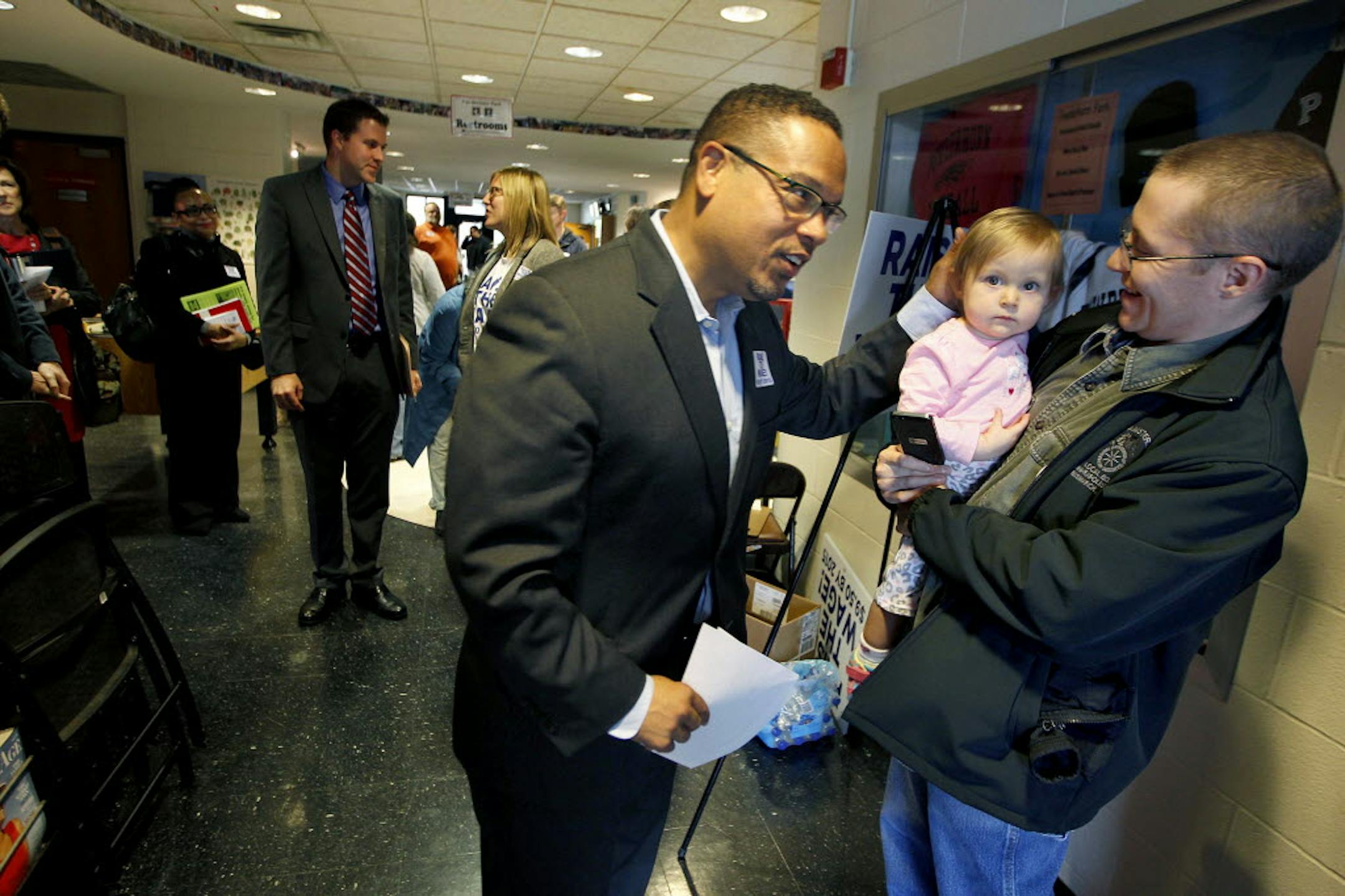
Low-income advocates pressing for a higher minimum wage told two Minnesota congressmen Monday that they are falling farther behind on their bills and losing sight of the American dream.
"I have paid my taxes and gone to college, yet here I am making $7.25 an hour," Darcy Landau, an airport worker, said at a forum at a southeast Minneapolis community center. "I owe $80,000 in student loans, and am between a rock and a hard place."
Advocates are intensifying pressure on Minnesota lawmakers to raise state's minimum wage to $9.50 an hour by 2015, up from a $6.15 base hourly wage for large employers – among the lowest in the nation. The fight to raise the minimum wage stands to be one of the most high-profile issues of the upcoming legislative session.
Most Democrats who control the Legislature agree the state's base wage should be higher, but they can't agree how high. Many rural Democrats don't want to raise it so high that it hurts businesses in border communities, where rival businesses in neighboring states could gain a price advantage from paying lower wages.
Many Republicans and business groups have fought hard against raising the wage, saying companies will have to operate with fewer workers at the higher wage.
U.S. Rep. Rick Nolan, a Democrat who represents northern Minnesota's 8th Congressional District, said the nation's economy rapidly evolving in a way that hurts workers at the bottom end of the wage scale.
"The rich are getting rich, the poor are getting poorer and the middle class are getting crushed," Nolan told the crowd. "It is the tax policy, the allocation of money in the budget, and of course it is the minimum wage. That is the best place to start."
Nolan and U.S. Rep. Keith Ellison, a Democrat who represents Minnesota's 5th Congressional District, support measures to raise the federal minimum wage to $10.50 an hour.


