

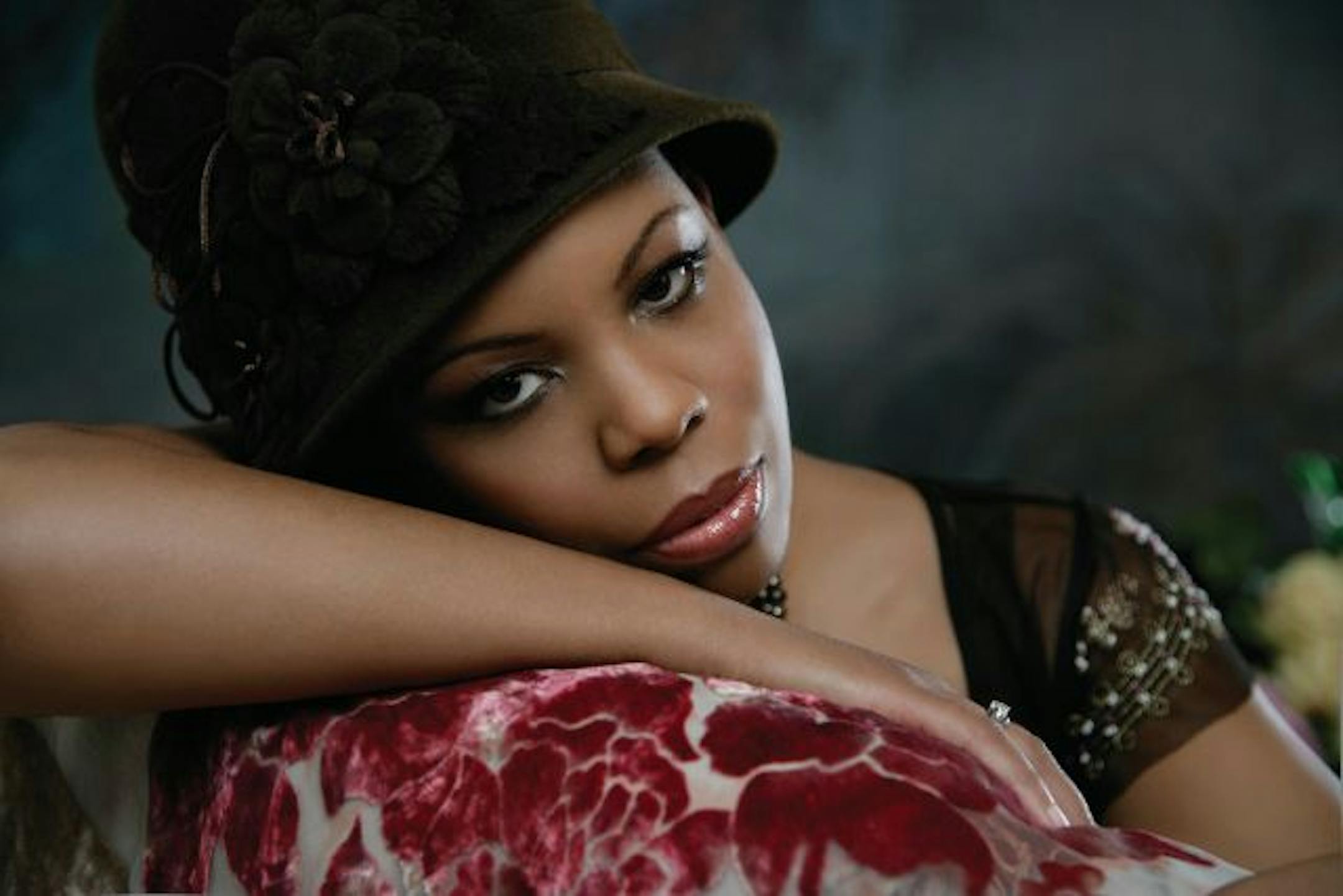
Jazz-oriented violinist Regina Carter has put herself in the enviable but challenging position of being renowned for her conceptual artistry. "I mostly play performing arts centers," she said, "and every few years presenters ask me if I have a new idea I want to present to their audience. I'm open to that, and it kind of forces my hand."
During the past decade, she unveiled a trio of concepts that were attractive to both general audiences and jazz fans. In 2000, "Motor City Moments" showcased tunes by songwriters from her native Detroit, ranging from Marvin Gaye to Milt Jackson; 2003's "Paganini: After a Dream" was an overt nod to Carter's Euro-classical training. And 2006's "I'll Be Seeing You: A Sentimental Journey" explored songs from the American Songbook and '30s swing that were favorites of her late mother.
That track record enabled Carter, 44, to earn a MacArthur Fellowship -- the no-strings-attached "genius grant" -- in 2006. And that led to "Reverse Thread," a collection of folk songs from the African diaspora, done in a chamber music context, with accordion and the 21-string kora joining Carter and her longtime bassist and drummer. The record will be released in mid-May, but Carter is already performing the music on a tour of selected venues across the country, including the Ted Mann Concert Hall on Monday.
"I have wanted to record a 'world music' record for years, but the label I was with told me it wouldn't sell," she lamented by phone from her home in New Jersey. "The MacArthur Fellowship not only gave me the freedom to record music that may not be that popular, but to get everyone together in the studio, in one room, and just play, with no overdubbing -- what a concept!" she said with a laugh. "That means there are going to be mistakes on the record, but I wanted that -- to approach these simple, beautiful melodies as folk music, because that's what it is."
The instruments came first
"Reverse Thread," being released by the independent label E1, is indeed a significant departure for Carter. In the past she has generally played with a suave urbanity and gilded texture, regardless of the music's character. These new songs are beautiful, but less mannered and more hand-sewn, not as beholden to the traditions of either jazz or classical music.
"I picked the [accompanying] instruments before I chose the music -- I had no clue," Carter said with another guileless laugh. "I knew I wanted something quiet, and I thought maybe it would be a Middle Eastern vibe. I love the accordion, and knew I wanted to have it. And I knew I wanted to tamp down the amplification, so when I thought about what acoustic instruments would be as quiet as a violin, I thought of the kora" -- a sweet-toned stringed instrument at the heart of the West African folk tradition.
Through the sister of her mentor on jazz violin, John Blake, Carter found kora master Yacouba Sissoko, from a longstanding family of griots. On accordion, she recorded with a pair of in-demand jazz artists, including Will Holshouser, who will play with Sissoko in Carter's quintet Monday.


