
The Red Cross issues a call for blood donors as holiday nears

Donations down 10 percent in June; supply at "emergency levels."

June 26, 2012 at 7:22PM
icon1:10
(Amanda Marzullo/Amanda Marzullo)

In the mood to do a good deed that won't take much out of you and will be rewarded with juice and cookies?

The American Red Cross announced on Monday that its blood supply has reached "emergency levels," and issued a call for donors in advance of the July 4th holiday.

Nationally, donations were down about 10 percent in June, meaning there were 50,000 fewer donors than expected, the Red Cross said, adding that it has only about half the blood supply on hand as it did this time last year.

In Minnesota and the Upper Midwest, donations and blood supplies are also down, but not as dramatically, according to Sue Gonsior, spokeswoman for the Mid-American Blood Services Division.

Locally, she said, the blood inventory is down about 33 percent.

Donations have been on the decline for several months, possibly because of the unseasonably warm weather this spring, officials said.

It's not unusual for blood donations to drop during the summer months, Gonsior said, because many blood drives take place at schools and colleges. Employers are also less likely to host blood drives during vacation season.

Geoff Kaufmann, CEO of the regional Red Cross, said it's asking people to donate now to avoid possible shortages.
To read more about how donation works and how it benefits the public and to schedule a donation, go to www.redcrossblood.org or call 1-800-733-2767.

Among the questions answered at that website are these:

How long does it take to contribute blood?

"The entire process takes about one hour and 15 minutes; the actual donation of a pint of whole blood unit takes eight to 10 minutes. However, the time varies slightly with each person depending on several factors, including the donor's health history and attendance at the blood drive."

How quickly is a blood donation replenished by your body?

"The plasma from your donation is replaced within about 24 hours. Red cells need about four to six weeks for complete replacement. That's why at least eight weeks are required between whole blood donations."

Maura Lerner • 612-673-7384

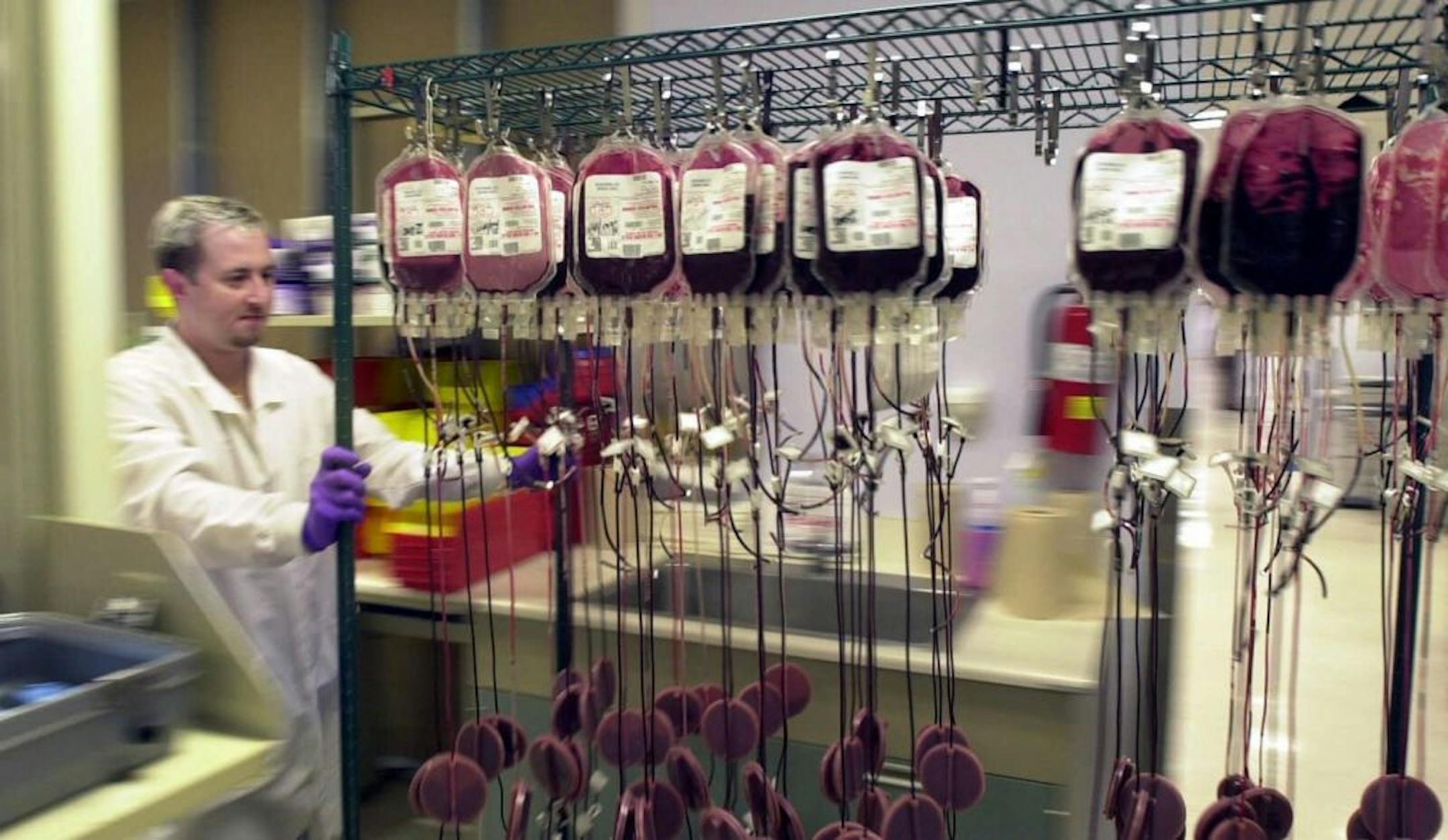
Lab technician assistant Danny Haddock transports a load of donated blood into a cooler at the American Red Cross in Atlanta last week. Giving blood is as simple as it is quick and its benefits include saving lives.
Donated blood (New York Times/The Minnesota Star Tribune)
about the writer

about the writer

Maura Lerner

See Moreicon

More from Minnesota Star Tribune

See More
card image
Provided/Sahan Journal

Family members and a lawyer say they have been blocked from access to the bedside of Bonfilia Sanchez Dominguez, while her husband was detained and shipped to Texas within 24 hours.

card image