

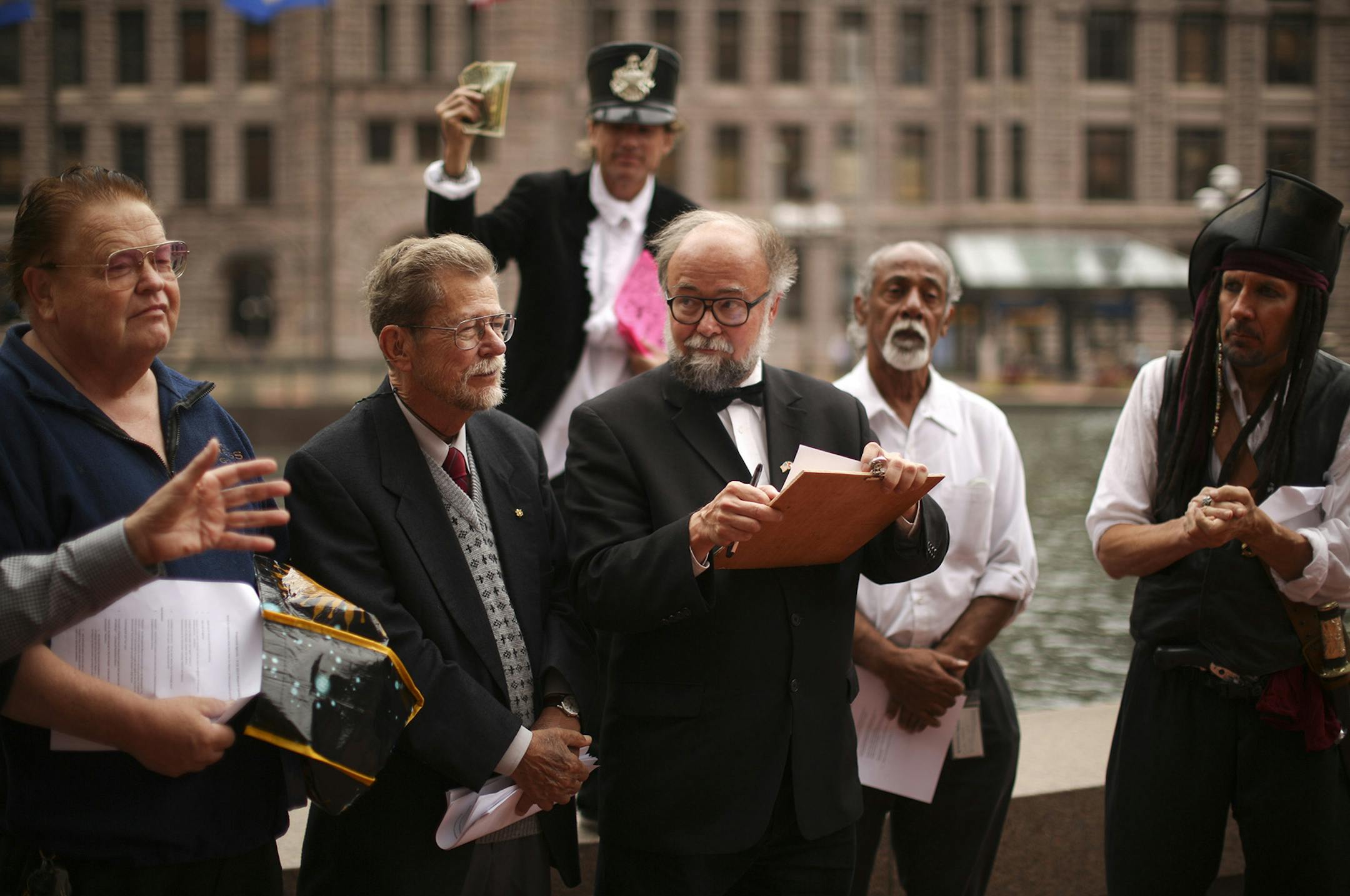
In mayoral contests, as in many human endeavors, it's possible to have too much of a good thing. That's the problem vexing Minneapolis voters this fall. Political choice is good, but settling on first, second and third choices from a list of 35 candidates for mayor is daunting for even the most politically attuned voter.
And the mayoral race is only the beginning. Voters also must study and sort 10 candidates for three at-large seats on the Parks and Recreation Board, four for two seats on the Board of Estimate and Taxation, and in most wards, between three and six contenders for City Council.
Many factors contributed to this year's unprecedented wave of candidacies. It's the first Minneapolis election in 20 years without an incumbent mayor on the ballot. The dominant DFL Party is divided in some wards and did not endorse a candidate for mayor, prolonging some candidacies past what would have been their usual expiration point. The willingness of so many nominal DFLers to run for the same office might fairly be seen as a reflection of the latter-day DFL's undisciplined condition.
Ranked-choice voting, employed for only the second time in a Minneapolis election, likely enticed some candidates onto the field. RCV assures filers that they will stay in the running through the Nov. 5 election, and allows optimists among them to nurse long-shot hopes that second- and third-choice votes could propel them to an upset victory. Coupled with a low filing fee, it's an especially friendly format for perennial candidates and, in the case of the Minneapolis mayoral contest, a pirate character and a self-described "Lauraist Communist" who believes Laura Ingalls Wilder is God.
RCV eliminated the low-turnout primary election, which traditionally had been on the second Tuesday in September. But those who tag RCV alone for the surfeit of Minneapolis candidacies are overlooking a more obvious culprit — the paltry $20 filing fee for city offices. That fee was set by city charter in 1967, when $20 was the equivalent of $140.05 today, according to the Bureau of Labor Statistics.
Well in advance of the 2017 city election, that fee should be raised high enough to deter recreational candidacies. That will take either the unanimous action of the City Council or, failing that, voter approval via a charter amendment referendum.
The City Council seemed poised to make such an adjustment this spring but pulled back amid concern that with three council members then running for mayor and nine others seeking re-election, the move would be seen as self-serving. Maybe so — but failing to act in the city's best interest in order to avoid that perception is self-interested as well.
The case for a higher filing fee in Minneapolis is easily made by looking to its twin city. St. Paul's mayoral election this year in many ways parallels the Minneapolis mayoral election of 2009 — a popular mayor is seeking a third term without a formidable challenge in an election that will be decided by RCV.


