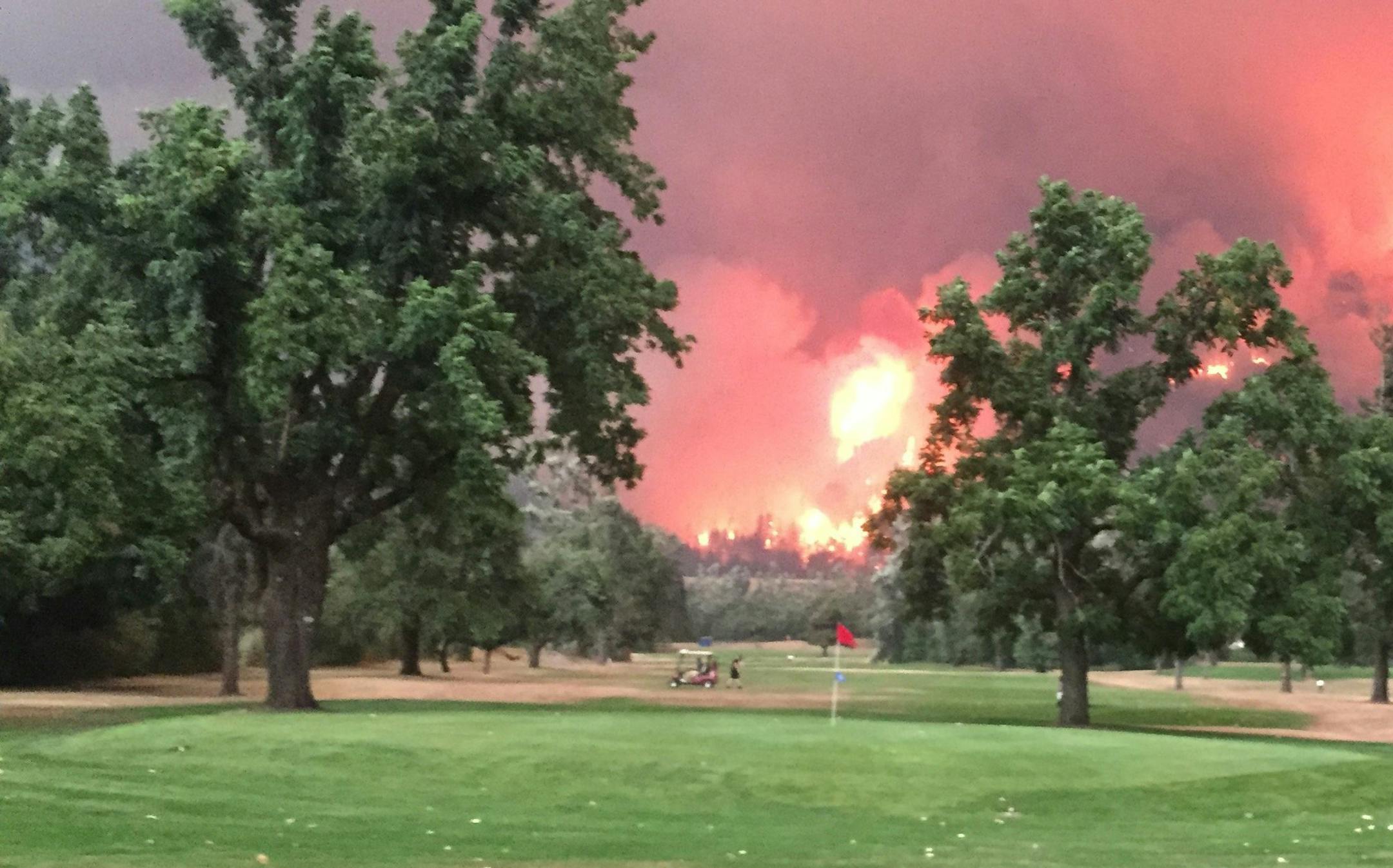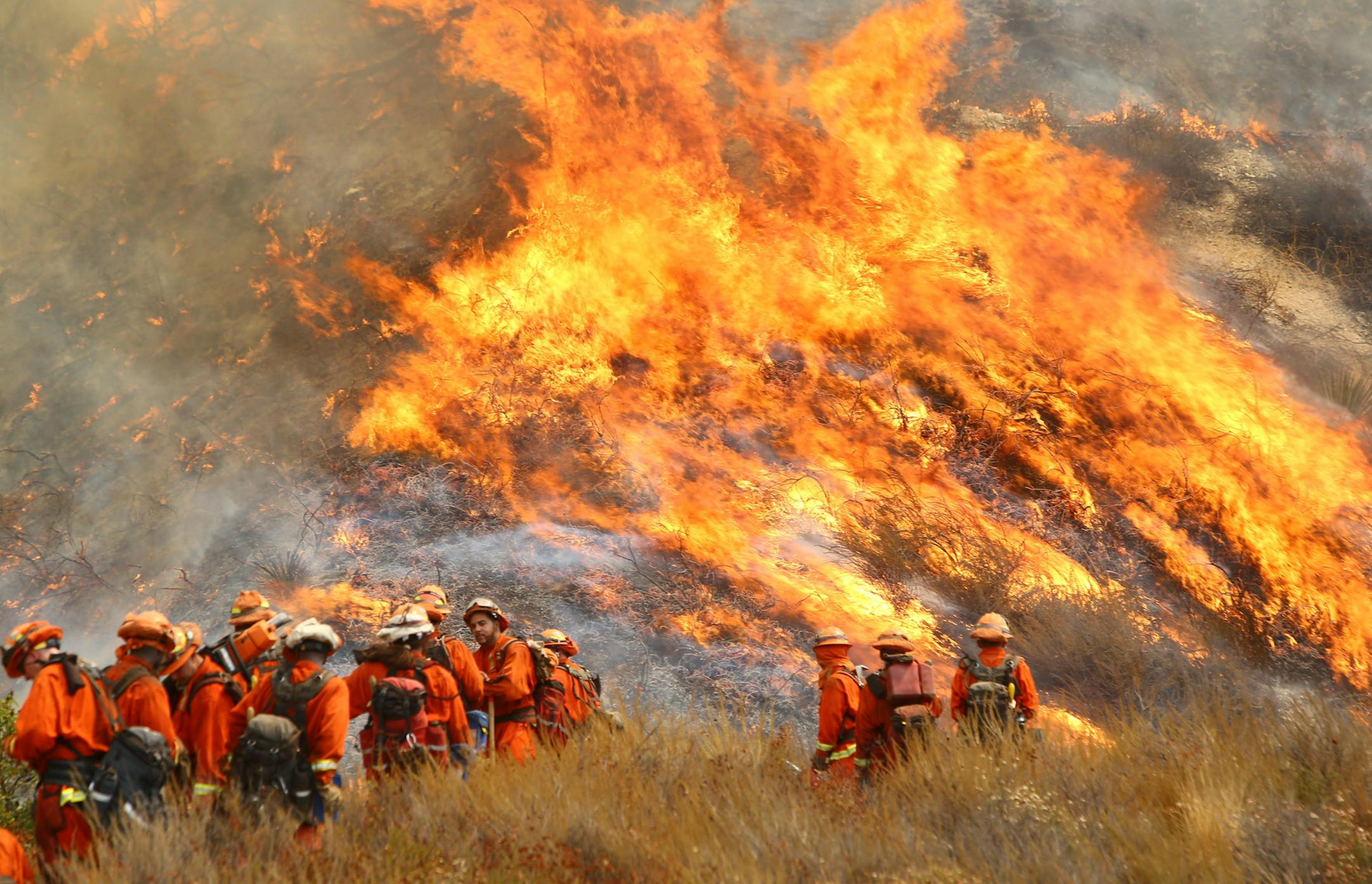
BEACON ROCK STATE PARK, Wash. – As night fell last Monday in the Columbia River Gorge, the Oregon slopes burned as if carpet-bombed from above. Winds acted like bellows in a hearth to supercharge the flames spread by embers flying from ridge to ridge. Stands of trees that matured over decades — sometimes centuries — were engulfed within minutes.
The Eagle Creek wildfire is a dramatic reminder that the forests of western Oregon and Washington, so often cloaked in snow or drenched by rain, have a cycle of fire and renewal. When conditions are right, they can burn in spectacular fashion just like the more arid landscapes east of the Cascades.
The fires are less frequent than in drier forests, but the burn cycles are not etched in stone. They reflect a climate that scientists forecast to undergo big changes in the decades ahead as global combustion of fossil fuels warms the Earth.
In the Pacific Northwest, climate models indicate that average summer temperatures will warm later in this century by 4.7 to 6.5 degrees compared with the last half of the 20th century.
The warming is likely to shorten the burn cycles in the Puget Sound region as well as other parts of western Washington and western Oregon.
"We expect to see more fires and bigger fires," said Amy Snover, director of the Climate Impacts Group at the University of Washington. "People are just beginning to wake up to this, but public lands managers do think about this and the potential risks."
Those risks likely will include more smoke and more fire threats to communities, where many homeowners have yet to consider removing close-by trees and brush to create defensible spaces should flames threaten their land.
This year, the smoke is the result of fires that have burned around the Pacific Northwest, including more than 732,000 acres in Washington and Oregon. Significant fires have flared west of the Cascades, including the Eagle Creek fire that has burned more than 32,000 acres, and threatened small towns outside of Portland.