

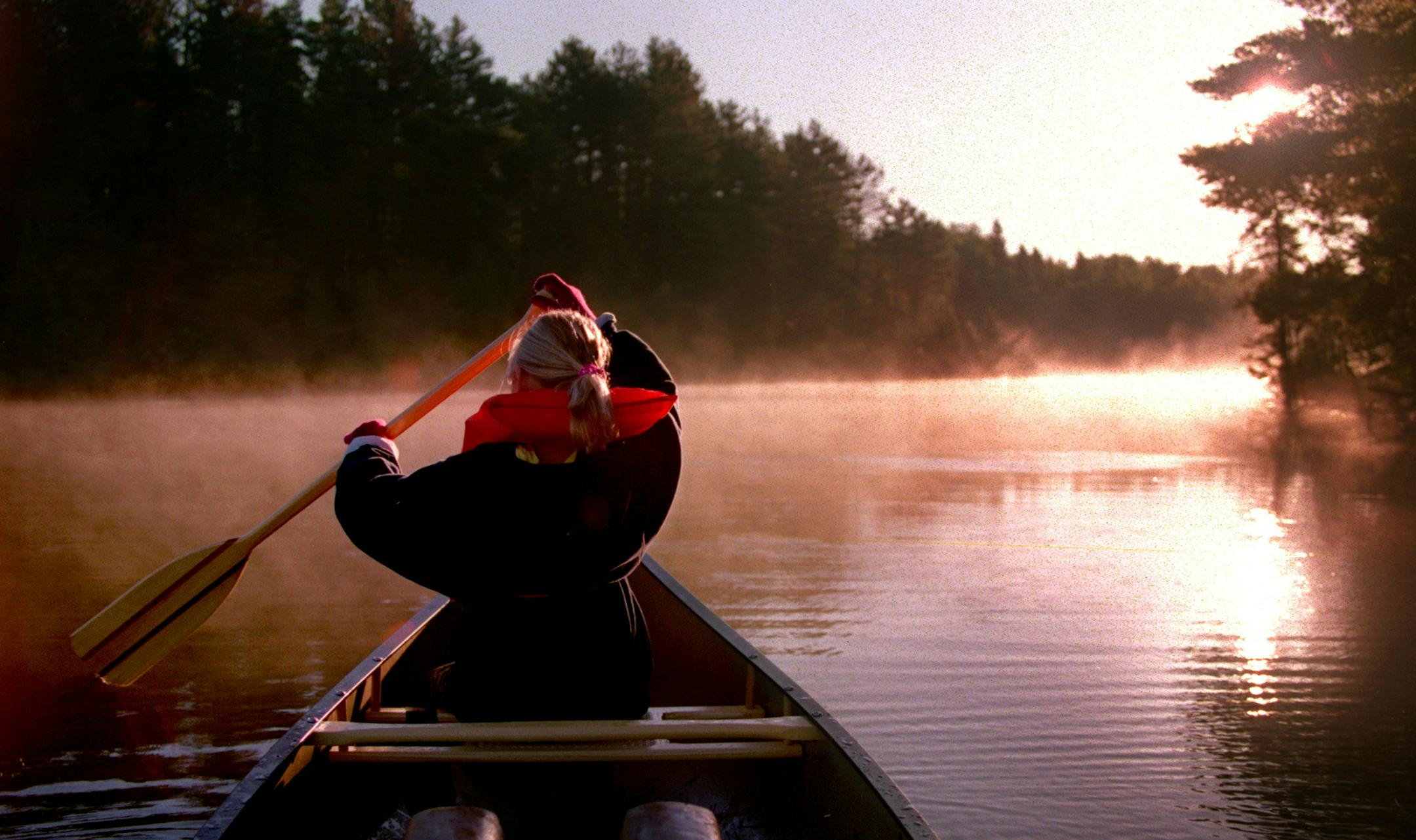
Late last year the U.S. Interior Department concluded that two expired leases held by a Chilean-owned mining company, Twin Metals Minnesota, should be reinstated for copper and nickel mining near the border of our state's beloved Boundary Waters Canoe Area Wilderness.
This step reversed a decision made at the end of the Obama administration, which rejected the leases after the Forest Service concluded that a mine located there "posed an inherent potential risk" that threatened "serious and irreplaceable harm" to the wilderness.
In January, the Trump administration scaled back a review of the impact of prohibiting mining on thousands of acres of Forest Service land near the wilderness. That was followed, this month, by Interior reinstating the expired Twin Metals leases. Now, the Trump administration says those leases must be renewed once terms and conditions are worked out.
These actions are another chapter in President Donald Trump's continuing assault on the nation's most precious natural and cultural lands. They are of a piece with the shrinking of Bears Ears National Monument in Utah by 85 percent to carve out areas believed to contain oil and gas reserves and large uranium deposits. By giving the extractive industries virtually everything they want in Utah, Alaska, Minnesota and elsewhere, this administration has sent an unambiguous message: There is no place on our public lands — or waters — that is inviolable if there are resources to be exploited.
This is not the first threat to the Boundary Waters. In the early 1960s, there were battles over logging, timber roads and the use of motorboats and snowmobiles. Though the area was included in the 1964 Wilderness Act, some logging and motor use were allowed to continue. Finally, in 1978, Congress passed the Boundary Waters Canoe Area Wilderness Act, which expanded the area's size, restricted motorboat use, ended logging, and banned mining in the wilderness and some adjacent lands.
Many thought the area had been protected permanently, but 40 years later the fight continues.
Twin Metals says that large deposits of sulfide-based ores like copper and nickel have been found near the wilderness and that it wants to extract them. The danger is that mining these sulfide ores can result in contaminated water seeping and flowing into lakes, rivers, streams, wetlands and groundwater. Because of the interconnected waterways in the wilderness area, much of the area's watershed could become polluted. Once that happens, there is no fixing it.
Twin Metals argues that the risk for pollution from the sites will be minimal. But the idea that pollution can be prevented by mitigation measures has proved wrong time and again at other mines. Studies undertaken for opponents of mining have concluded that the highly toxic waste from a single mine in the wilderness area's watershed could continuously pollute the Boundary Waters for hundreds of years.


