Mozart's "The Magic Flute" is technically not an opera, but a Singspiel, the Viennese equivalent of musical comedy. It was performed in German, rather than Italian, and premiered at a commercial theater rather than at court.
But Mozart elevated this popular entertainment. The magical fairy story inspired one of his most eclectic scores, from coloratura arias to folk songs. Slapstick comedy rubs up against some to the noblest choruses ever written.
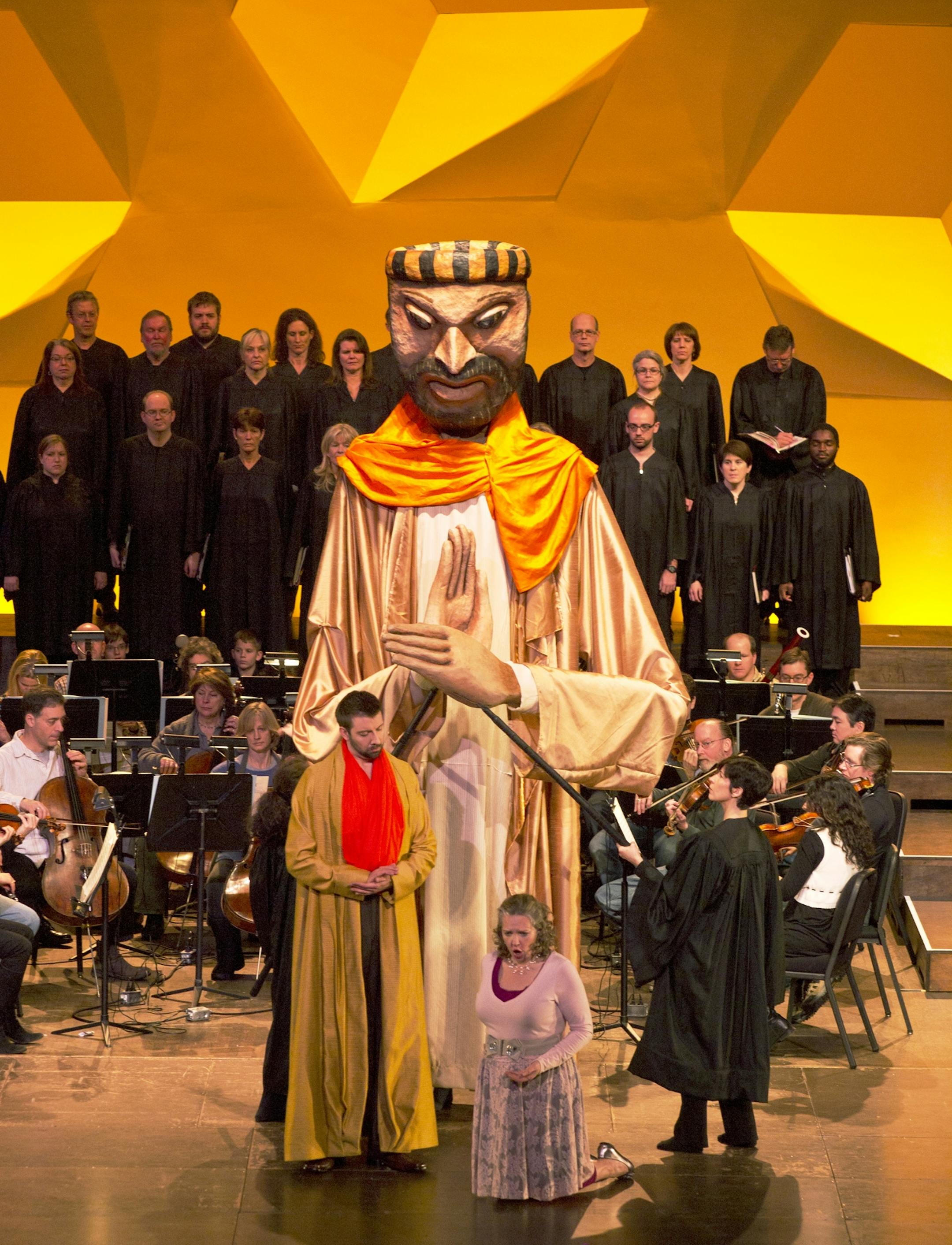
Minnesota Orchestra's semi-staged performance, as the finale of its Mid-Winter Mozart Festival, was a wonderful romp.
Director Robert Neu confirmed once again that he is one of the most inventive opera directors in town. His broad comedy made full use of the stage and the hall without sacrificing the eloquence of Tamino's and Pamina's journeys of transformation.
The choice to perform the dialogue in English demanded a higher level of acting from the singers, who ably met the challenge.
Neu's most brilliant idea was engaging In the Heart of the Beast Puppet and Mask Theater. When the Three Spirits entered in a boat gliding across the sky, the effect was truly magical. And 12-foot puppets shadowed the Queen of the Night and the priest Sarastro, effectively reflecting their authority.
Conductor Osmo Vänskä led a dramatic rendition of the Overture, but he set paces that were frequently overly frenetic. Many moments, like the Quintet in which the three ladies give Tamino and Papageno the magic flute, were robbed of wonder.
As Papageno, Raymond Ayers was the master of physical comedy, and his mellifluous baritone made the most of his folk-song like tunes.