

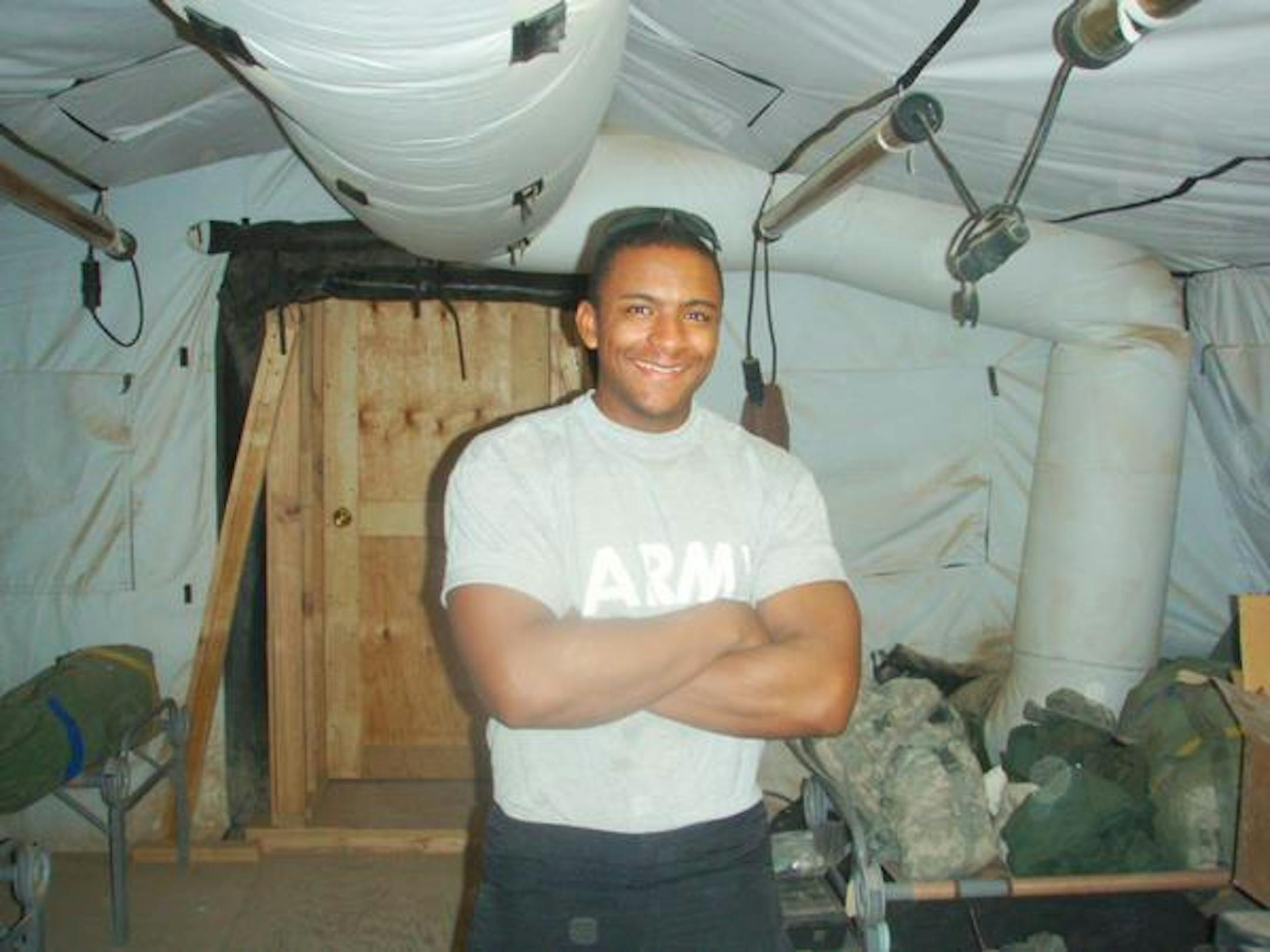
At 24, John Elliott has seen a lifetime of experiences. He has three Purple Hearts as evidence.
Elliott was in the 10th grade when the twin towers fell on Sept. 11, 2001. As he saw older men with families making their way to war, he thought it would be smart to one day join the Army so that he might replace someone more encumbered.
He was deployed during what has become known as "the surge" as a corporal with the Army's A Company 130th Infantry in Baghdad from May 2007 through March 2008. During his service he was involved in seven major explosions and was shot twice (ricochets both times, he's quick to point out). He received two Purple Hearts for the wounds he received on duty on July 24, 2007, and a third for his wounds on March 29, 2008. The March incident was a remarkable 18-hour firefight in Baghdad's Sadr City district, where insurgents used pigeons for communication and Elliott watched through the sights of his Bradley fighting vehicle as street-front shops blew up and disintegrated around him. He was badly burned when his vehicle was hit, the weapons inside melting from the heat of the explosion, and he dragged others in his unit to safety under the gunfire.
Now out of the Army, the Bloomington native will receive a $14,000 grant next week from the Minnesotans' Military Appreciation Fund, a statewide nonprofit group. He has been diagnosed with 80 percent disability and awaits a final ruling on the other 20 percent from the Department of Veterans Affairs.
He has a powerful perspective on his wounds, especially compared to someone returning from combat who may be suffering from unseen injuries like post-traumatic stress disorder or traumatic brain injury.
"When I touch the back of my leg and feel a scar, it will bring up a memory. I can feel where the holes were or I can feel a piece of shrapnel. When I think about the bad, I touch my wounds," he says. "I don't have to go back to each deep dark memory and think about it."
Mark Brunswick • 612-673-4434


