

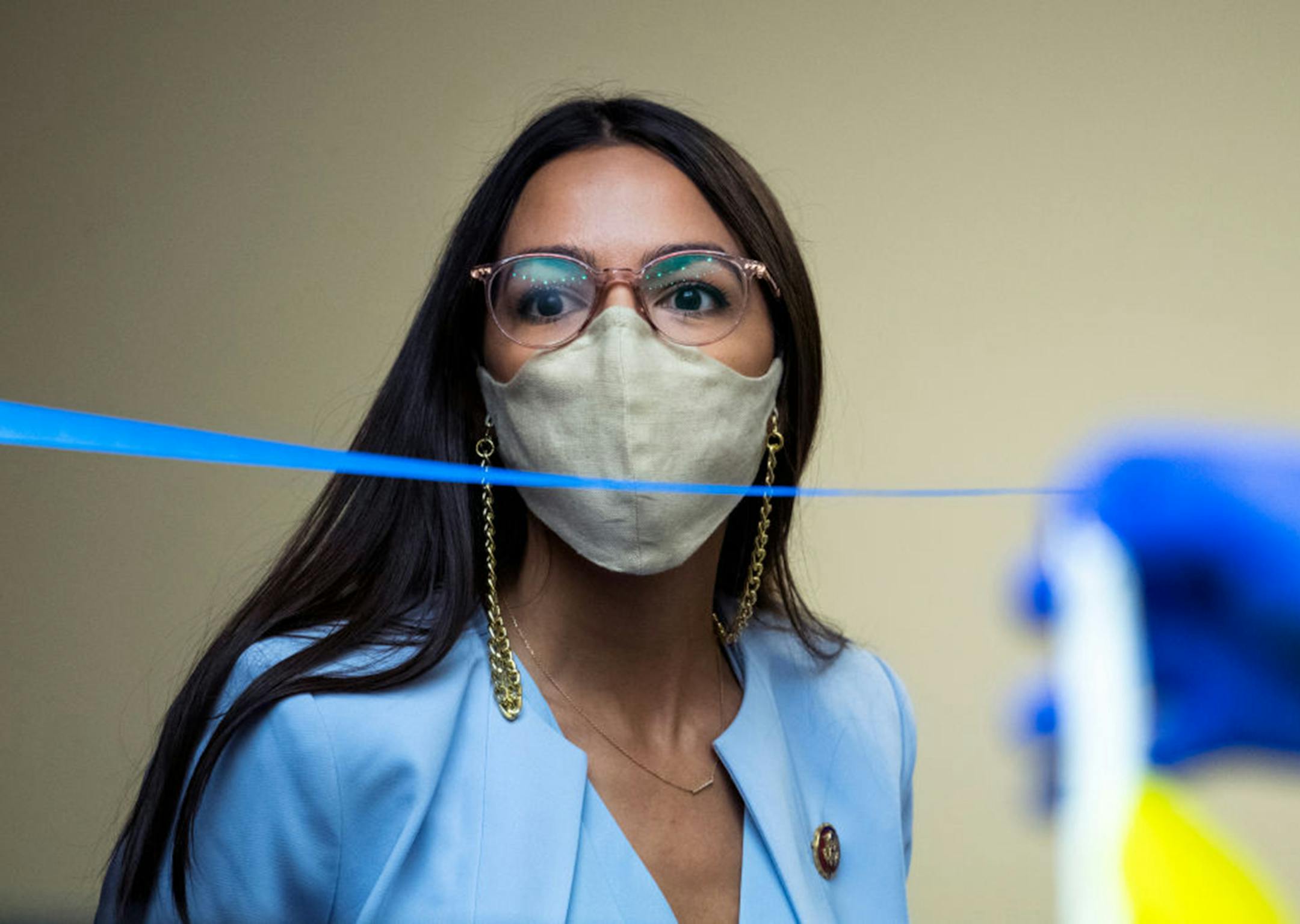
The gift many Americans were eager for this year has arrived: a vaccine against COVID-19. Unfortunately, there is no such inoculation against political opportunism — which is exactly what those who criticize politicians for getting the vaccine are engaging in.
Earlier this month, Rep. Alexandria Ocasio-Cortez recorded herself getting her COVID vaccine shot and shared it with her 8.2 million Instagram followers. This being 2020 (and this being progressive lightning rod AOC), her decision attracted a lot of criticism, much of it along the lines that she's only 31 and not likely to face serious health issues if she contracts COVID.
Then 49-year-old Sen. Marco Rubio also got his shot — and also found himself criticized, as a reckless hypocrite for getting it after having attended campaign rallies for President Donald Trump where few people wore masks.
As a matter of law, all members of Congress, as part of the legislative branch of government, are eligible to "cut the line" for a vaccine, regardless of their age, thanks to continuity-of-government protocols. Last week, under the same protocol, Vice President Mike Pence got his shot.
Still, the question is legitimate: Just because elected officials are allowed to get the vaccine, should they? Some congressional colleagues of Rubio and Ocasio-Cortez — including AOC ally and fellow "Squad"-member Rep. Ilhan Omar of Minnesota — say the answer is no.
"We are not more important then frontline workers, teachers, etc. who are making sacrifices everyday," Omar tweeted Dec. 20. "Which is why I won't take it. People who need it most, should get it." Omar's choice puts her in agreement with Republican Sens. Ted Cruz and Rand Paul — maybe the first and last time that's likely to happen.
But AOC has good reason, beyond a self-serving one, for getting vaccinated. As she tweeted, she had to "weigh the potential misinfo consequences of what wld happen if leaders urged ppl to take a new vaccine that we weren't taking ourselves."
COVID has taken a terrible toll among Black and Hispanic communities. In the spring, when New York City was the epicenter of the pandemic's first wave, Ocasio-Cortez's Bronx-Queens district was the epicenter of the epicenter. At one point the district, which is 58% Black and Hispanic, had more cases than all of Manhattan, despite having one million fewer inhabitants.


