

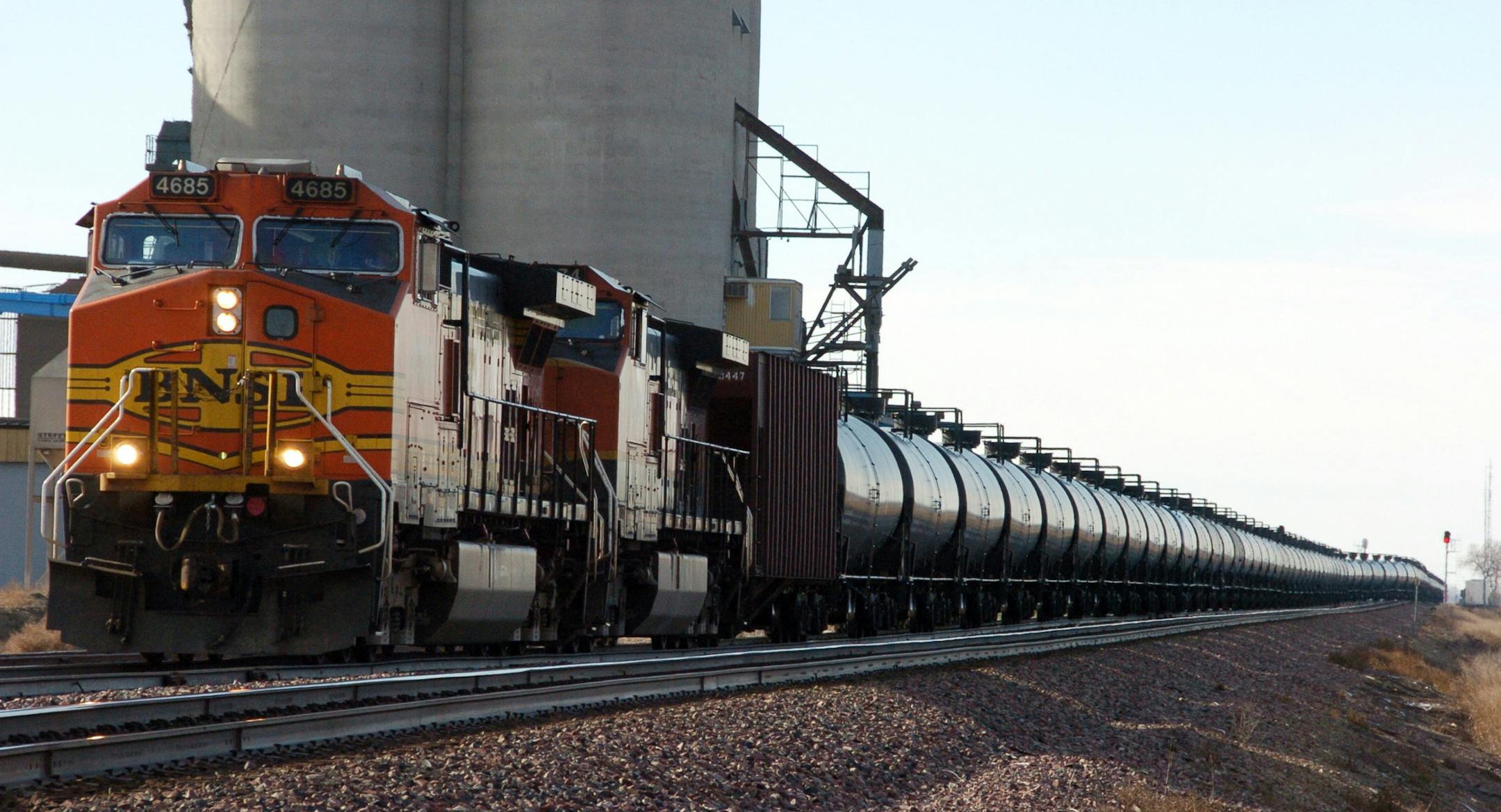
BNSF Railway officials have told federal regulators they're concerned that older, less-robust tank cars will end up on U.S. oil trains because of Canadian railroad pricing policies discouraging them.
Canadian Pacific and Canadian National railroads recently imposed surcharges on shippers using older tank cars known as DOT-111s to discourage their use for crude oil shipments. Tank cars built since October 2011 have thicker steel to make them more puncture-resistant.
BNSF, which hasn't imposed such disincentives, is concerned that the newer tank cars "will end up in Canada" while the older DOT-111s "will come to the U.S.," according to official notes from a March 19 meeting with the administrator and top officials of the U.S. Transportation Department's Pipeline and Hazardous Materials Safety Administration.
The agency released the meeting summary because it's considering new tank car regulations that likely will require upgrading, retiring or repurposing about 65,000 older DOT-111s, many of which haul crude oil, especially in North Dakota. But that rule is months from being final, and upgrading older tankers would take years.
Minnesota has a stake in the outcome because about six North Dakota oil trains per day travel through the Twin Cities, many of them 100 cars long. Most move on BNSF lines, the rest on Canadian Pacific's. Ethanol trains, which pose a similar hazard, move on Union Pacific tracks through the state.
Fiery oil train wrecks, including one in Casselton, N.D., on Dec. 30, have provoked rail safety hearings in Congress and at the State Capitol. A bill in the Minnesota Legislature would beef up track inspections and emergency response capabilities in the state.
Dave Christianson, who directs freight and rail planning for the Minnesota Department of Transportation, said BNSF has a valid concern that the Canadian surcharges could result in more older tankers on U.S. tracks.
"It definitely will be an incentive to shift some new cars into Canadian service first, leaving the U.S. Bakken fleet lagging behind in updating and conversions to safer cars," said Christianson, who did not attend the meeting in Washington, D.C.


