

Minneapolis-based Community Reinvestment Fund (CRF) has launched a $500 million program through a partnership with Wall Street's Morgan Stanley that will enable the 22-year-old nonprofit community development institution to buy, pool and sell more U.S. Small Business Administration loans.
The loans are collateralized by commercial real estate in inner-city neighborhoods and small towns. CRF supports community development agencies often working with banks and municipalities to finance higher-risk loans that otherwise wouldn't get financed entirely by commercial lenders. It says it has injected more than $1.1 billion into low-income neighborhoods nationally, helping to retain or create 43,000 jobs since 1988.
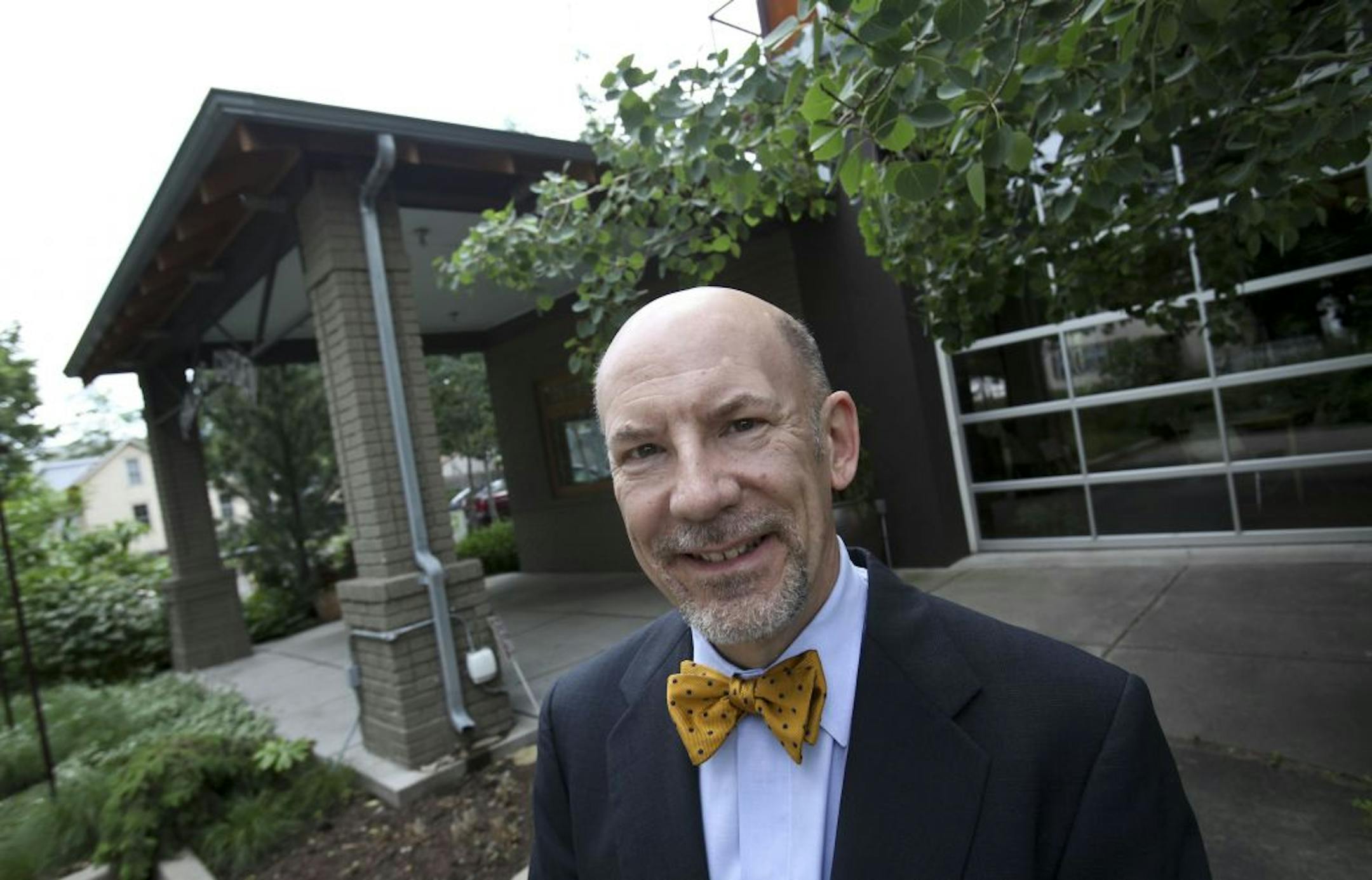
CRF buys loans made by community lenders, pools them and sells them to institutional investors. That frees up capital to get more deals done. The Morgan Stanley partnership is designed to help community banks lend to small businesses through the SBA 504 program. Frank Altman is CRF's longtime CEO.
Q What's a tangible example of what CRF does? Let's start with an abandoned gas station at 2646 Cedar Av. S. in Minneapolis that was transformed into Phillips Garden, a landscaping company that employs about 20 people.
A We partnered with the city and the Metropolitan Consortium of Community Developers that focused on acquisition and rehabilitation of buildings along the corridor between E. Franklin Avenue and E. Lake Street, and along W. Broadway in north Minneapolis, where capital wasn't flowing. It was a "gap" program that created a second lien, secured by real estate, that was going to be occupied by the owner. We have now financed 90 loans over the last decade in some low-income neighborhoods.
Ed Burke, the owner of Phillips Garden had worked out of his house in the neighborhood for years. That old gas station was a site of some drug dealing. Ed saw the opportunity to transform that old building from an abandoned community detriment to a working asset. Franklin Bank could not make the entire loan on its own. The capital gap was filled by a community development agency and we bought the loan. The long-term financing helped them get through the recession of 2008-09. They have created jobs, grown, improved and beautified the neighborhood.
Q How do you raise capital?
A We get money donated by foundations and institutions. We also use market-rate capital from pension funds and financial institutions. We get debt capital from socially motivated investors at below-market rate, including foundations and high-net worth individuals. And contributors. That's about 20 percent of the capital we raise.



