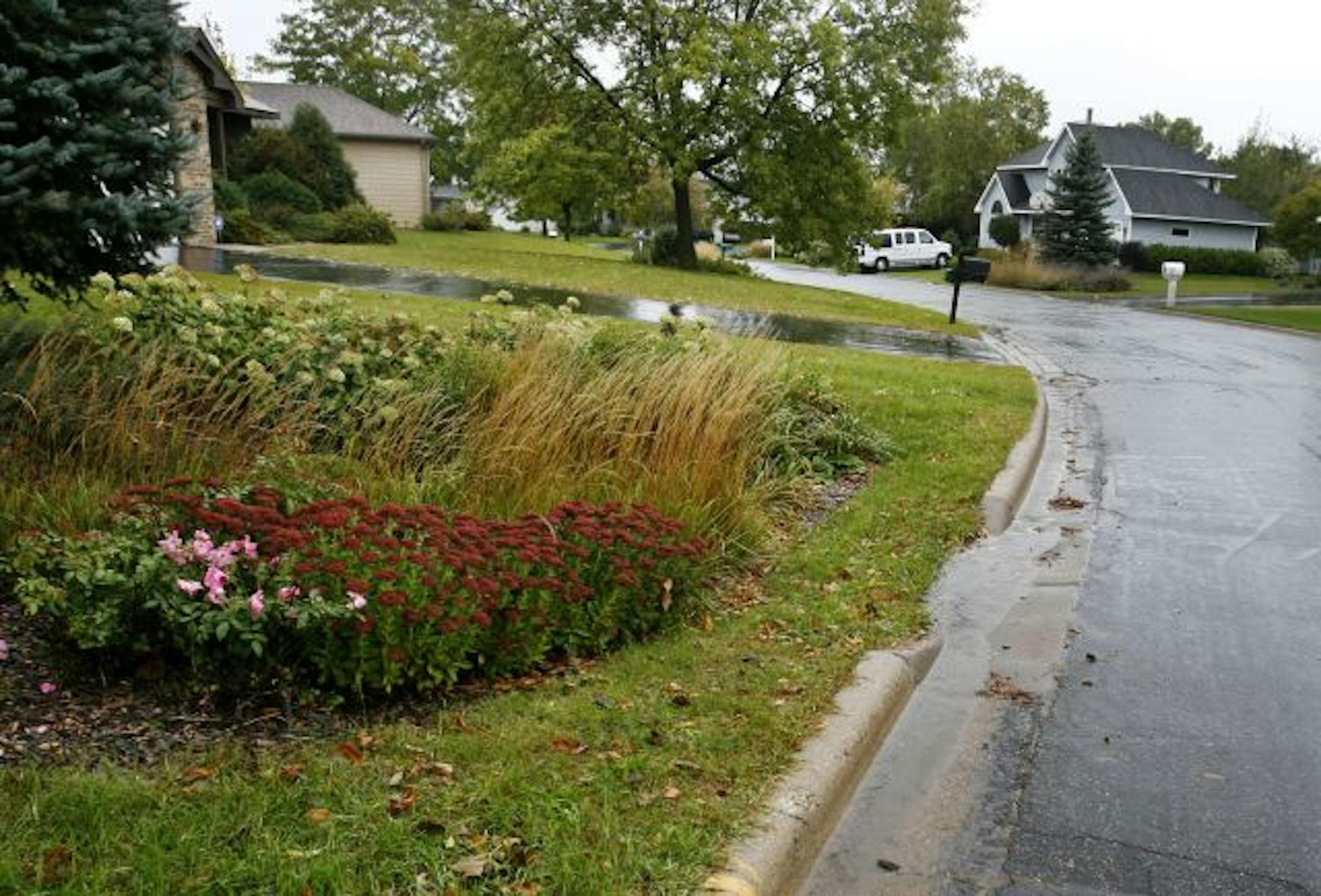
Even now, with fall rushing toward winter, the handsome gardens along Rushmore Drive in Burnsville draw the eye with their maroon sedums, purple asters and waving ornamental grasses.
All the gardens are near the curb, and all drop a foot or two below street level at their lowest point.
They're rain gardens.
Since they were planted in 2003, they've attracted national attention for their success in diverting storm water that would have gone directly into a local lake. About 90 percent of the water that flows off Rushmore Drive now filters into the ground instead, trapping debris and pollutants.
Bloomington is now trying to replicate some of that success with a street reconstruction project along two blocks of Thomas Avenue South that normally dump storm water into Nine Mile Creek. Curb cuts will direct storm water instead into six large rain gardens in private yards. Maplewood, Plymouth, Arden Hills, St. Paul Park and Stillwater have undertaken similar projects, and Lake Elmo is planning one next year.
The idea is not to handle all storm water through rain gardens -- even streets with rain gardens have storm sewer grates to take in overflow -- but to use them as another weapon in the arsenal to prevent water that carries fertilizer, oil from the street, grass clippings and debris from directly entering lakes and streams.
In Bloomington's case, a $25,000 grant from the Nine Mile Creek Watershed District is paying about half the cost of installing the rain gardens, with the city's storm water utility fund paying the rest.
"It was a way to get residents involved in storm water treatment in a way that would be fun," said Steve Segar, a Bloomington civil engineer who works on water resources. "We wanted to start on a smaller scale, because this is the first time we've done this. But we hope to include it in future street reconstruction."