

my job
By Laura French • jobslink@startribune.com
As a doctoral student at the University of Minnesota in the 1980s, David Gaarder was a teaching assistant in the Composition Department. "I really did enjoy being in the classroom. I find the person-to-person contact important," he said. Having finished the coursework and exams required for his Ph.D., Gaarder ran through the time and money he had allocated for finishing his dissertation.
"I needed a job," Gaarder said. "I went to U student employment office and got connected to Methodist Hospital. I went out and mowed grass for the summer in 1991. The folks there liked me, and they found me hours over the wintertime shoveling snow. My first snowstorm was the Halloween blizzard of 1991 — I went from not that much experience with snow to a record snowfall."
He assisted the lead groundskeeper at Methodist Hospital and then moved into the role for seven years. "After being a student most of my life, which was an abstraction, I liked doing something with my hands," Gaarder said.
He moved into a maintenance engineering position. Although he held the position for six years, he said, "It was a poor fit. I don't have a strong technical background." In the summer of 2011, he was a crew leader for Tree Trust, working with at-risk youth. "That was my transition experience. It was the shift from the technical side to teaching and mentoring," he said.
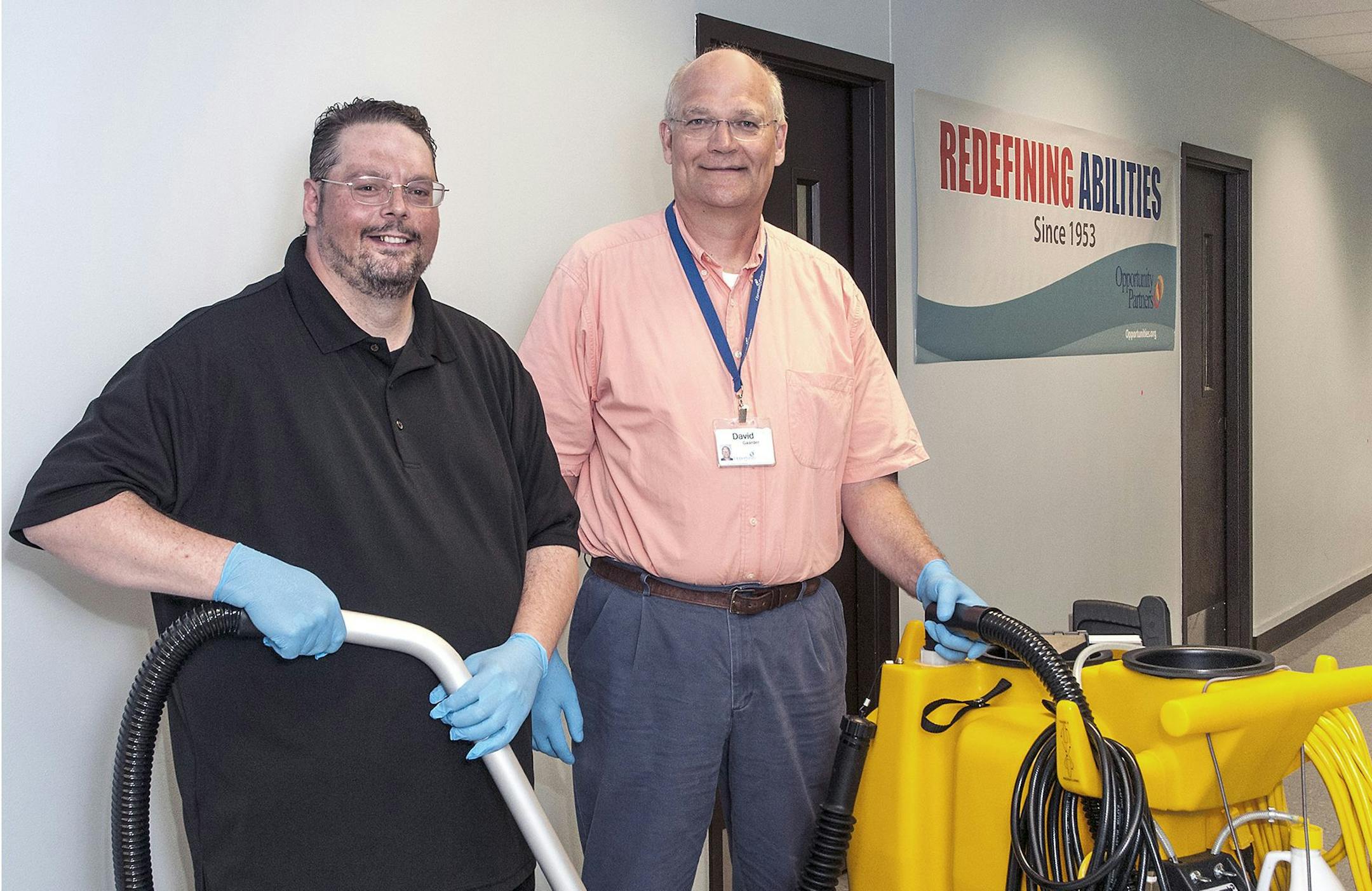
His counselor at the Workforce Center, a former employee of Opportunity Partners (OP), referred him to a position in retail training. Then the Professional Cleaning training position opened up. "It was a better fit. I have 20 years of practical, hands-on experience that in many situations amounted to cleaning.
"This is the best job of my life. I'm intersecting with people at important points in their lives, and I hear from them that it's making a positive impact. The three things you look for in negotiating a life transition are purpose, passion and a paycheck. I've negotiated that transition over the last two years."
Who are your students?
We work with people who are signed up with Opportunity Partners, people who have a developmental or cognitive disability. We also work with people who come through the Workforce Centers — people who were in the labor market but have had something happen.



