"We should bring kayaks out here," the 20-something sitting on the bench behind me said to his friends.
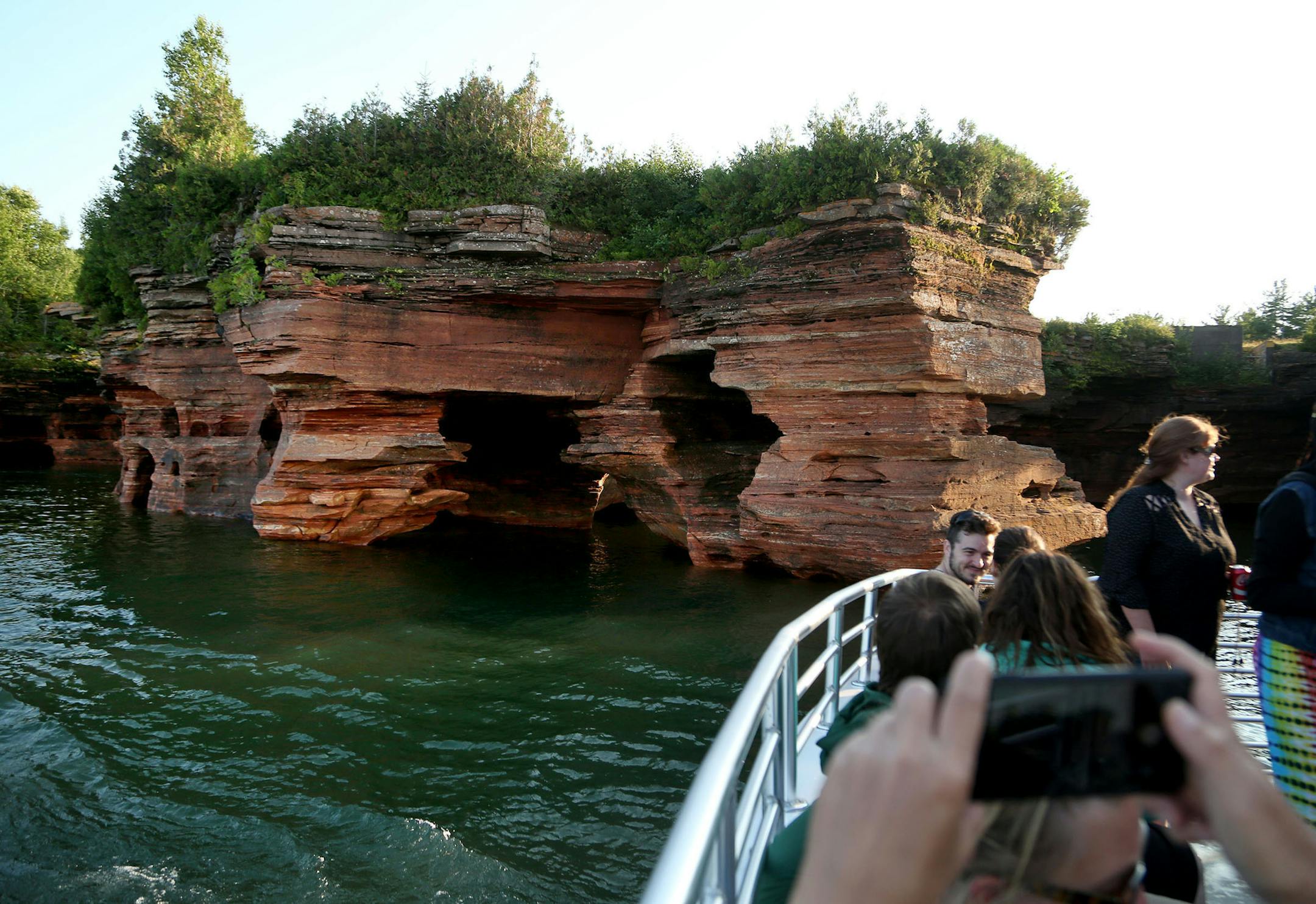
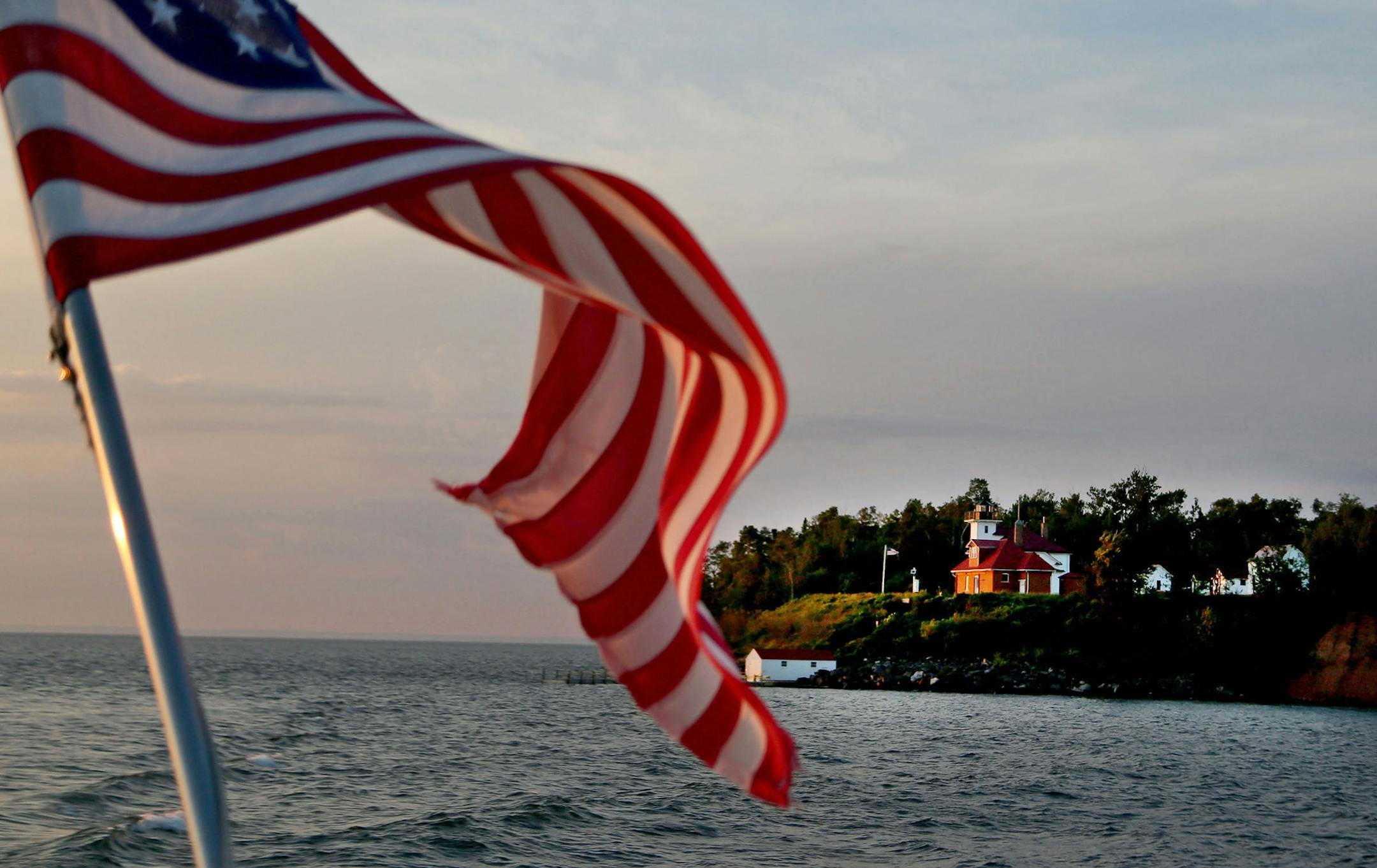
We were on an evening boat tour that brought us past several of the Apostle Islands, a cluster of 22 isles off Wisconsin's Bayfield Peninsula in Lake Superior. From our seats on the open-air upper deck, views inspired such daydreams. Waves caught the late afternoon sun, glowing blue-green. Islands with dense forests slid past, close enough for us to sense their wildness.
All but one of the islands make up the Apostle Islands National Lakeshore, set aside for their historic lighthouses, unmarred nature and sandstone caves. The outlier is Madeline, where a few hundred year-round residents inhabit a land mass the size of Manhattan, and where vacation rentals and ice cream stores lure mainlanders for summer getaways. I've been one of those vacationers for years, and I finally decided to explore the rest of the archipelago — woodsy beauties that shimmer in the distance off Madeline's shores.
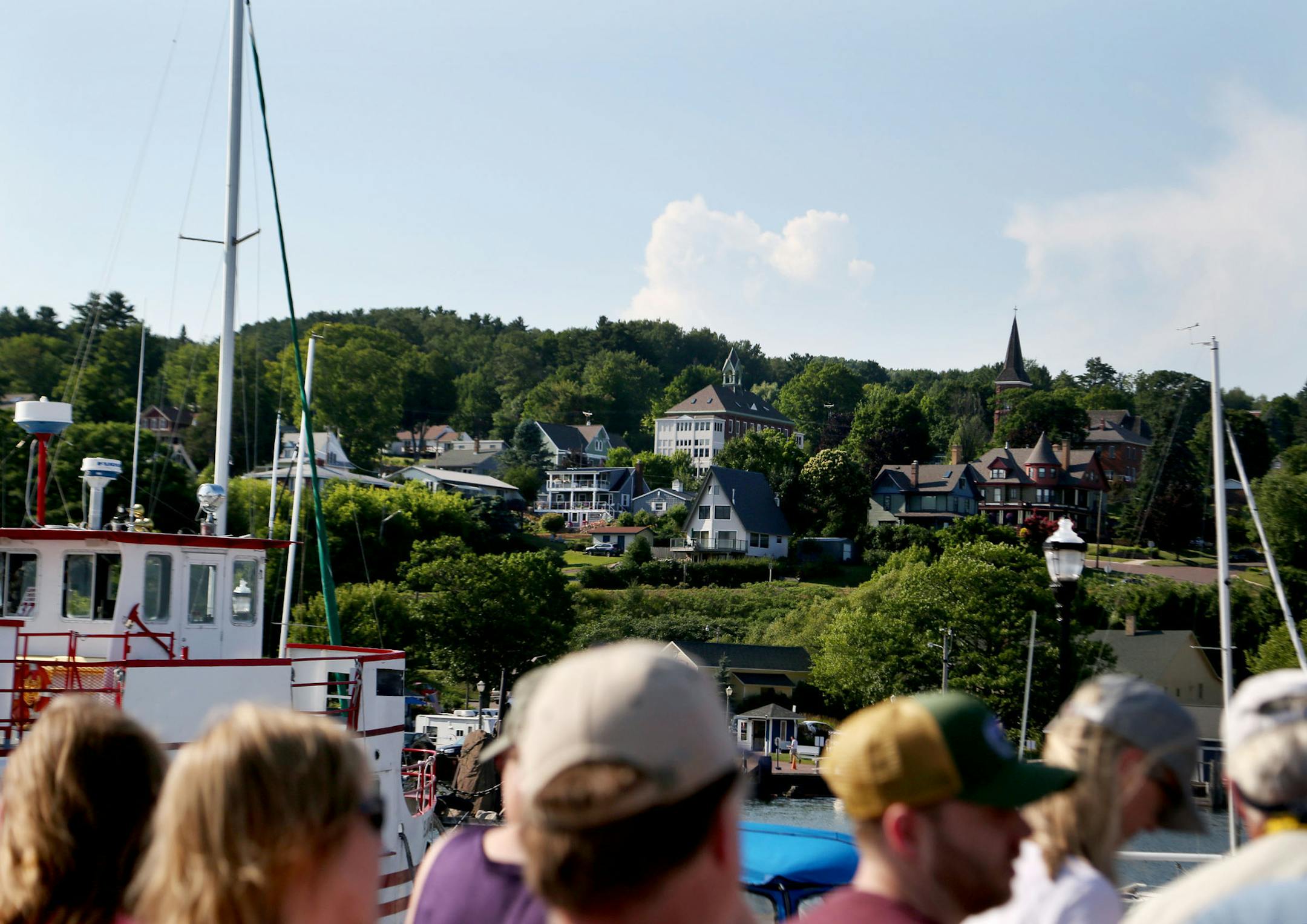
In Bayfield, I caught my 5:30 p.m. ride: the Apostle Islands Cruises' Superior Princess, with a top deck lined by wooden benches and a main cabin with oversized windows and a section of glass in the floor that reveals the waters below.
We had barely motored away from the dock when Captain Zack began his narration. Lake Superior is the largest and deepest of the Great Lakes; its waters could cover the Lower 48 in 3 feet of water, he said. The average visibility is a remarkable 27 feet, due to its chill; the average temperature of 40 degrees keeps the water pure.
Signs of life
We skirted Basswood and then curved around Hermit Island. There Captain Zack circled the boat so the nearly 100 passengers could see abandoned giant blocks of sandstone. They were proof that Hermit, with towering trees rimming the water's edge, had once buzzed with human activity. During the late 1800s, a quarry on the island made a man so rich that he built a mansion there for his wife. She declined the gift on a spit of land devoid of other women but crawling with men. Another motive could have been at play; he was 76 and she was 20, the captain pointed out.
At Manitou Island, we saw signs of modern life. A neon green towel flapped from a clothesline amid the weathered remains of a fishing camp, including a wooden net reel, a smokehouse and a cabin. The camp is on the National Register of Historic Places, and each summer a volunteer cares for it, which explains the bright fluttering sign of human life.
In an instant — when our 65-footer passed Rocky Island and came upon Devils — I felt the power of the Big Lake. Passengers who had been standing grabbed railings. The boat rocked and bobbed in swells. We'd hit the northernmost point in our tour, and had entered sealike waters, unfettered by the sheltering lands.