

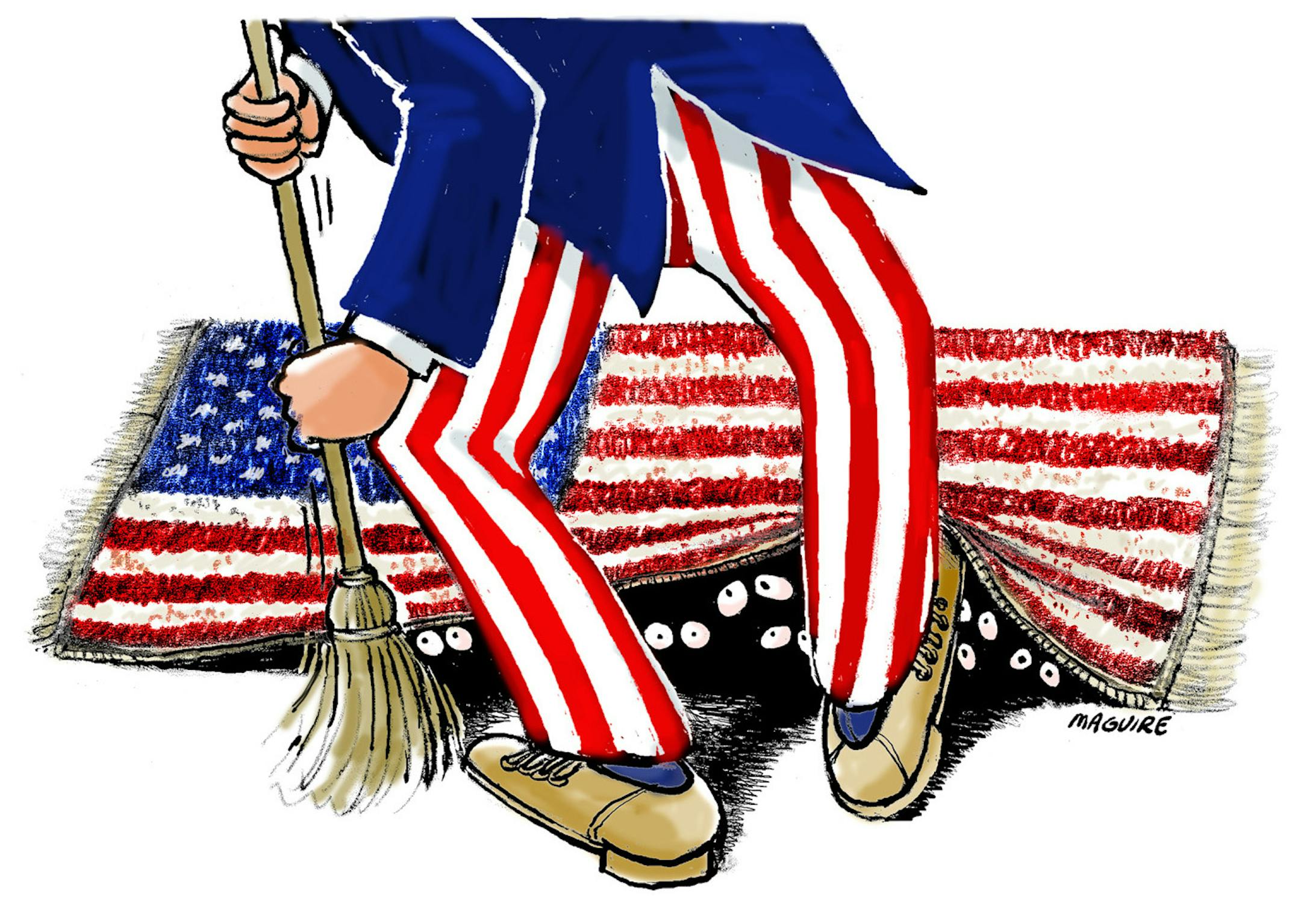
Several weeks ago, Vice President Joe Biden, reluctant as he is to enter the presidential fray, denounced harsh anti-immigrant rhetoric spilling from the Republican nomination battle.
Biden rightly zeroed in on Donald Trump — "one guy … absolutely denigrating an entire group of people [and] working on this notion of xenophobia … in a way that hasn't occurred … since the Know Nothing party … "
Thinking about history's lessons might well improve today's immigration debate — reducing overstatements about both our current immigration problems and the debate itself. But we need to get history's lessons right.
Trump's nativist pandering is foul, but you don't have to go back to the Know Nothings' heyday before the Civil War to find its like, even among "guys" who aspired to the presidency.
Woodrow Wilson, who was actually in the White House a century ago during what's often regarded as the golden age of immigration, had earlier described immigrants of his day as "multitudes of men of the lowest class from the south of Italy and men of the meaner sort out of Hungary and Poland, men [with] neither skill nor energy nor … intelligence … as if the countries of the south of Europe were disburdening themselves of the more sordid and hapless elements of their population."
Sounds a lot like Trump, only literate. And there has been plenty of tough talk about immigrants since Wilson's day. Some of it even came in connection with a major 1994 crime bill pushed by then-Sen. Joe Biden and signed into law by President Bill Clinton. That law has been faulted recently (including by Clinton himself) mainly for its contribution to America's soaring incarceration rate.
But according to Roger Daniels in "Guarding the Golden Door," a history of American immigration policy, the Clinton crime bill was also "the first of four statutes in a two-year period designed to … 'get tough' with immigrants." Among other things, the legislation established a "criminal alien center" to keep tabs on immigrant crime.
In recent years, on immigration as on many issues, Americans have grown more polarized and more clearly divided along party lines. But the idea that there's anything new about the controversy is the sort of humbug that should be left to Trump, who likes to claim that nobody was talking about illegal immigration before his candidacy.


