

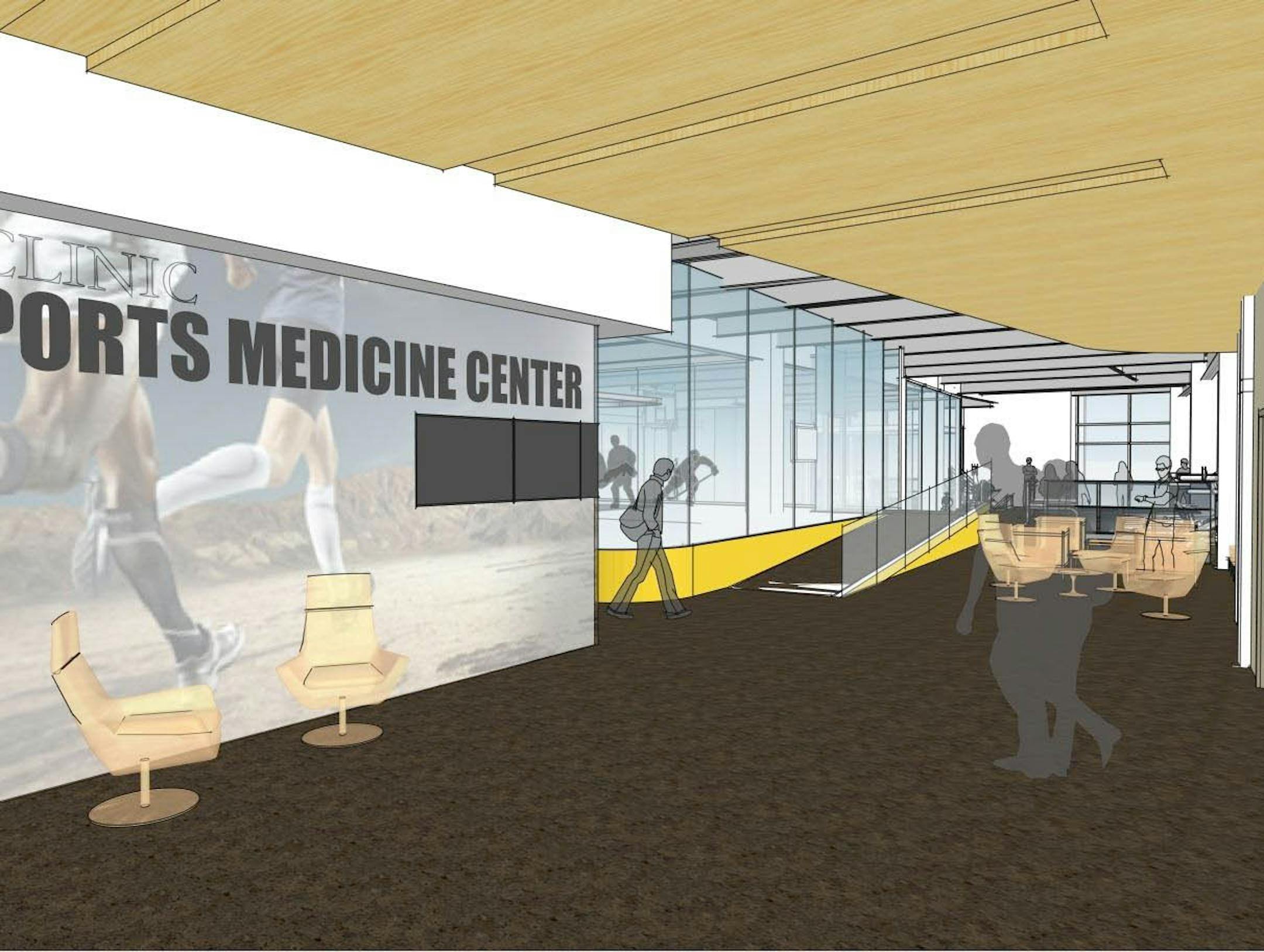
The Mayo Clinic is making a big play to attract ailing athletes and weekend warriors with aching knees to its campus.
The hospital system plans to open a 22,000-square-foot sports medicine facility in Rochester next spring that will double its existing practice.
The center aims to be a sort of high-tech medical playground that will help the injured get back in the game and the healthy hone their skills.
"A lot of people think of Mayo as the last resort," said Dr. Edward Laskowski, co-director of Mayo's Sports Medicine Center. "We want to change that."
Though not directly part of Mayo Clinic's successful bid this year to get taxpayer support for its massive expansion plans, the new facility nonetheless is tied to Mayo's broader strategy of becoming a "destination" — not just for rare and complex diseases, but for exercise-related injuries, as well.
Sports medicine is a fast-growing and highly competitive field among hospitals and free-standing surgery centers, as athletes of all ages and abilities seek out the specialized care needed to stay active.
Outpatient surgery centers owned by doctors are competing for patients with long-standing hospital-based programs, such as those run by Allina Health's Sister Kenny (now Courage Kenny Rehabilitation Institute) and Fairview Health Services. Twin Cities Orthopedics is testing out a one-price, one-bill option for some knee replacement surgeries. At Tria, patients recover from surgery in a hotel suite.
"It can be a lucrative market," said Steve Parente, a health care economist and professor of finance at the University of Minnesota. "It also has these rub-off effects … where it's not just sports medicine for the very elite. It goes down-market, if you will, to folks with other orthopedic concerns."


