By MALCOLM RITTER • Associated Press
Thousands of years ago, a teenage girl toppled into a deep hole in a Mexican cave and died. After being hidden there for more than 12,000 years — along with the bones of dozens of extinct ice age beasts — her skeleton and her DNA are bolstering the long-held theory that humans arrived in the Americas by way of a land bridge from Asia, scientists said.
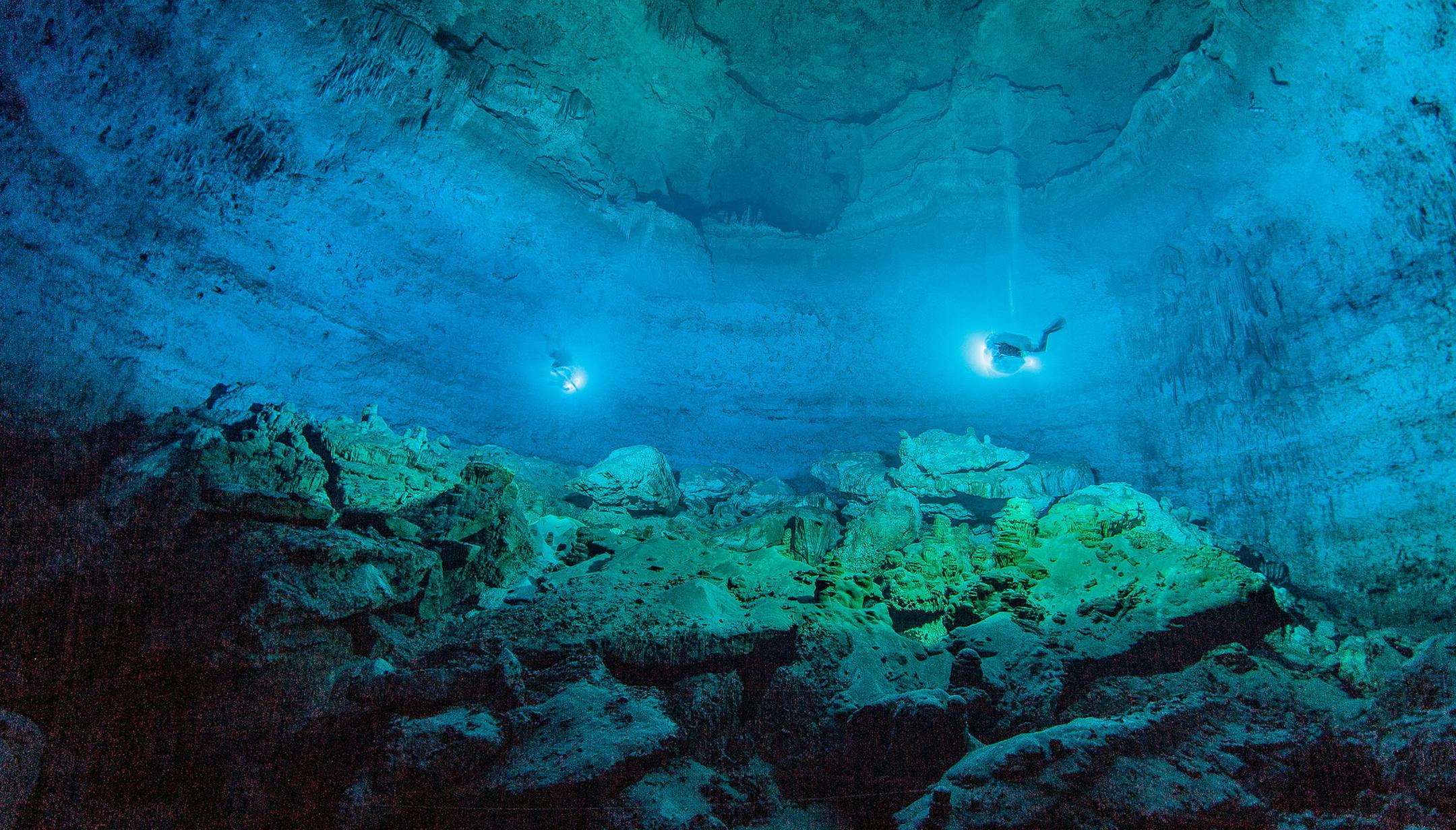
The girl's skeleton was discovered by chance in 2007 by expert divers who were mapping water-filled caves north of the city of Tulum, in the eastern part of the Yucatán Peninsula. One day, they came across a huge chamber deep underground. "The moment we entered inside, we knew it was an incredible place," one of the divers, Alberto Nava, said. "The floor disappeared under us and we could not see across to the other side."
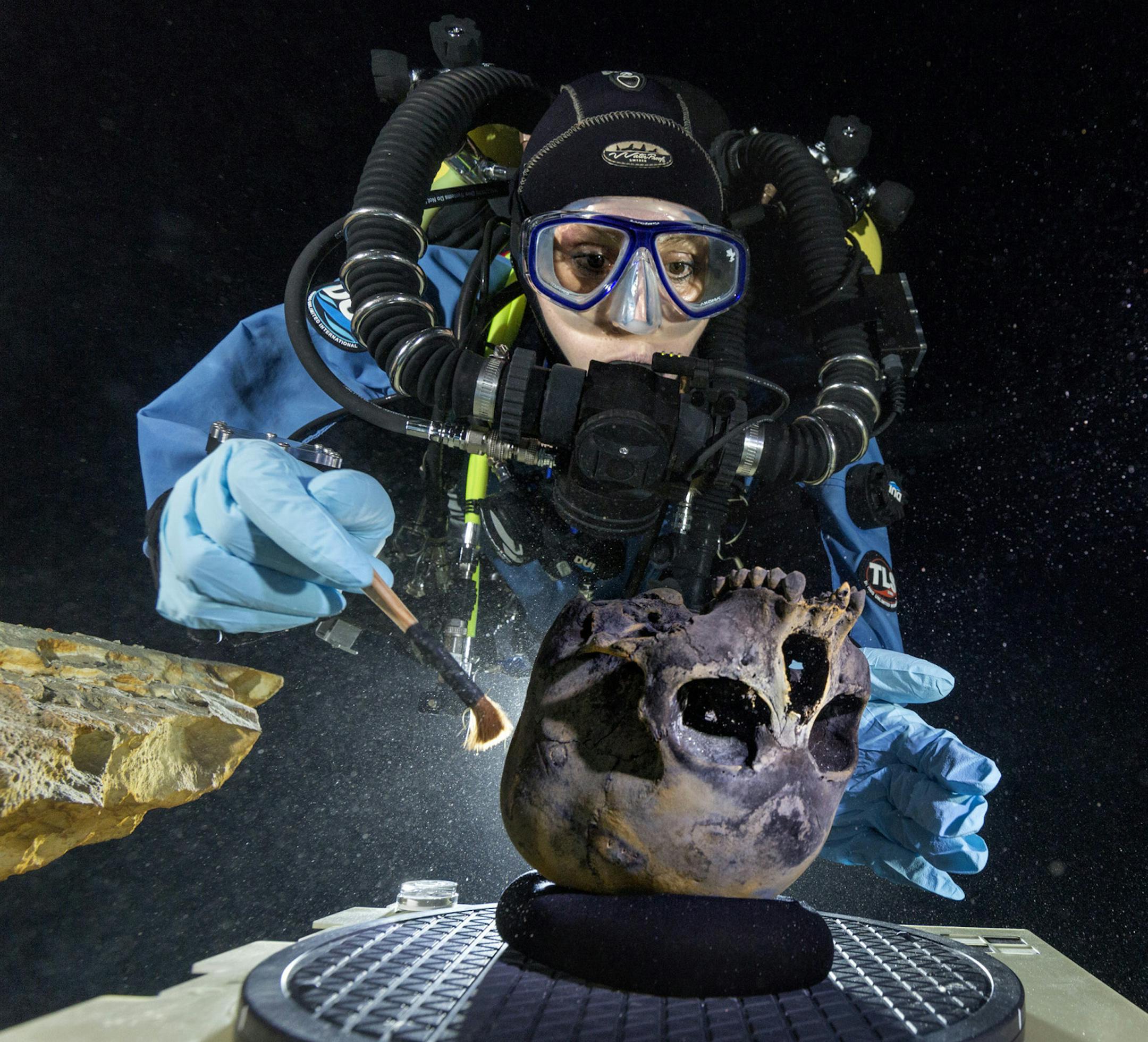
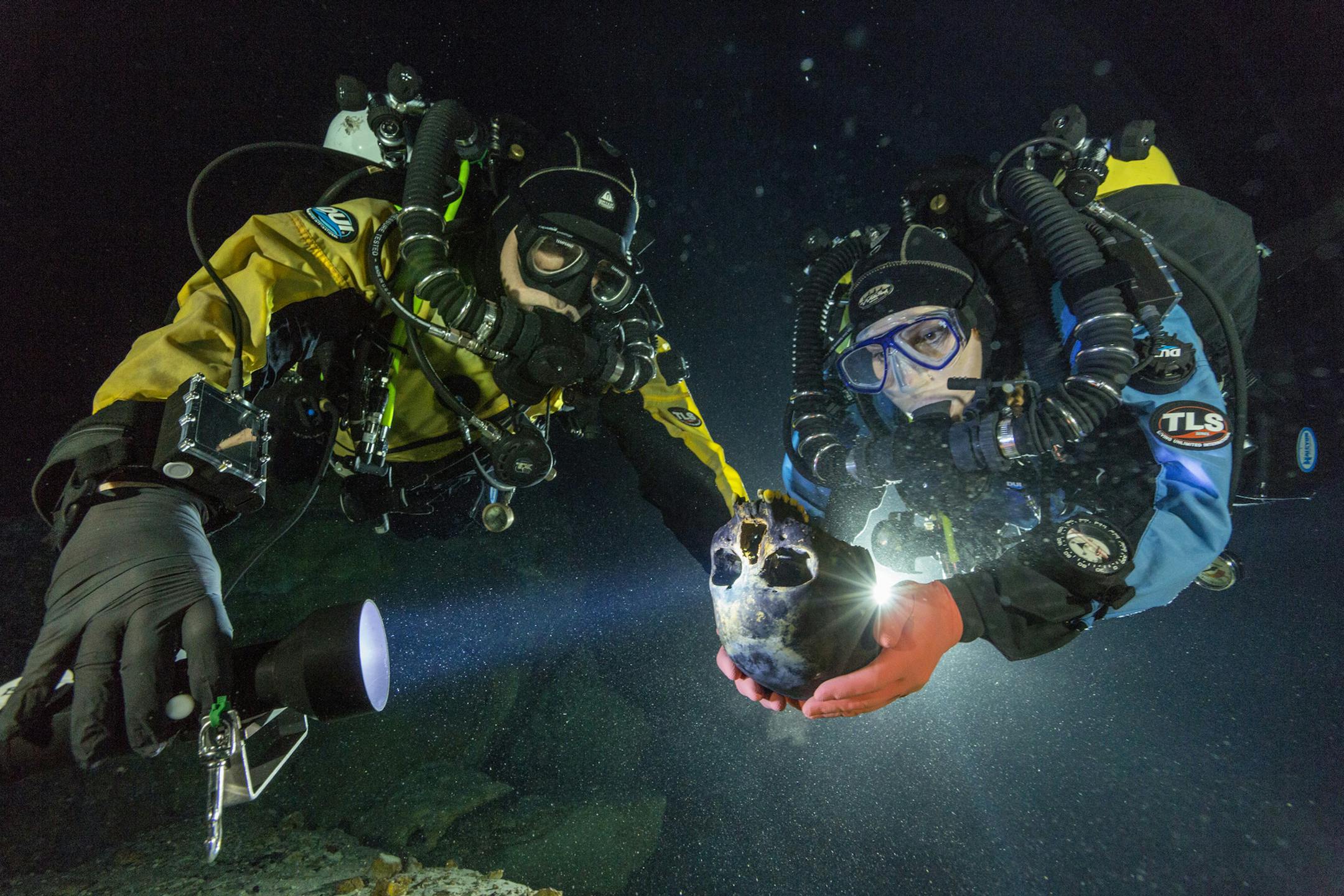
Months later, they returned and reached the floor of the 100-foot tall chamber — which was littered with the bones of saber-toothed tigers, giant tapirs and bears — and divers quickly spotted the skull as they swept the chamber with flashlights. "It was a small cranium laying upside-down with a perfect set of teeth and dark eye sockets looking back at us," recalled Nava of Bay Area Underwater Explorers, a nonprofit conservation organization based in Berkeley, Calif. The divers named the skeleton Naia, after a water nymph of Greek mythology.
Now, researchers have published an analysis of Naia's skeletal remains in the journal Science, calling it the oldest, most complete specimen ever discovered in the Americas.
The study authors say that the bucktoothed 15- or 16-year-old girl's mitochondrial DNA reveals she is related to 11 percent of living American Indians, and links them genetically to a population of early humans who inhabited a land now submerged beneath the Bering Sea.
Carbon-dating of her teeth and isotope data from crystals that formed on her bones helped study authors determine that the girl lived 12,000 to 13,000 years ago in what would have been a parched environment. They believe she was probably searching for water when she entered a dark, underground cave and then plummeted 100 feet into the massive chamber. now called Hoyo Negro, or black hole.
Unable to escape — her hip bone shattered from the fall — she died amid a menagerie of similarly doomed megafauna. As the ice age ended and glaciers melted, sea levels rose and filled the chamber with water, sealing it off from humanity.