

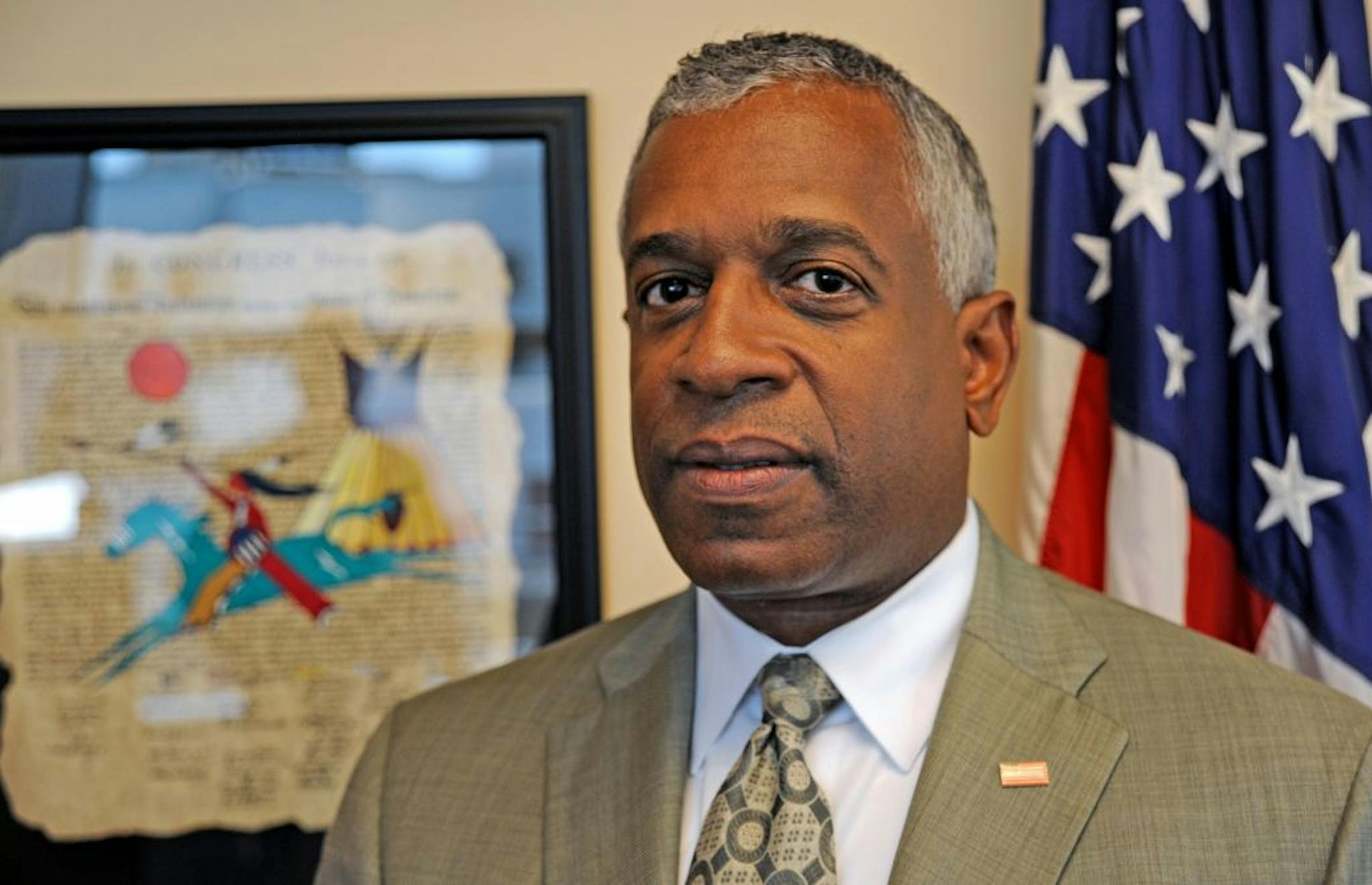
The choice of Minnesota U.S. Attorney B. Todd Jones to head the Bureau of Alcohol, Tobacco and Firearms and Explosives (ATF) made him the face of a national anti-violence agenda growing from the shock of the schoolhouse shooting massacre in Connecticut.
But much like President Obama's effort to ban assault weapons and expand background checks on gun buyers, Jones' nomination has become stuck in the mire of congressional politics.
On Tuesday, nearly six months after his name was put forward, Jones is expected to face off with some of the most skeptical Republican critics of gun restrictions and the ATF, an agency that has become a stand-in for GOP ire with Obama's Justice Department and embattled Attorney General Eric Holder.
The White House has prepared Jones for a fractious grilling when he enters the Senate Judiciary Committee room. But the long-anticipated encounter also will give Jones his first chance to go on national television to answer questions that have been raised about his leadership as ATF's temporary acting director and Minnesota's top federal law enforcement officer.
"I am looking forward to meeting with the committee and answering all their questions," Jones told the Star Tribune.
To Iowa Sen. Chuck Grassley, the ranking Republican on the panel, Jones has a lot to answer for. Grassley has tried unsuccessfully to force Jones to testify about Fast and Furious, a troubled ATF gun-tracking operation on the Mexican border that Jones was brought in to clean up. Grassley also sought to tie Jones to a controversial Justice Department deal to drop two whistleblower cases against St. Paul as a means of averting a civil rights showdown before the Supreme Court over the city's rental code enforcement.
Grassley's numerous requests for documents are cited by Democrats as one reason for delaying the hearing.
The criticisms have become personal as well. Republicans have delved into anonymous complaints from lawyers in the Minneapolis U.S. attorney's office who accuse Jones of an overbearing "militaristic" management style that has fostered a "climate of fear." An internal ATF video warning of "consequences" for those who go outside of the chain of command was interpreted by some critics as a threat against potential whistleblowers.


