
Ice pack gives lots of Twin Cities drivers headaches

December 12, 2012 at 6:09PM
I-394
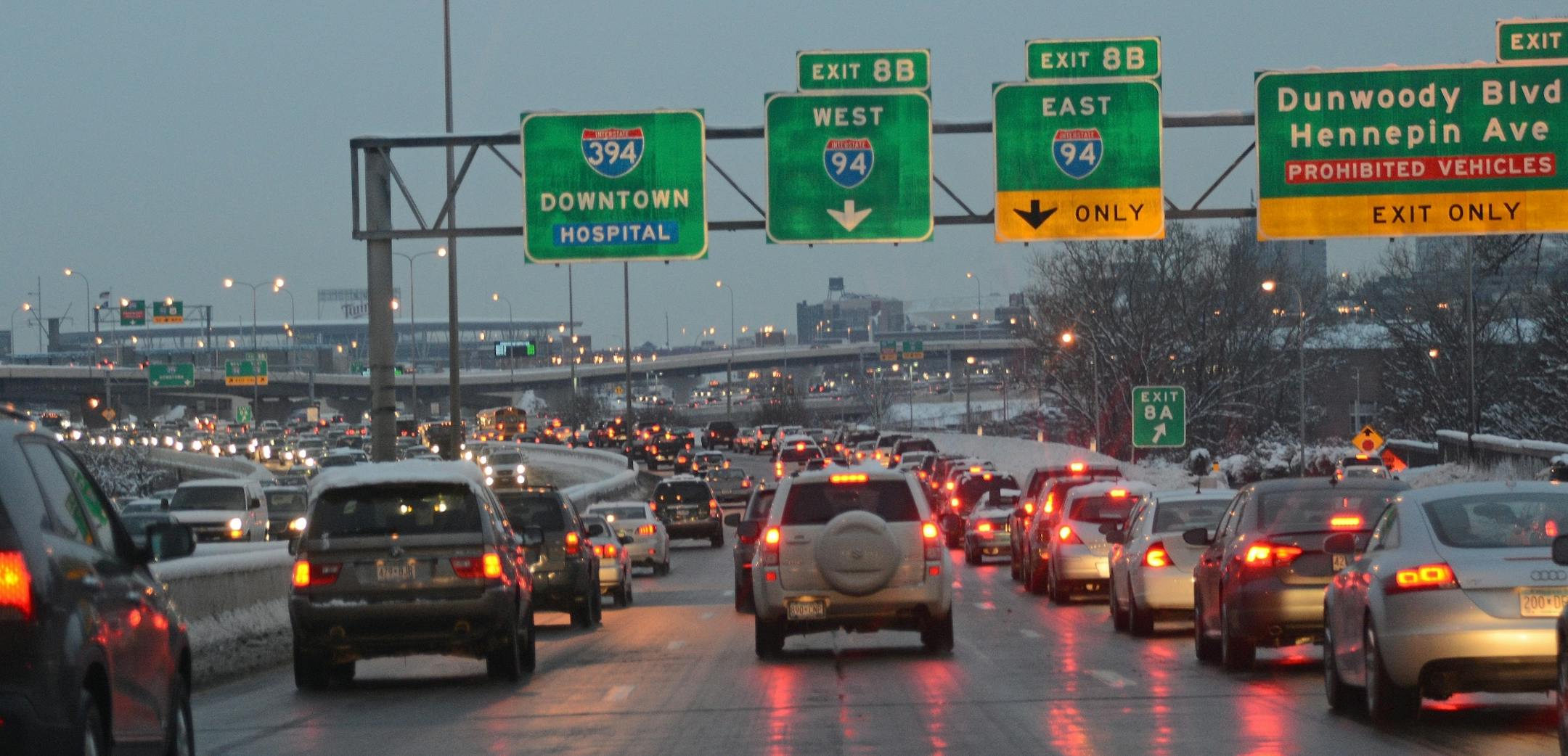
Although road conditions improved for Wednesday morning's commute, there still were plenty of spinouts and accidents. Here, traffic was backed up on I-394 eastbound at Dunwoody Blvd. (Dml -/The Minnesota Star Tribune)

Metro area road managers were feeling some unseasonable heat Tuesday as drivers called, tweeted and otherwise openly questioned why icy gridlock persisted two days after the fourth-deepest December snowfall in Twin Cities records.

Tuesday afternoon's commute remained painfully slow for many drivers, following the second straight day featuring morning trips three times as long as normal. A thick washboard of ice continued to grip metro freeways and streets despite widespread snow emergencies and other road-clearing efforts.

Mindy Kehn's usual hourlong commute from Princeton to Minneapolis Tuesday morning became a two-hour, white-knuckled grind. At its worst, cars crawled along at 5 miles per hour, and 40 mph at its best. "It was very slow," she said. At one point, she and other motorists hit "washboard ice," she said. "It was just terrible ... I was so focused on being safe, I was holding my breath and had to remind myself to breathe."

The unrest even prompted St. Paul city engineer John Maczko to take to the city's website to plead for patience and assure drivers that sun and temperatures in the mid-30s Wednesday should bring significant improvement.

"I can assure you that all of us in Public Works are doing everything humanly possible with the resources we have to get back to normal as soon as possible," Maczko wrote. "... It is a problem across the metro area. We ask for your patience and understanding. (And if you have any pull with Mother Nature it would be appreciated.)"

Maczko explained how the ice sheets had formed as wet snow fell and temperatures dropped Sunday. He noted that the city had used nearly three times the amount of salt as it uses in a typical snowfall.

'Bulletproof' ice pack

Mike Kennedy, Minneapolis Public Works superintendent, described the ice pack on streets as "bulletproof."
"We saw this in 1991 with the Halloween snowstorm, and conditions persisted for weeks," Kennedy added. "This is a mini-version of that effect."

The ice sheets have been a problem even in less-traveled areas, such as Washington County.

"We knew the storm was coming, so we were prepared for it," said county engineer Wayne Sandberg. "But it just kept falling and falling. We'd clear roads and they'd fill back in. Sunday night the wind picked up and we had drifting in rural areas. Then the temperatures [got] cool. At a certain point salt starts to lose effectiveness. We tried dumping more salt, but that's not good for the environment and it's not cost effective. It was a tough storm to recover from, but we're making progress."

Snow fell for nearly 24 hours Sunday, at times at a rate of nearly 1 inch per hour. The final Twin Cities total, measured at Minneapolis-St. Paul International Airport, was 10.5 inches, but Lake Elmo, in the northeast metro, got nearly 17, nearly the highest amount in the state. The variability made the situation worse on some roads than others.

"That extra five to six inches of snow can make a big difference," said Minnesota Department of Transportation (MnDOT) spokesman Kent Barnard. Making matters worse: a melt, then a freeze, with heavy traffic rolling and compacting the snow and ice and binding it to the pavement. Plows can't just scrape that away, he said.

Barnard declared 80 percent of the metro roads in "good winter" driving condition by 4 p.m. Tuesday. The commutes on Wednesday "should be a lot better," he said. But some ramps and bridges could still be icy, he warned.

Better by Tuesday p.m.

The Tuesday afternoon rush hour, with relatively few accidents, was slow but a significant improvement over Monday afternoon's and Tuesday morning's, said Todd Fairbanks, dispatcher with the Minnesota Department of Transportation's Regional Traffic Management Center.

Kehn agreed the trip home Tuesday afternoon was marginally smoother but still longer than it should have been -- 1 hour, 40 minutes. But seeing an entourage of snow plows throwing salt gave her hope that future commutes will return to normal. "It was bad this morning but tonight it was getting better," she said, noting she could drive the posted 65 mph limit on the last leg of her Tuesday commute home.

The storm was blamed for contributing to a pair of traffic deaths, including a head-on collision on icy Hwy. 169 near Mankato between an SUV and a semi-trailer truck late Monday afternoon. The driver of the smaller vehicle, James E. Hughes, 63, of North Mankato, was killed, according to the Minnesota State Patrol. The big rig's driver was slightly hurt.

On Sunday, Justin T. Breza, 21, of Winona, died in a three-vehicle wreck on snowy Hwy. 61 in Goodhue County.

Staff writer Paul Walsh contributed to this report.

Bill McAuliffe • 612-673-7646

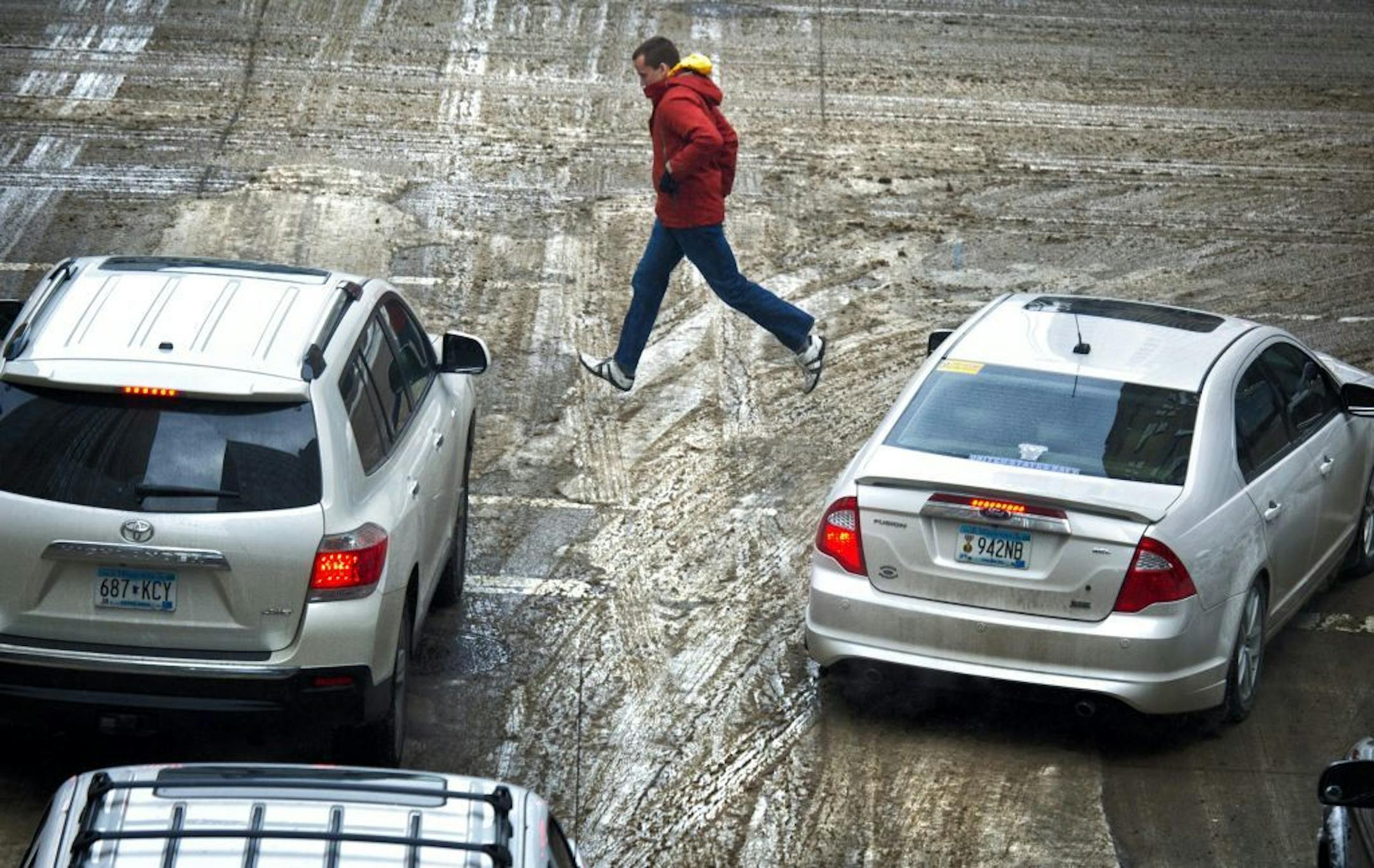
A patch of sloppy ice had wheels spinning in downtown Minneapolis on Tuesday.
A patch of sloppy ice had wheels spinning in downtown Minneapolis on Tuesday. (Star Tribune/The Minnesota Star Tribune)
about the writers

about the writers

Tim Harlow

Reporter

Tim Harlow covers traffic and transportation issues in the Minneapolis-St. Paul area, and likes to get out of the office, even during rush hour. He also covers the suburbs in northern Hennepin and all of Anoka counties, plus breaking news and weather.

See Moreicon

Mary Lynn Smith

Reporter

Mary Lynn Smith is a general assignment reporter for the Star Tribune. She previously covered St. Paul City Hall and Ramsey County. Before that, she worked in Duluth where she covered local and state government and business. She frequently has written about the outdoors.

See Moreicon

More from No Section

See More
FILE -- A rent deposit slot at an apartment complex in Tucker, Ga., on July 21, 2020. As an eviction crisis has seemed increasingly likely this summer, everyone in the housing market has made the same plea to Washington: Send money — lots of it — that would keep renters in their homes and landlords afloat. (Melissa Golden/The New York Times) ORG XMIT: XNYT58
Melissa Golden/The New York Times

It’s too soon to tell how much the immigration crackdown is to blame.