

Like so many of us, Jean O'Keefe avidly reads the obituaries.
But she does more than just read. She guards memories.
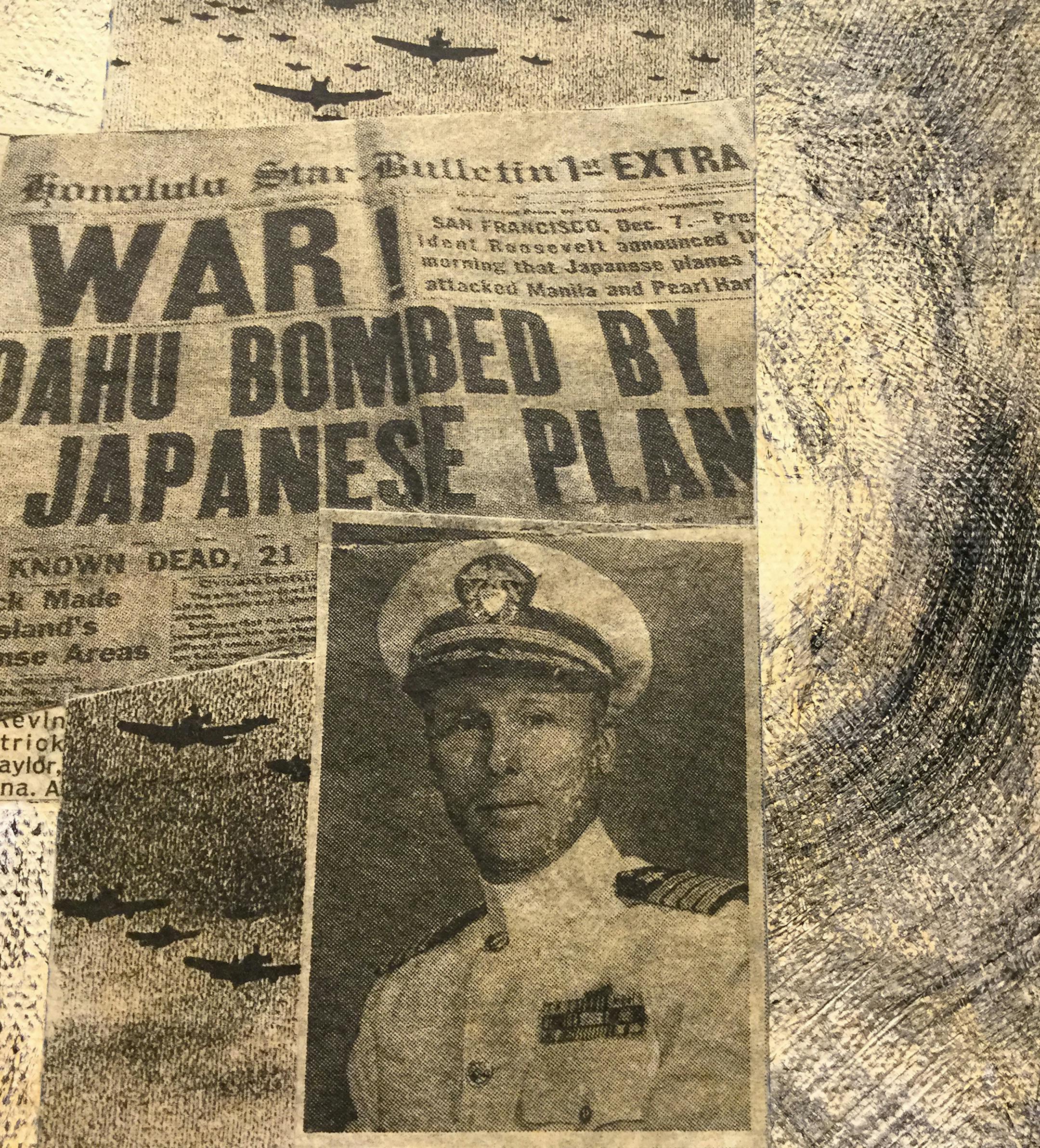
Since 2010, O'Keefe has scoured newspaper death notices for a specific kind of obituary, drawn in by photographs of smiling young men and women of another era, handsomely dressed in sheepskin-lined bomber suits, battle fatigues or Army nurse whites.
She's drawn in by tiny American flags and Purple Hearts and respectful tributes crafted by loved ones, such as "She answered the call to serve her country overseas," or "Another soldier of our Greatest Generation passed away."
O'Keefe of Hopkins has clipped out more than 200 World War II obituaries, placing them one by one into an expanding manila folder. One day she wondered, "What does one do with the collected dead?"
For O'Keefe, who's an artist, the answer is a 60- by 24-inch triptych collage titled "Arsenal of Democracy," part of a juried art show at the Hopkins Center for the Arts through Oct. 28.
The title comes from a slogan used by President Franklin D. Roosevelt in a radio broadcast in December 1940. In the speech, the president promised to provide military supplies to the Allies, while our country stayed out of the actual fight. That plan changed dramatically, of course, a year later.
The collage's panels are shaped like the letters "U," "S" and "A," weighted in heavy acrylic and designed to represent combat, O'Keefe said. The "U" is painted red to represent "blood on the beach," inspired by a red stone she picked up on Omaha Beach in 2008. "S" is swirling white, suggesting a cloudy sky filled with fiery smoke. "A" is a vibrant blue, "kind of a sky during an air battle."


