

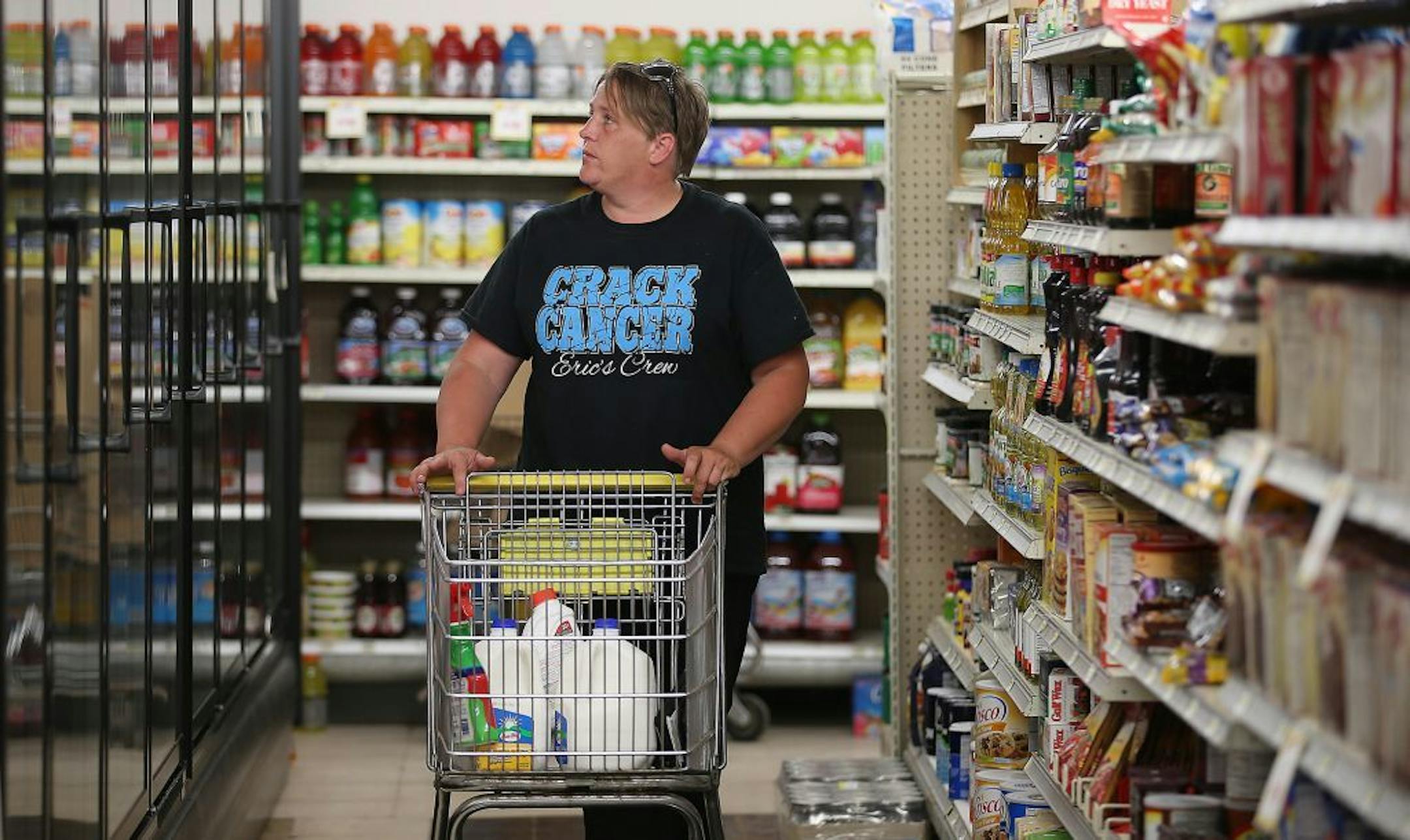
The residents of Clinton, Minn., found themselves on the front page of the Star Tribune last month, when reporter Jenna Ross chronicled their efforts to save Bonnie's Hometown Grocery because a local store preserves the town's identity and maintains easy access to fresh foods for the elderly.
But it turns out that the importance of local grocery access in maintaining a healthy population is catching on all across Minnesota.
Last week, Blue Cross and Blue Shield of Minnesota released a survey showing that healthy foods are inaccessible to many Minnesotans — and that 96 percent of respondents believe it is at least somewhat important to increase access to such foods.
"The desire to eat healthy … comes down to more than willpower," said Janelle Waldock, director of the Blues' Center for Prevention. "It also requires that healthy options are available. That isn't the reality for all Minnesotans."
The result is a state obesity rate of roughly 25 percent, up from 15 percent in 1995.
The problem of "food deserts" — low-income communities with no nearby grocery stores — has been much discussed in Minnesota. Most of north Minneapolis, and half of western and northern Minnesota, meet the criteria, which is determined by the U.S. Department of Agriculture based on a community's poverty, median income and the share of residents living one mile from a grocery store in urban areas, or 10 miles in rural areas.
Blue Cross used a simpler definition in its survey, asking Minnesotans if they lived more than 10 minutes away from a grocer. A third of respondents said they live that far away, and half admitted that the lack of easy access to healthy foods influenced their eating choices.
"A lot of this is also dependent on people's transportation options," said Stacy Housman, communications manager for the prevention center. "If you're someone who is elderly and you're no longer able to drive, or you're lower income and don't have reliable transportation, that 10 minutes can become a really, really significant barrier."


