

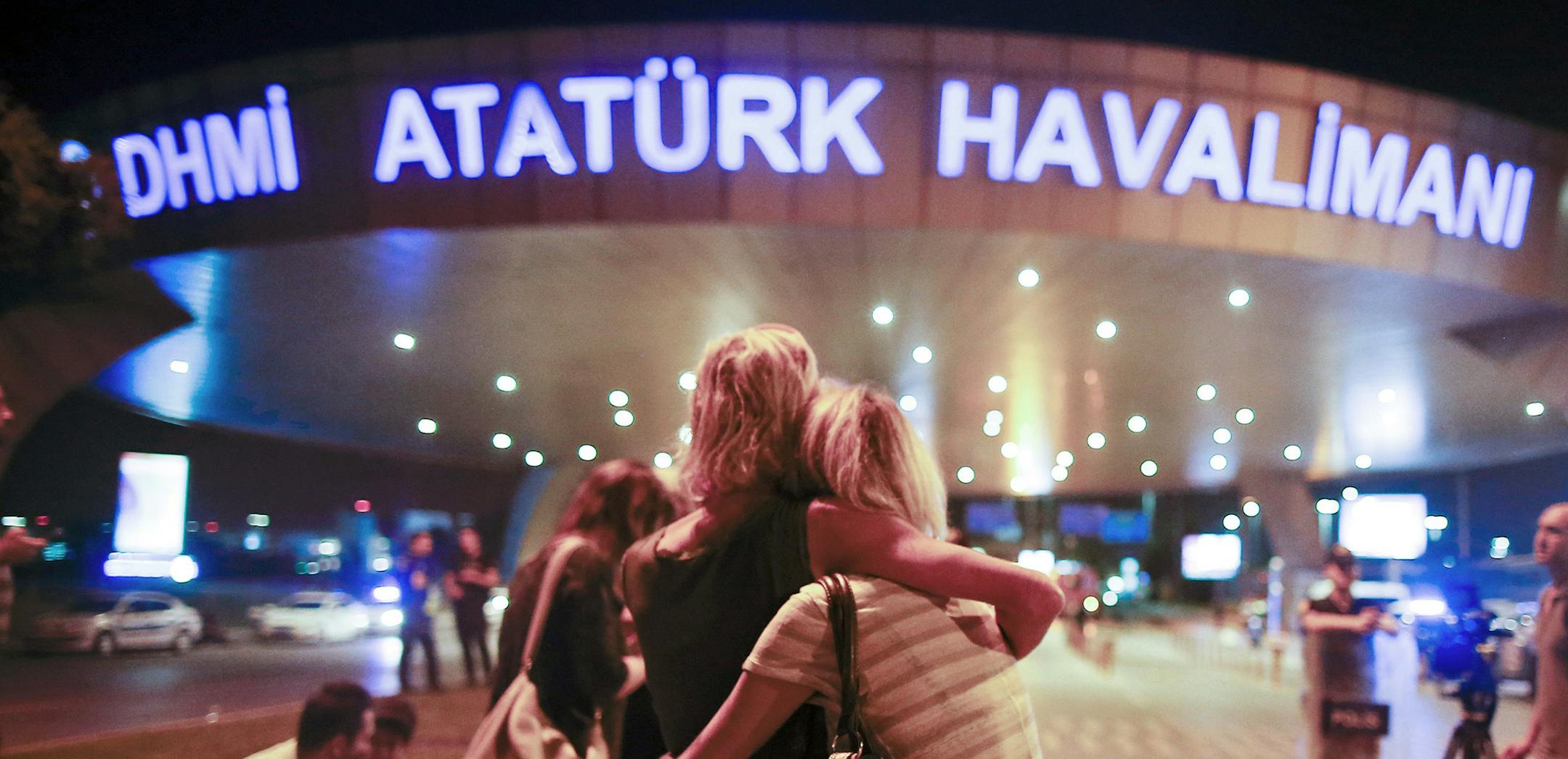
Yet another of the world's great cities lamentably became the setting of a terrorist attack Tuesday as gunfire and explosions erupted in Turkey at Istanbul's main airport.
The tourism season in this ancient city straddling two continents was in full swing when the horrifying violence shut down one of the world's major air travel hubs. The death toll stood at 41, according the latest reports, with more than 200 people injured. Though no group has yet claimed responsibility, the violence fits an abhorrent pattern of tightly coordinated attacks against "soft targets" — areas where civilians gather — that have been carried out in Paris and Brussels over the past year by the Islamic State in Iraq and the Levant (ISIL). The gunman who mowed down revelers at an Orlando nightclub this month also claimed allegiance to ISIL.
The frequency of these attacks does nothing to anesthetize the sense of outrage that accompanies each one. Innocent people were once again slain by those who put twisted ideology before human life. And again, the world grieves as personal details turn the body count into a list of beloved family members and valued colleagues.
That this happened in Turkey merits deeper consideration as the world reacts. Turkey's modern government has historically been secular, but 98 percent of the nation's population is Muslim. In choosing Istanbul for the latest slaughter, the terrorists sent a strong message to the world that they aren't just enemies of the West or of Christianity. If ISIL is indeed responsible, as the Turkish government has claimed, its fighters who seek to create an Islamic caliphate in the Middle East turned their bombs and guns on fellow Muslims.
"Make no mistake: For terrorist organizations, there is no difference between Istanbul and London, Ankara and Berlin, Izmir and Chicago or Antalya and Rome,'' said Turkish President Recep Tayyip Erdogan.
Erdogan called on countries around the world to take a firm stand against terrorism. While perhaps unsatisfying to those who seek immediate vengeance, that's the right strategy. Terrorists are a global enemy. Ending the violence requires a global response. That's a crucial point as U.S. presidential candidates roll out foreign-policy specifics and Great Britain struggles with the aftermath of its vote to leave the European Union. The so-called "Brexit" seems to embody a metastasizing, go-it-alone zeitgeist that can be seen on this side of the Atlantic in voter support for anti-immigrant, anti-free-trade and isolationist political candidates.
This shortsighted philosophy ignores global collaboration's force magnification effect in the fight against terrorism. Other countries bring resources to the table. Their representatives provide important regional expertise to the ethnic and religious divisions that are part of modern-day terrorism's toxic brew. ISIL's latest attack underscores the need not only to fortify long-standing alliances, such as that between the United States and Turkey, but to build new ones.


