

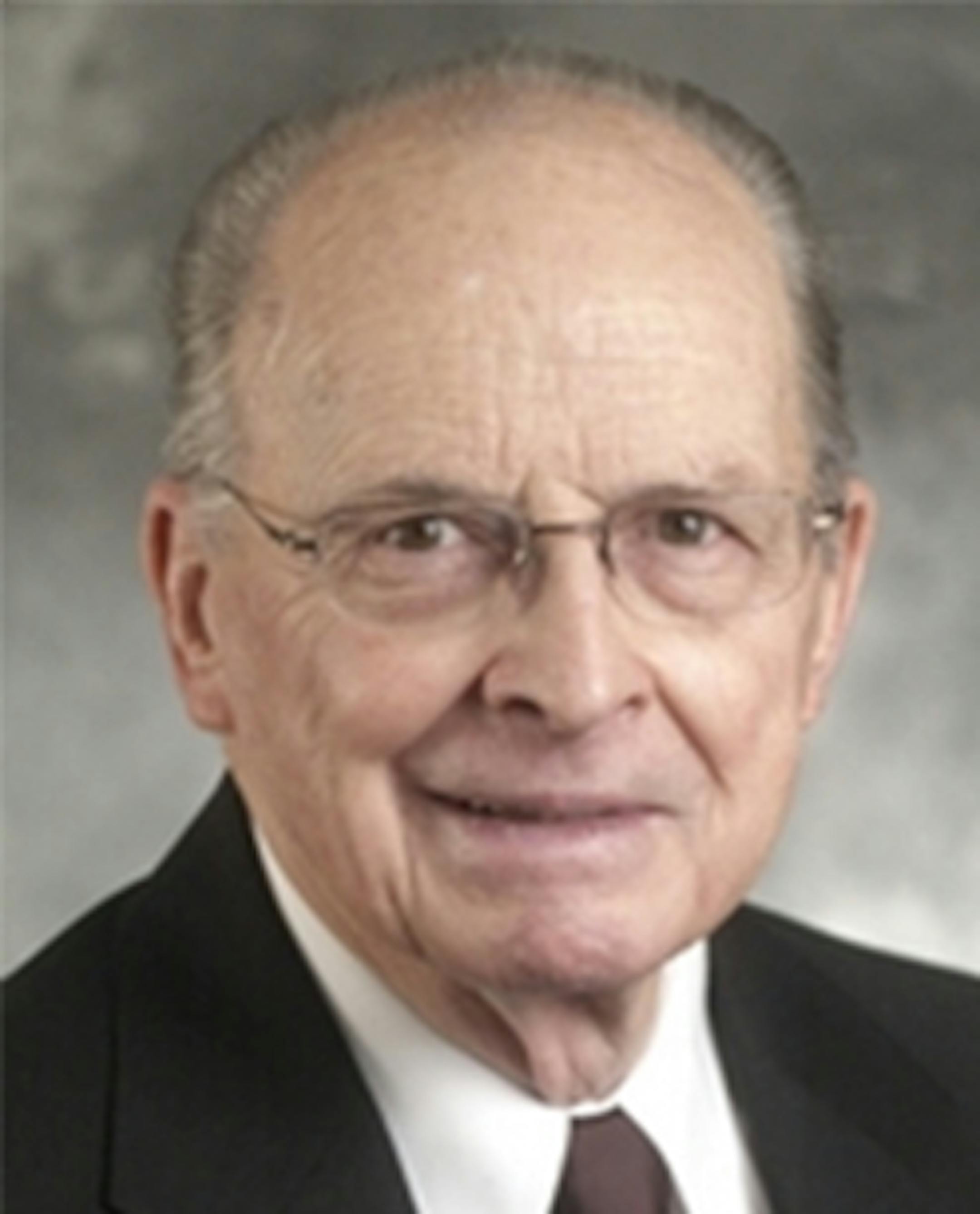
As a young man, Bernie Lieder served in the European theater of World War II, helping liberate German towns and camps after the Nazis fell.
Several decades later, after a career as a highway engineer in Polk County, Lieder was elected to the Minnesota House of Representatives, where he served for 25 years. After the Interstate 35W bridge collapsed, the Democrat from Crookston helped push through a major transportation infrastructure funding bill that included the first state gas tax in 20 years. He was the last WWII vet to serve in the state House.
Lieder, a witness to history who was known for his integrity and humility, died Aug. 23. He was 97.
"His regard for people and how he talked about people, I think that speaks volumes," said daughter Sue Dundas, of Wells, Minn. She noted her father was so well liked among his legislative colleagues that people from both parties wanted to campaign door to door for him.
Lieder was born in 1923 at his family's farmhouse in Greenwood Township, Minn. During his youth, his parents ran a barbershop, butcher shop and a bar and restaurant in Hanover. A grandson of German immigrants, Lieder grew up speaking German and put it to use later in the war, where he served as an unofficial translator between Allied military officials and German citizens and prisoners.
Near the end of the war, Lieder came upon a gruesome scene when retreating Germans burned a barn holding 1,000 prisoners.
He returned to Europe more than a dozen times and was honored in 2009 at Israel's Holocaust memorial, Yad Vashem, where he laid a wreath and offered a salute.
"There wasn't a dry eye in the house," said state Rep. Frank Hornstein, DFL-Minneapolis, who attended the ceremony with Lieder and a delegation of state lawmakers.


