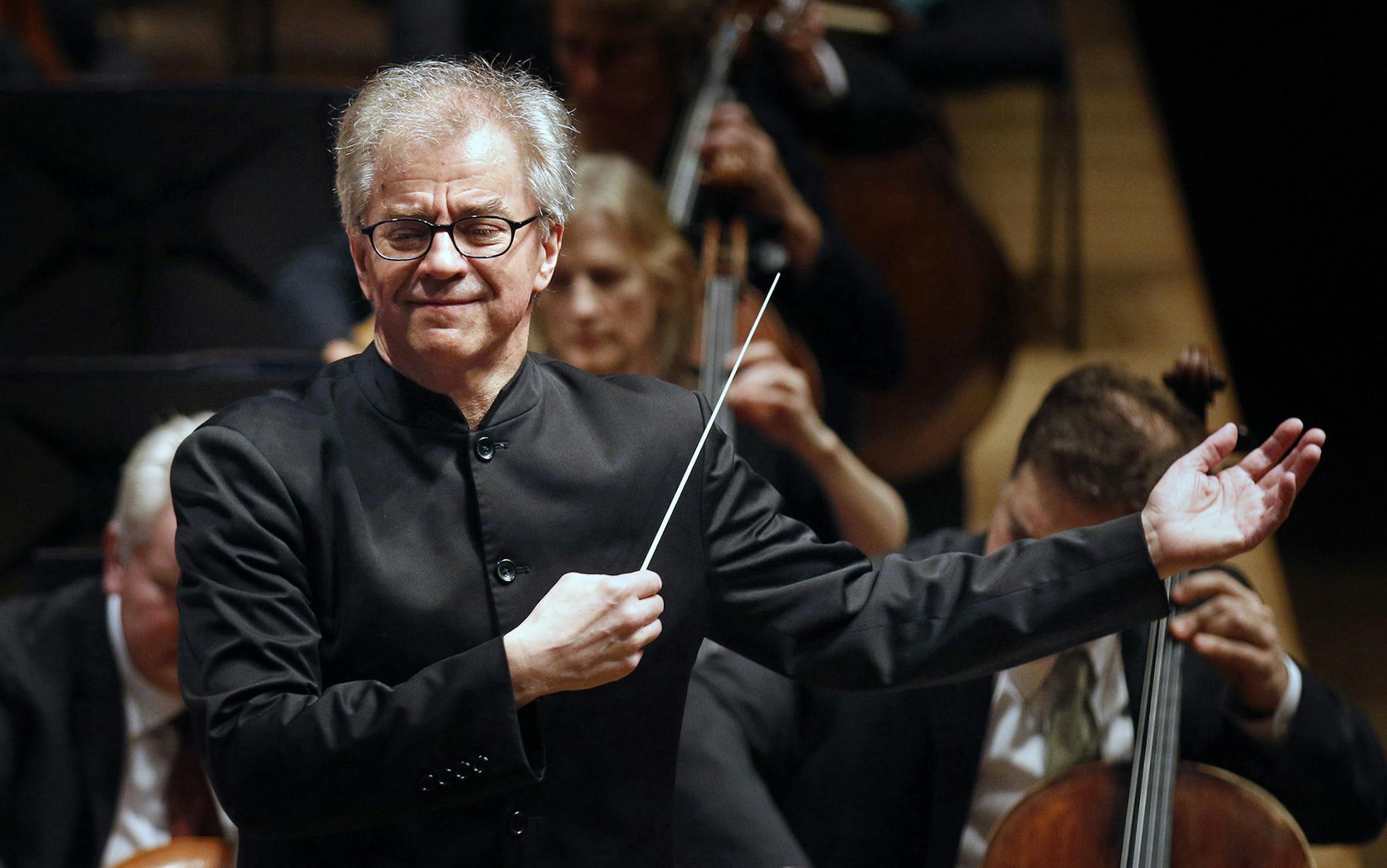
The Minnesota Orchestra's three-week Richard Strauss Festival surged into its second week Thursday morning at Orchestra Hall, offering unusual repertoire under the assured guidance — and clarinet expertise — of Osmo Vänskä.
The program included three early works — the Suite in B-flat Major for Thirteen Wind Instruments, the Burleske in D minor for Piano and Orchestra and the tone poem "Death and Transfiguration." Alongside these was one of the most tender, heartfelt works that Strauss ever wrote, his memorial for the destruction of the Munich Opera House during the last months of World War II and, by extension, the entire German cultural tradition, "Metamorphosen; A Study for 23 Solo Strings."
Pairing the Suite with "Metamorphosen" in the first half turned out to be thought-provoking. When, in fact, does genius reveal itself? Though they were composed more than 60 years apart, these works share at least some of the basics of Strauss' style — the dovetailing of phrases, the winding, chromatic lines, the rich sonorities. The Strauss we know was almost fully formed as a composer by age 20, when he wrote the Suite.
Vänskä joined the ensemble for the Suite, playing the first-clarinet part, setting tempos at the start of each movement and playing the ascending opening phrase of the second movement with special elegance. Strauss' thick scoring was kept in even, sonorous balance.
For "Metamorphosen," he presided at the podium as the string players, except for the cellos, stood around him in a half-circle. The superb playing proceeded as if animated by a single breath. Great care was taken with the overlapping phrases and textures.
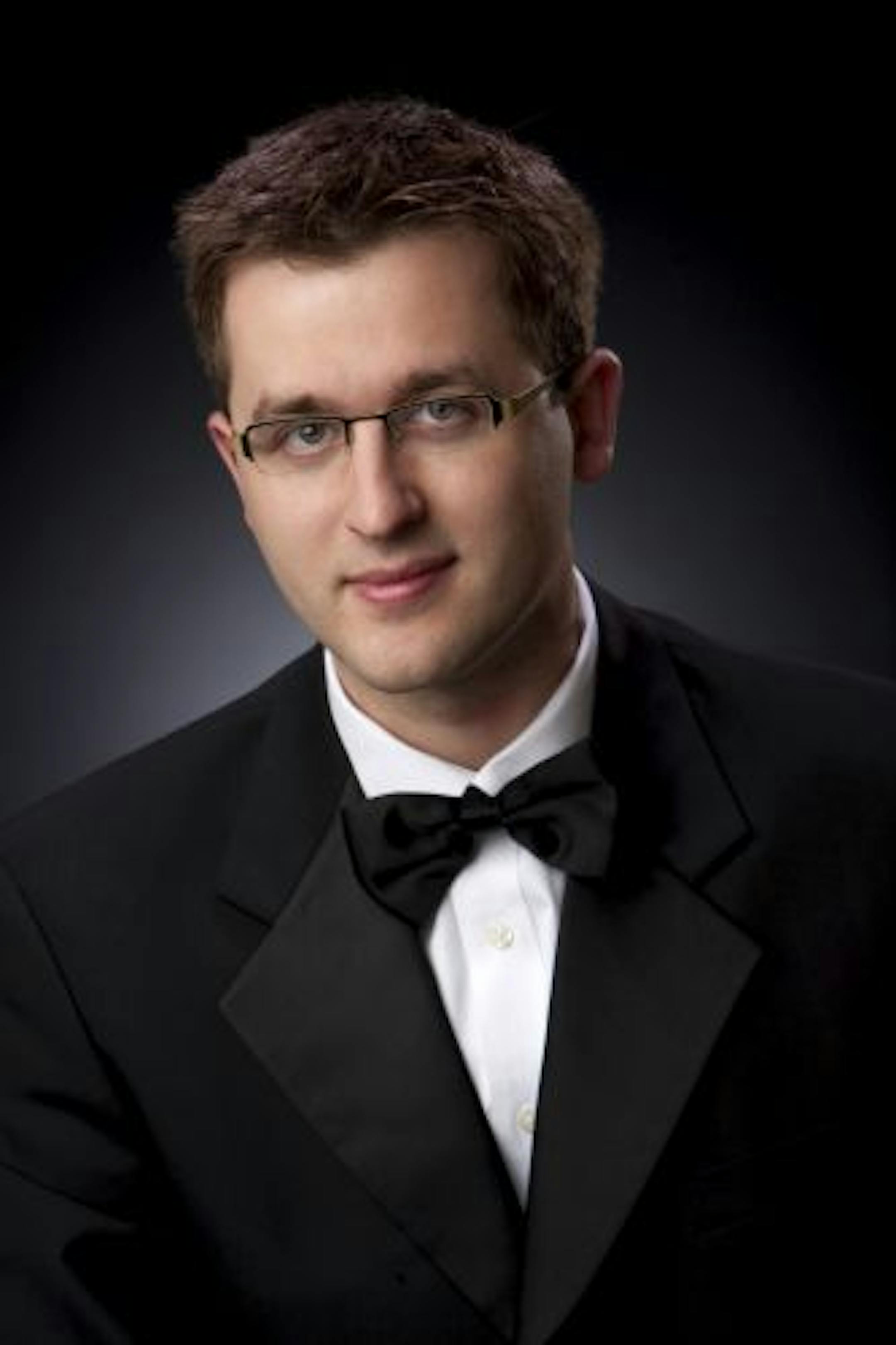
The concert leapt from one peak to another. St. Paul native Andrew Staupe, a pupil of Lydia Artymiw's at the University of Minnesota, was the immaculate and nimble soloist in "Burleske," which opened the second half. The title suggests the spirit of the work, though most pianists pound the music to a pulp as an exercise in humorless — and over-fast — virtuosity. Staupe and Vänskä set a more sensible pace, allowing the music to breathe and sparkle.
Staupe, who just turned 30, has fabulous technique. There was fire and wit in the performance but also an affectionate regard for the work's often-ignored lyrical moments. His phrasing of the big cadenza near the end was downright droll. When it was over, audience members stood and cheered.
Vänskä's impressive "Death and Transfiguration," a work entailing the death-struggle of a human soul, was refreshingly bombast-free, even in so theatrical a work. The more expressive passages, though opulently played, were projected warmly without cloying.