

Global meat consumption has more than doubled since the 1960s, and meat production is set to double again by 2050. In one way, that's a good thing — proof that rising incomes are supporting higher living standards in developing countries.
But Americans, famous for enjoying too much of a good thing, still eat three times as much meat as the global average. For solid self-interested reasons, they and other rich-world diners ought to curb their appetite.
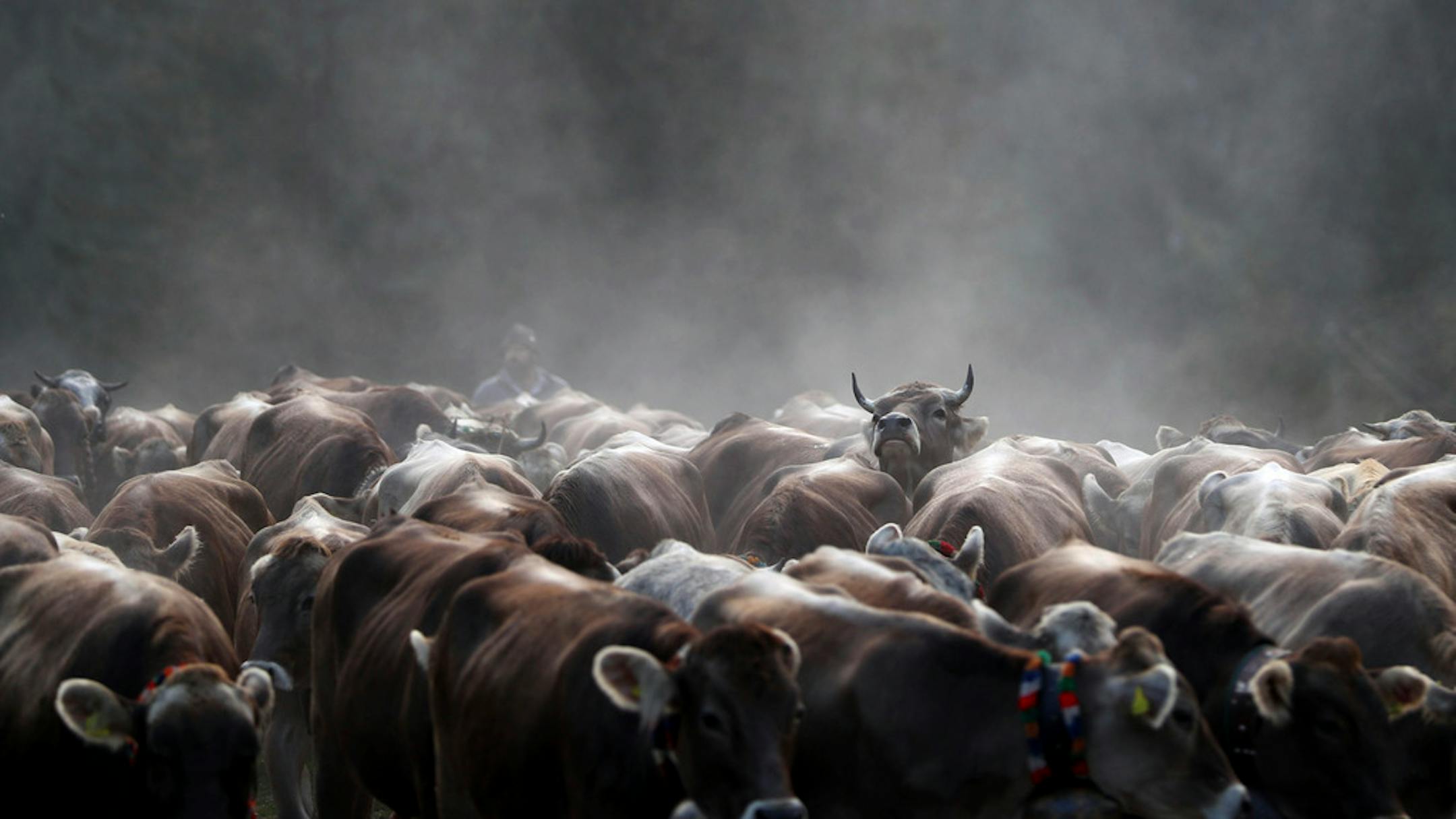
Consider this: Livestock are responsible for 12% of man-made greenhouse-gas emissions, more than the entire aviation industry. Most of that comes from just one animal: the humble, gassy cow. On a per-calorie basis, cattle are responsible for vastly more emissions than chickens and pigs, in part because their digestive systems produce methane, a potent greenhouse gas.
Cattle don't just produce gas; they also take up a lot of space. In Brazil, for example, swaths of the Amazon have been cut down to make room for cattle ranches, releasing huge amounts of trapped carbon. But Brazil is hardly the only culprit: More than a quarter of the earth's ice-free land has been set aside for grazing.
In fact, thanks to climate change, the world's system of beef production is on course to destroy itself. A warming planet is already threatening the world's food supply. After decades of decline, global hunger has begun inching up over the past five years — not coincidentally, the hottest five years on record.
If the global temperature rises by 2 degrees Celsius, scientists predict global wheat output will fall by 10%, with monthslong heat waves damaging crops that feed humans and animals alike. Heat stress will reduce meat and milk yields and could kill off thousands of cattle. Pastoralists in the developing world would be particularly vulnerable.
Curbing meat consumption voluntarily seems a better bet than letting the industry self-destruct after years of contributing to climate change. Most climate scientists agree that eating less meat would help to avert a worst-case scenario. But how much less? If all the world swore off meat, it would cut global emissions by 8 gigatons a year — roughly the same as shutting down 2,000 coal-fired power plants.
But if you're not cut out for veganism, just eating less meat would help. Adopting the Mediterranean diet, which includes poultry but limits red meat, would have about the same impact as driving 70 fewer miles each week. (It would also thrill your doctor.)


