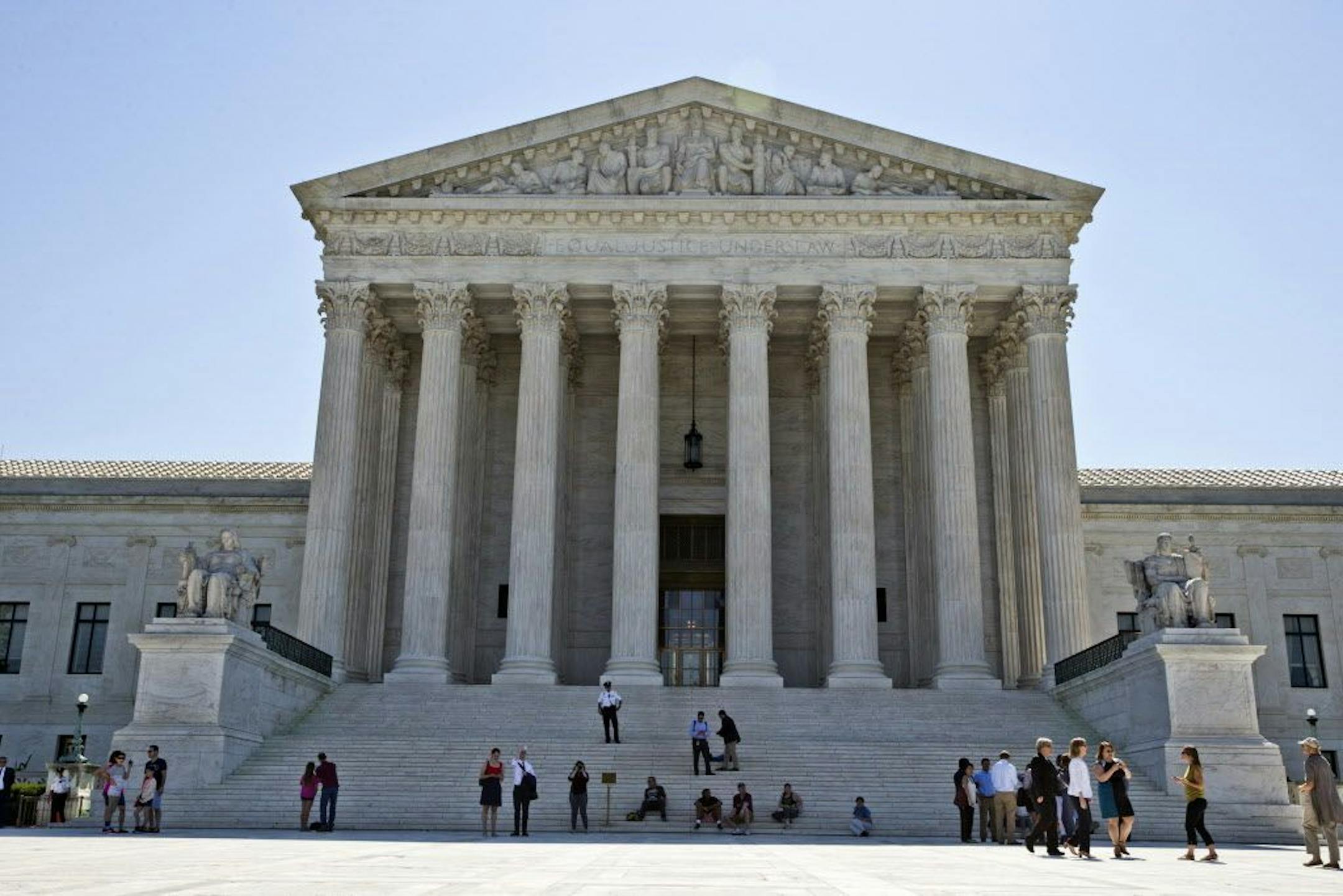
WASHINGTON – A bank fraud conviction sent Southern California resident Lawrence Eugene Shaw to federal prison and his lawyer to a Supreme Court that remains depleted by politics.
Shaw's challenge Tuesday to his 2012 conviction will start the high court's new term. It could be a term that ultimately stars a new justice and confirms the impact of the late Justice Antonin Scalia's absence.
It's a term during which justices will scrutinize North Carolina's redrawn congressional districts, Texas' death penalty practices and Miami's fair housing actions.
And it's a term that could bring some rare good fortune for Shaw, now living in a Long Beach-area halfway house as he completes his sentence.
"Lawrence Shaw has spent a lifetime chasing expectations — his father's, his 'Tiger Mom' stepmother's, his own — and feeling like a failure at every turn," his attorney wrote in a 2013 sentencing memo.
The hourlong oral argument Tuesday will deal with a technical question that only lawyers, inmates and potential defendants care much about: whether a conviction under the federal bank-fraud statute requires an intention to cheat a bank as well as deceive it.
Underscoring the case's limited audience, just one outside organization, the National Association of Criminal Defense Lawyers, filed a brief giving its view of the case. By contrast, a big challenge last term to union fees charged by the California Teachers Association drew nearly 50 such friend-of-the-court briefs.
But Shaw's low-key case also suits a court that's still shorthanded seven months after Scalia's death. With only eight justices, who tied 4-4 in the union fee case, the court's 2016 term is starting out slow.