

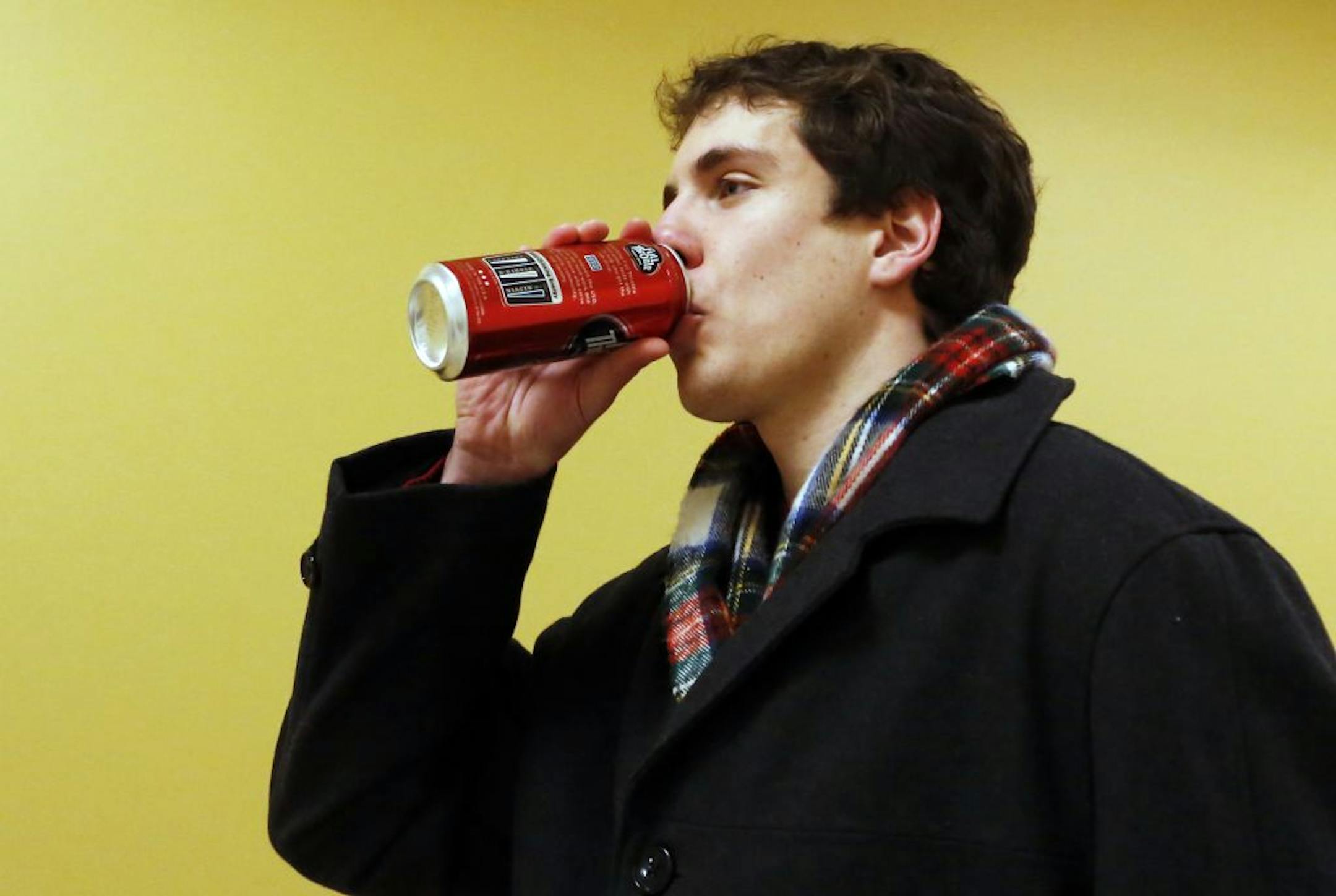
The surging consumption of highly caffeinated energy drinks has triggered concerns about health risks for children and teens, but it turns out that adult drinkers could be more likely to end up in hospital emergency rooms.
More than 5,000 patients age 40 and older visited ERs due to health problems related to energy drinks in 2011, according to a new federal report -- a number that has tripled since 2007. Twin Cities ER doctors said they were not surprised, because the young energy drinkers of the past are now older energy drinkers with chronic conditions and diseases that don't mesh well with caffeine overloads.
"Adults in some ways do better [than teens] because they're more tolerant to the drug," said Dr. Jon Cole, an ER physician and medical director of the Hennepin Regional Poison Center in Minneapolis.
"On the other hand, as they get older, they have more underlying cardiac and neurologic disorders that could be exacerbated by it."
Nationally, the number of energy-drink-related ER visits doubled in four years, from 10,068 in 2007 to 20,783 in 2011, according to a report released Wednesday by the U.S. Substance Abuse and Mental Health Services Administration. Patients sought treatment for irregular or racing heartbeats, anxiety, seizures and other problems, and, overall, visits were most common among men aged 19 to 25.
The numbers in Wednesday's report tracked the rapid growth of energy drinks in recent years. Sales of Red Bull, for example, soared to 4.6 billion cans worldwide in 2011, with consumption rising 11 percent in the United States, 35 percent in France and 62 percent in Japan.
Rare but high-profile tragedies -- such as the death of a 14-year-old girl in Maryland who drank two large cans of an energy drink -- have drawn attention to the safety risks and brought calls from lawmakers to investigate the beverages and the accuracy of their ingredient lists.
The American Beverage Association, which represents energy-drink makers, said the federal report only counts patients in the ER who consumed energy drinks, and doesn't prove that energy drinks caused all of their symptoms, especially given the number of patients who took other substances. The organization says the products are safe and that many contain the same amount of caffeine as coffeehouse coffee.


