
Eighth Minnesota turkey farm hit with bird flu

It's the second turkey farm hit in Kandiyohi, the state's largest turkey-producing county.

April 8, 2015 at 2:21AM
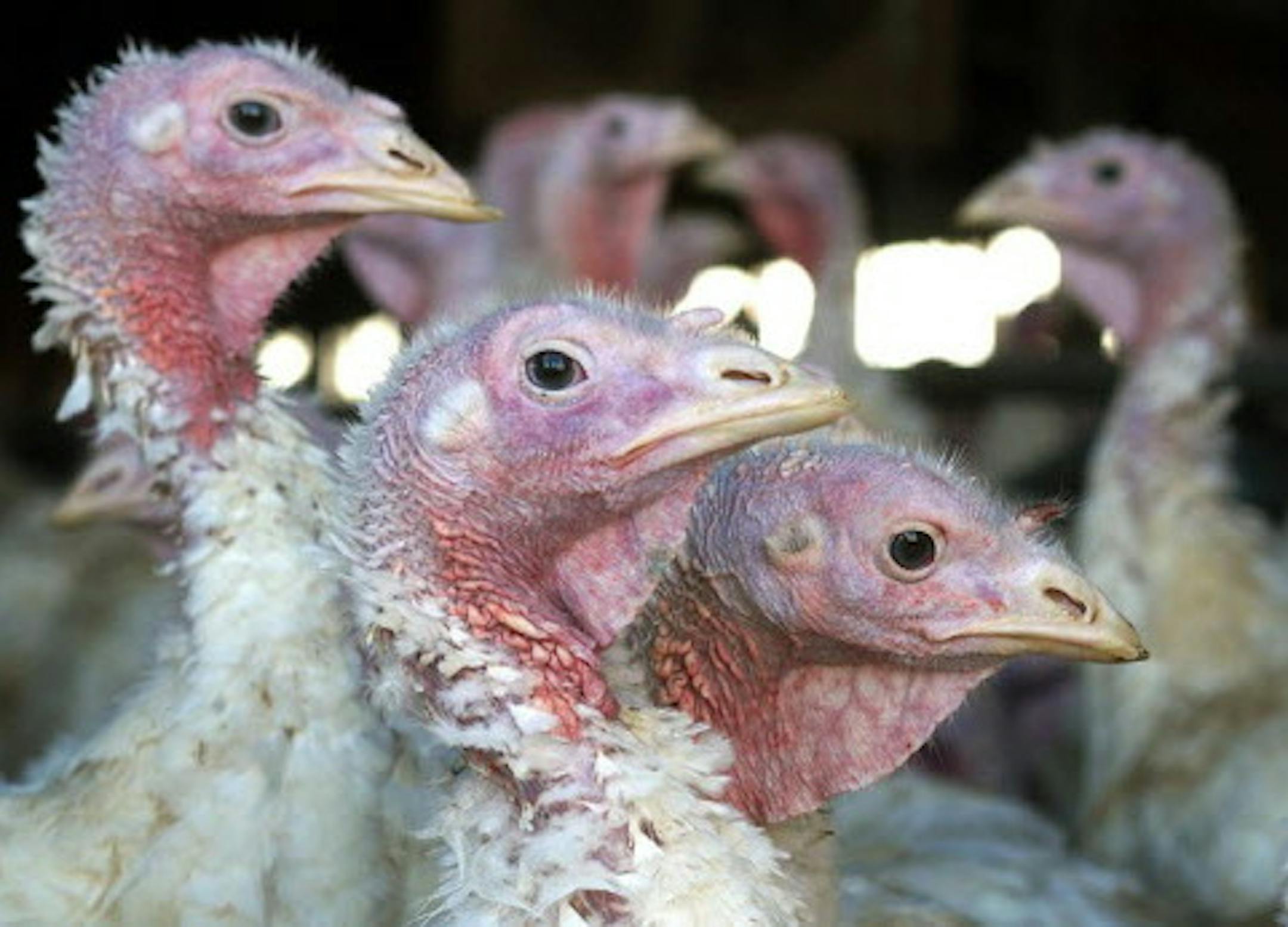
FILE - In this Nov. 2, 2005 file photo, turkeys are pictured at a turkey farm near Sauk Centre, Minn. A bird flu strain thatís deadly to poultry has shown up in a commercial turkey flock in South Dakota and a fourth turkey farm in Minnesota, state and federal agencies confirmed Thursday, April 2, 2015, bringing the total number of outbreaks in the Midwest to 9 and leading to the death of 314,000 birds since early March. (AP Photo/Janet Hostetter,File)
FILE - In this Nov. 2, 2005 file photo, turkeys are pictured at a turkey farm near Sauk Centre, Minn. A bird flu strain thatís deadly to poultry has shown up in an eighth turkey farm in Minnesota. (The Minnesota Star Tribune)

Bird flu has hit an eighth Minnesota turkey farm, the second such occurrence in Kandiyohi County, animal health regulators said Tuesday.

Highly pathogenic H5N2 bird flu has been found in a flock of 30,000 turkeys in Kandiyohi, the state's largest turkey-producing county. Turkeys in one of the farm's three barns came down with the flu. As is common in such outbreaks, turkeys in the other two barns were killed as a precaution.

The farm has been quarantined, so birds can't be moved in or out. The dead birds will be composted on site for about four weeks.

The second Kandiyohi County outbreak occurred 3 to 4 miles from another farm struck by bird flu in the past few days.

The flu is believed to be spread by migratory birds who don't get sick themselves. The virus is transmitted through wild bird feces, and is somehow making its way into commercial turkey barns, which are enclosed from the elements.

With this new outbreak, 373,000 Minnesota turkeys will have died from the flu or been euthanized to prevent the disease's spread. Minnesota, the nation's largest turkey producer, churns out about 46 million turkeys a year.

The Minnesota Animal Health Board and the U.S. Department of Agriculture have about 50 people working on stopping the outbreak and figuring out how it has spread. The industry is boosting "biosecurity" measures: limiting farm access for people and machinery, and intensely cleaning both if they go into a barn.

The flu first appeared early last month at a Pope County turkey farm, but has surfaced at seven more operations in the last 10 days. The state's animal health board said state law doesn't allow the release of farm names or exact locations.

The bird flu also has been reported recently in eastern South Dakota, Arkansas and Missouri, and earlier this year in several western states. While chickens can get the H5N2 bird flu, turkeys have been much more susceptible to the virus.

The H5N2 bird flu poses a low health risk to people, health experts say, though workers at afflicted turkey farms are being monitored by state health officials. Birds from affected flocks do not enter the human food system, as they are destroyed, the animal health board says.

Mike Hughlett • 612-673-7003

(The Minnesota Star Tribune)
about the writer

about the writer

Mike Hughlett

Reporter

Mike Hughlett covers energy and other topics for the Minnesota Star Tribune, where he has worked since 2010. Before that he was a reporter at newspapers in Chicago, St. Paul, New Orleans and Duluth.

See Moreicon

More from Minnesota Star Tribune

See More
card image
Provided/Sahan Journal

Family members and a lawyer say they have been blocked from access to the bedside of Bonfilia Sanchez Dominguez, while her husband was detained and shipped to Texas within 24 hours.

card image