

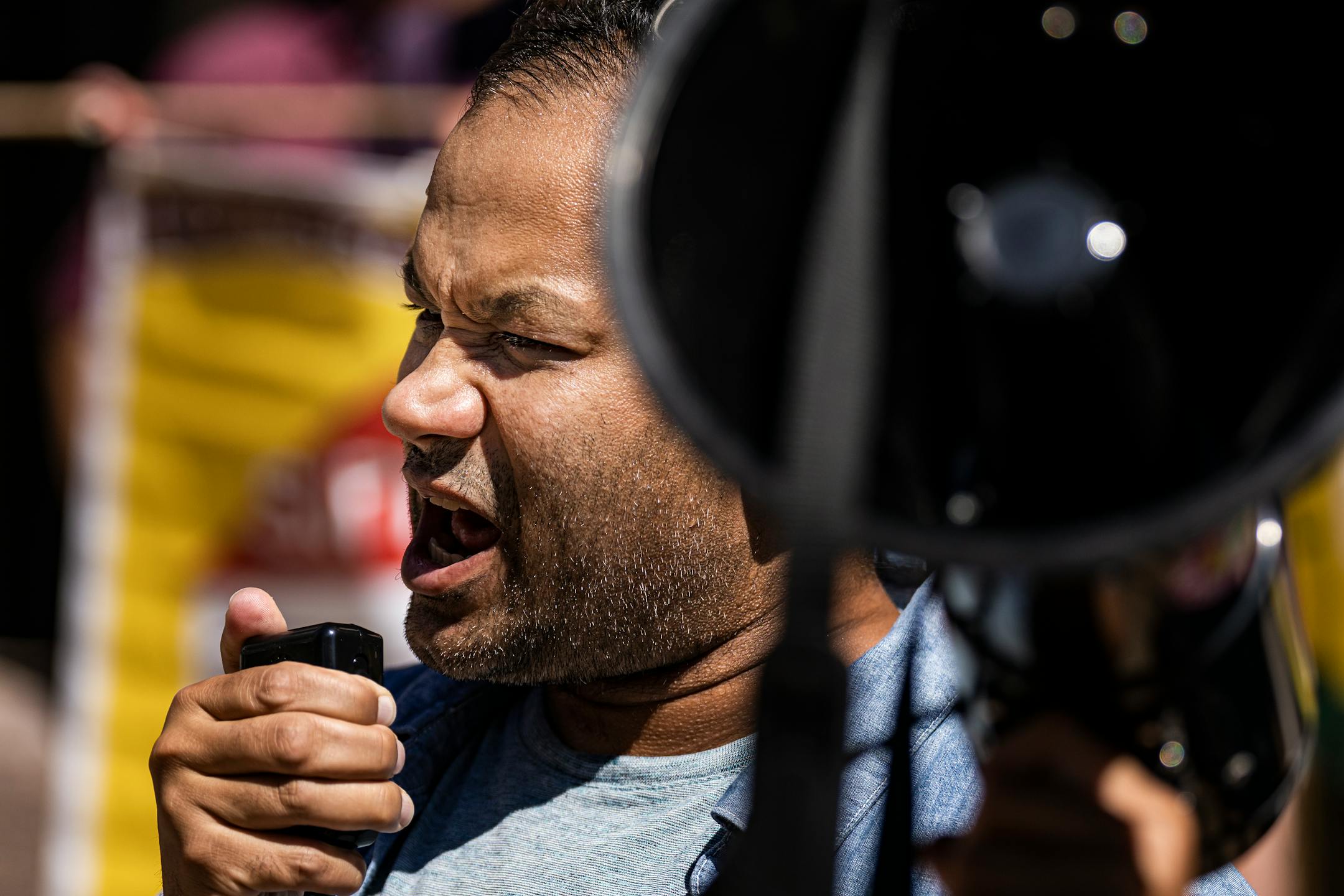
More than a month after Minneapolis officials lauded a hard-fought compromise over a contentious development project in south Minneapolis, environmental activists blocking the city's plans want to make clear: No deal has been struck, their lawsuit continues and so do negotiations.
"We are continuing to fight for our neighborhood's health," said East Phillips residents Steve Sandberg on Thursday during a rally of several environmental organizations on the steps of City Hall. "We want to correct the impression that was given off by the city that we have agreed to something that the city is proposing. We're still in negotiations and we will continue that, but we have not received the details of the city's plan."
The city has wanted to concentrate Public Works operations in the centrally located East Phillips neighborhood since 1991 so that staff can get around more efficiently on their routine maintenance of city infrastructure.
In 2010, it completed the first phase of that Public Works campus at 1901 E. 26th St. When the owners of the defunct Roof Depot warehouse — at Longfellow Avenue and E. 27th Street — decided to sell in 2016, the city leapt at the chance to complete the second phase: a yard for water distribution maintenance employees, their equipment and fleet.
A group of longtime East Phillips residents objected. Organized as the East Phillips Neighborhood Institute (EPNI), they had another vision for the Roof Depot warehouse — an urban farm incorporating affordable housing, aquaponics and small business retail that required saving it from demolition.
After years of split City Council votes, tens of millions of public money spent and no significant advancement on either course of action, council members celebrated a promising compromise proposal in June.
Mayor Jacob Frey and Council Members Jason Chavez and Emily Koski came up with an offer they hoped the East Phillips community would accept: exclusive development rights to 3 acres for an urban farm as long as EPNI dropped its environment lawsuit against the city and allowed the Public Works water yard to be built next door along with a job training center that would prioritize opportunities for residents living within a 2-mile radius.
"It has been such a journey, such an effort to get to this point today," said Council Member Andrew Johnson before the council's unanimous vote to approve the offer on June 28. "It's remarkable because I cannot think of a big win like this where we were at such an impasse with community over such a contentious issue, and where we're now at a huge compromise and a win-win situation with the parties involved."


