

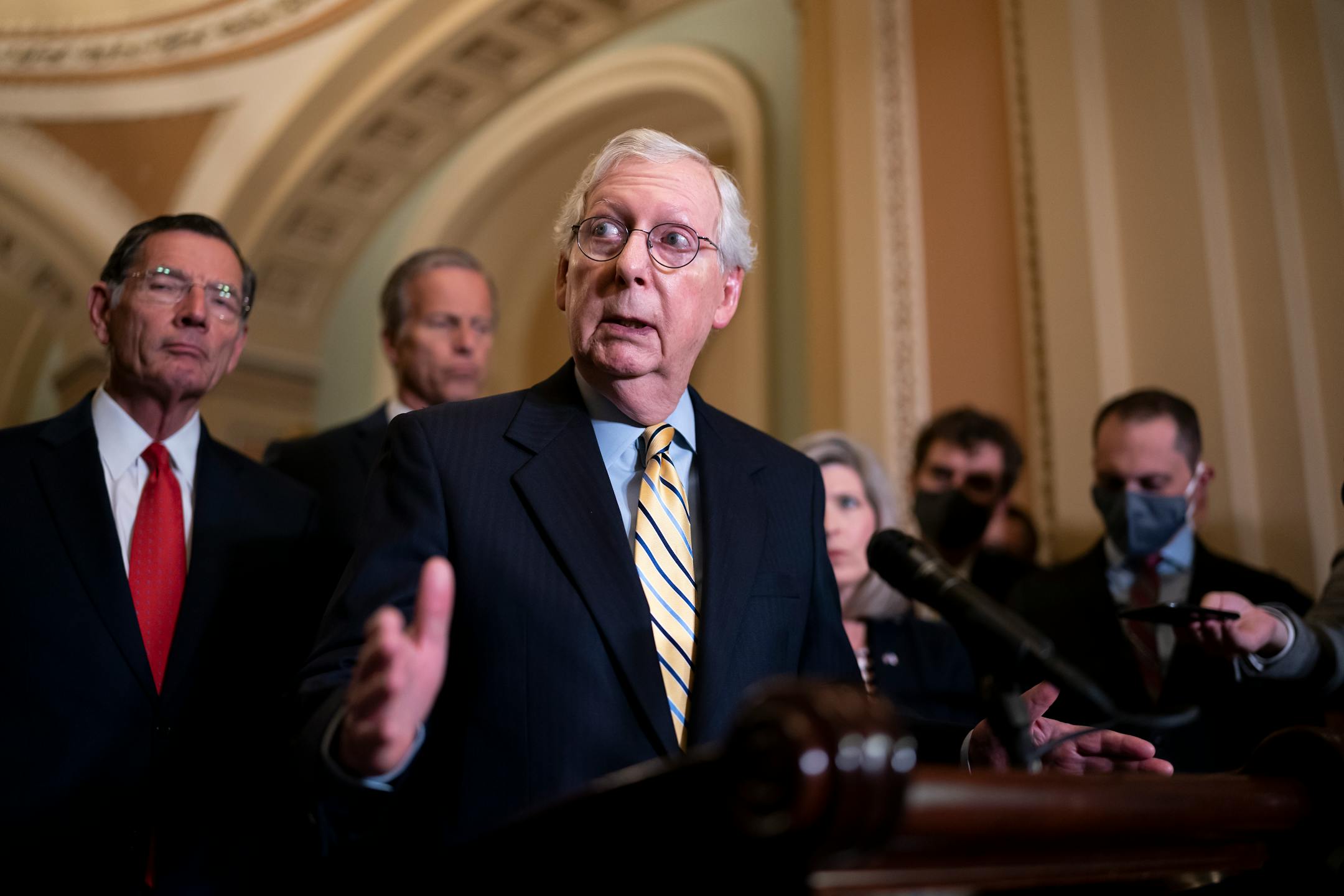
John Thune of South Dakota, the second-ranking Senate Republican, says that "the debt limit needs to be increased." He also says Republicans are not going to vote for it. He thinks the Democrats can and should do it on their own. This stance makes political sense, but no other kind, which suggests that the debt limit should be repealed.
The conventional view, which Thune clearly accepts, is that failing to raise the debt limit would cause the federal government to default on its obligations in short order, with large economic costs. Without the increase, money to pay the government's bills could run out in October.
But if you look at the issue from the perspective of Thune and the other Republicans, you can see why Democratic efforts to shame them into voting to raise the debt limit are failing.
There is a long bipartisan tradition of opposition parties inveighing against the irresponsibility of the party in power for debt-limit increases.
"America has a debt problem and a failure of leadership," said Sen. Barack Obama in 2006. "Americans deserve better." Sen. Joe Biden voted with him as Republicans, then in the majority, raised it on their own. When Obama and Biden became president and vice president, their view of which stance on the debt ceiling was responsible changed dramatically.
There is also a tradition of bipartisan deals that enable an increase in the debt limit. In 2011, Republicans controlled the House and Democrats the Senate and White House. They negotiated an increase in the debt limit paired with a reduction in the growth of federal spending. In 2019, with President Donald Trump in office, both parties were in a freer-spending mood. They agreed on spending increases and raised the debt limit.
From Thune's point of view, what's on offer today looks a lot worse. Republicans are being asked to give up the opportunity to take shots at Democrats over the debt-limit increase without getting any policy victories in return. The Democratic leadership in Congress and the White House is seeking to enact $3.5 trillion in spending increases and nearly as much in tax increases on a party-line vote. That's after passing a $1.9 trillion spending bill, also on party lines, in March.
The partisan argument over whose decisions made it necessary to raise the debt ceiling now is a wash. The Democrats say, accurately, that more of the national debt was incurred during the Trump presidency than during Biden's. The Republicans can retort, also accurately, that Biden's policies have required a bigger and earlier increase in the limit. They note, as well, that Democrats could have structured their "budget reconciliation" bill, which they are planning to pass with 51 Democratic votes, to include an increase in the debt limit. They chose not to include it because they want to share the blame for it with Republicans.


