

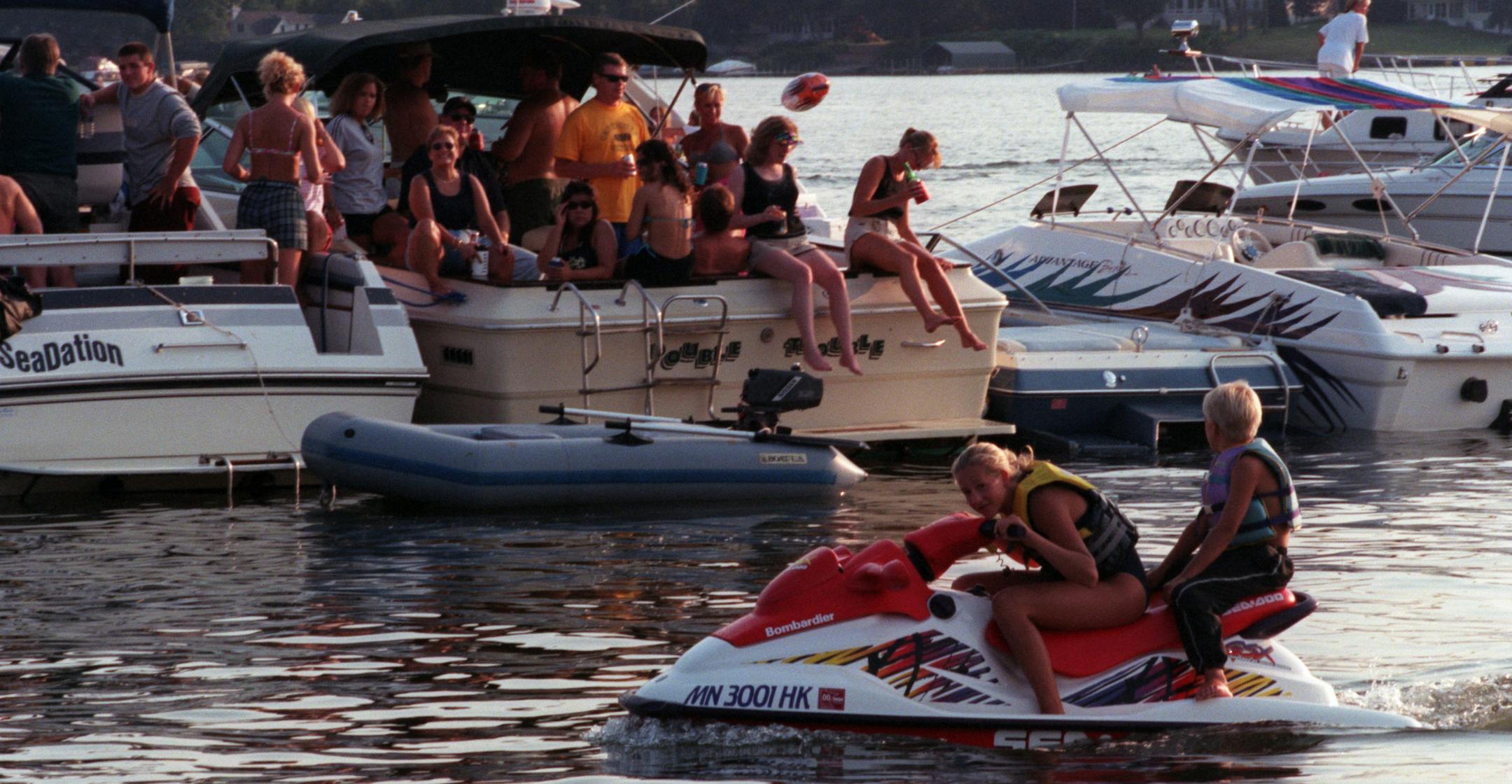
As the ice starts to recede on Lake Minnetonka and boaters prepare to return to the Twin Cities' busiest lake, community leaders are stepping up enforcement of everything from littering to intoxicated boating, after unruly, speeding boaters caused damage and safety concerns last summer.
The Lake Minnetonka Conservation District, which regulates use of the lake, unanimously approved a $33,000 grant Wednesday night to the Hennepin County Sheriff's Office Water Patrol Unit to have a dedicated deputy patrolling the lake during peak boating hours starting in May.
It's part of broader efforts to boost enforcement, with a new Water Patrol satellite station at Shorewood Yacht Club to better patrol the lower lake.
"It will hopefully be something that will make a meaningful difference," said Dan Baasen, chairman of the conservation district's board.
The Water Patrol, which has eight deputies, responds not just to sprawling Lake Minnetonka but to 103 other lakes and three rivers in Hennepin County, dealing with everything from water rescues to routine patrols. But that means that sometimes as few as one deputy is available to staff the 14,000-acre lake, along with special deputies, who are civilian volunteers.
High traffic spots like Big Island, a popular place for boats to tie up and party, can be far apart. And about 10,000 boats dock on Lake Minnetonka and 61,000 boats launch into the lake, according to a 2010 study. With more events being held on and around the lake throughout the year, leaders of the conservation district want to make sure it stays safe, putting enforcement "one notch higher than the minimum requirement," said Gabriel Jabbour, a former Orono mayor who's on the conservation district board.
"We're trying to keep the standards up," he said. "It's money well spent."
'Striving for excellence'
Jabbour, who owns four marinas on Lake Minnetonka, noted the high volume of trash last year on the lake. And record rainfall led to high water levels, spurring an unprecedented no-wake restriction for the entire lake for almost two months, which slowed boating on the normally crowded lake.


