

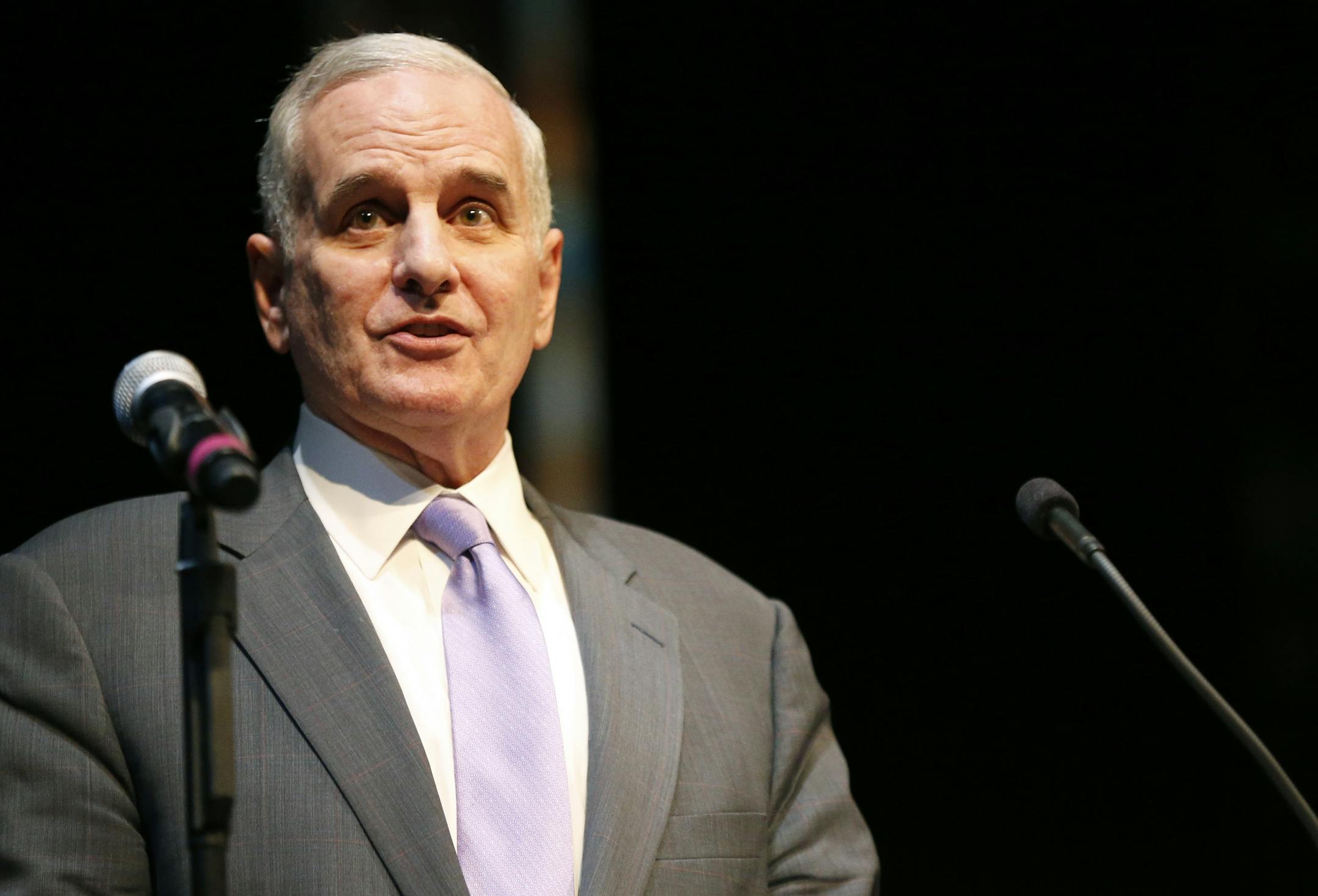
Child care providers who care for children in their homes and personal care assistants who take care of elderly and disabled people will be able to vote on unionization under a bill signed Friday by Gov. Mark Dayton.
The DFL governor signed a bill that became a major point of contention in the last hours of the Legislative session, but which was a top priority of unions that are part of the DFL coalition.
It does not unionize care workers, but it allows them to vote on whether to represented by unions.
It affects in-home child care providers, both licensed and unlicensed, who care for children receiving state subsidies; as well as personal care attendants, or PCAs, who are hired by the people they care for, often their relatives.
Two unions have been organizing in-home providers for years: the American Federation of State, County and Municipal Employees, or AFSCME, and the Service Employees International Union, or SEIU.
Controversy focused on child-care portion of the bill because these providers run their own businesses and negotiate rates directly with parents. An active group of child care providers fought the bill, along with the Republican minority in the House and Senate.
Local and national conservative organizations are promising lawsuits to challenge the new law before it can take effect.


