

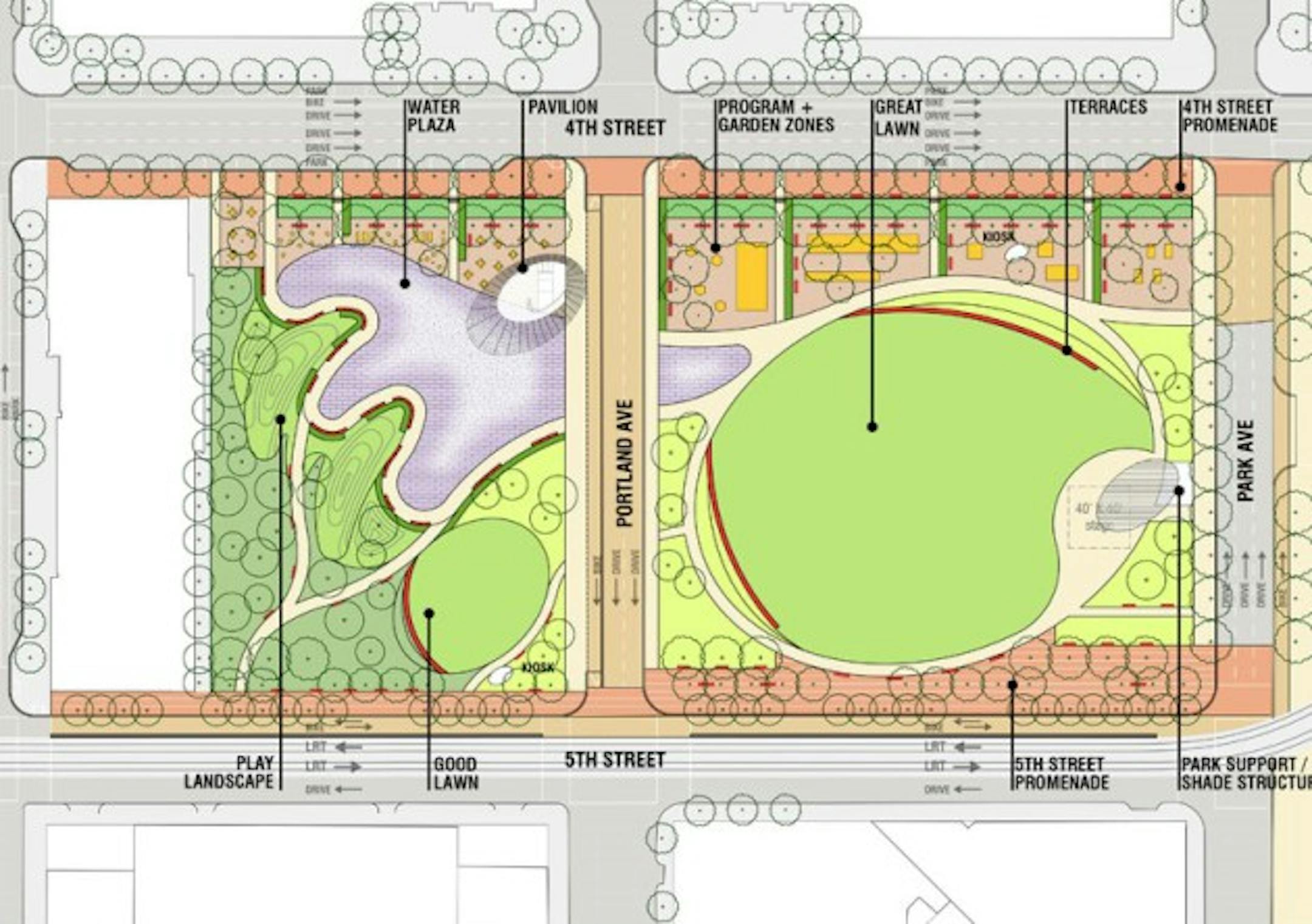
Above: A schematic of the proposed amenity-laden 1.66-block park beside the new Viking Stadium in downtown Minneapolis. (Hargreaves Associates)
Minneapolis' support for the ornate downtown park designed by prominent national consultants will ultimately be contingent on securing the funding to maintain it, the City Council decided Friday.
The last-minute condition convinced a wide majority of the council to support the concept for a new park that will sit in the shadow of the Minnesota Vikings stadium and Wells Fargo's new downtown campus. There are still plenty of challenges ahead, most prominently the need to raise $22 million for the park's construction.
But the council voted to kick in $2 million toward that total on Friday for the initial design, reversing earlier expectations that the city would be reimbursed for those design costs. Council members made the decision to satisfy donors who wanted the city to commit funding to the design plan, the mayor's office said this week.
The 11-2 vote gives city backing to Hargreaves Associates' vision for the urban park, which includes trees, a pavilion, grand lawns and a water plaza. But if there's not enough money to maintain it, the city will approve a new, scaled-down concept.
"My concern all along is that we not end up with something that we can't maintain," said Council Member Lisa Bender, who sponsored the amendment for the backup, smaller plan. "And that we not stick Minneapolis taxpayers with a huge maintenance bill."
Staff said earlier this week that the park could cost $1.25 million a year to operate and maintain. Some of that will initially be covered from the fundraising campaign, but long-term funding options that have been discussed include assessments on nearby properties and a new fee on parking facilities.
Some took the opportunity to highlight the city's support for the park project, which has helped spur private development without committing new property tax subsides. The land clearance and basic park construction were made possible by $18.8 million in debt issued by the city, tied to expected revenue from a nearby parking ramp.


