

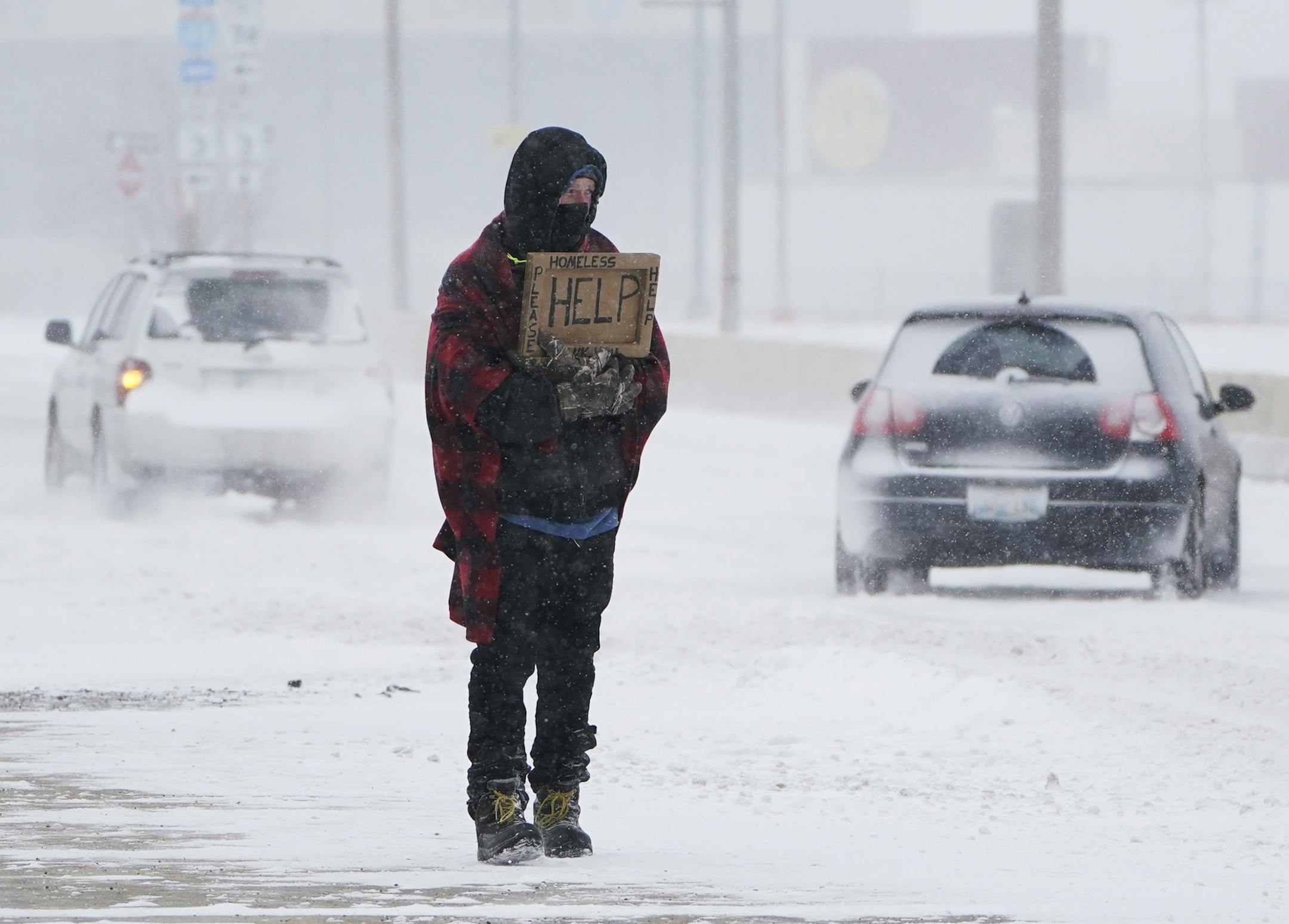
The notion that the global phenomenon of a hotter planet could be sending a shocking cold wave into the southern United States might seem nonsensical. And every cold snap can be counted on to elicit quips and stunts from those who deny the science of climate change.
But the weather patterns that send freezing air from the polar vortex plunging all the way to the Gulf Coast could, like other forms of extreme weather, be linked to global warming — which is why climate scientist Katharine Hayhoe prefers the phrase "global weirding."
Winter storms are influenced by many factors, including the natural variability that affects all weather systems. The planet's warming could be part of that icy blend, even while climate change is making winters milder overall.
The air that usually sits over the Arctic is now sweeping down South because of changes to the jet stream, the high-level air current that circles the Northern Hemisphere and usually holds back the frigid polar vortex.
There is research suggesting that Arctic warming is weakening the jet stream, allowing the cold air to escape to the south, especially when a blast of additional warming strikes the stratosphere and deforms the vortex. The result can be episodes of plunging temperatures, even in places that rarely get nipped by frost.
Of course, bitter cold from the polar vortex has long been a part of the North American weather picture. Amy Butler, a research scientist at the NOAA Chemical Sciences Laboratory, has said that she has yet to find any long-term trend in polar vortex disruptions, which "occur naturally even in the absence of climate change."
But Judah Cohen, director of seasonal forecasting at Atmospheric and Environmental Research, a company that provides information to clients about weather- and climate-related risk, has identified general trends in winter storms. He was an author of a paper last year in the journal Nature Climate Change that found a sharp increase in Northeast winter storms over the decade from 2008 to 2018.
"Severe winter weather is much more frequent when the Arctic is warmest," Cohen said, adding, "It's not in spite of climate change but related to climate change."


