
Census report: Slow economy puts young Minnesota lives on hold

Even as Minnesota outpaces the nation when it comes to jobs, prospects are tough for those in their 20s, a new census report says.

September 20, 2012 at 1:59PM
icon1:34
(David Brewster/David Brewster)

The Great Recession left a hangover that has been particularly harsh for Minnesota's young adults, who continue to experience high levels of unemployment and poverty while delaying major life events such as moving out on their own and getting married.

Yet all isn't lost in the land of twentysomethings. Census data released Wednesday hint that hardships might have bottomed out in 2011. The unemployment rate for 22- to 24-year-olds, for example, edged down last year, though it remains well above prerecession levels.

"There appears to be a little bit more work for this group," said Susan Brower, the Minnesota state demographer. "And this is a group that has been hit hard by the recession."

One bright sign in Wednesday's report was a sharp increase in health insurance for young adults. The rate of insurance coverage jumped from 78.8 percent in 2009 to 82.6 percent last year for Minnesotans ages 19 to 25. The increase, however, was largely due to the 2010 federal health care law, which allows more adult children to stay on their parents' policies, and not to young adults' obtaining coverage on their own through employers.

The circumstances of young adults is but one aspect of the rich data collection of the Census Bureau's American Community Survey, which measures everything from household formation to commuting time. Wednesday's report also showed that adjusted median income in Minnesota held steady between 2010 and 2011, which was better than the 1.3 percent decline nationally. Minnesota's overall poverty rate remained among the nation's lowest, and its child poverty rate didn't increase, for the first time in five years.

Brower singled out the figures for young adults because the recession had been especially damaging to employment and income for that age group.

The share of 22- to 24-year-olds who were not seeking work in Minnesota, for instance, rose from 13 percent in 2007 to nearly 17 percent in 2010, before leveling off last year.

Young adults are also delaying moving out on their own. The latest data show that more than half of Minnesota's 18- to 24-year-olds live with their parents. And the median age of Minnesota men getting married for the first time has increased from 27.3 in 2007 to 29 last year. For women, the median age increased from 25.8 to 27 over the same period.
Familiar bedroom

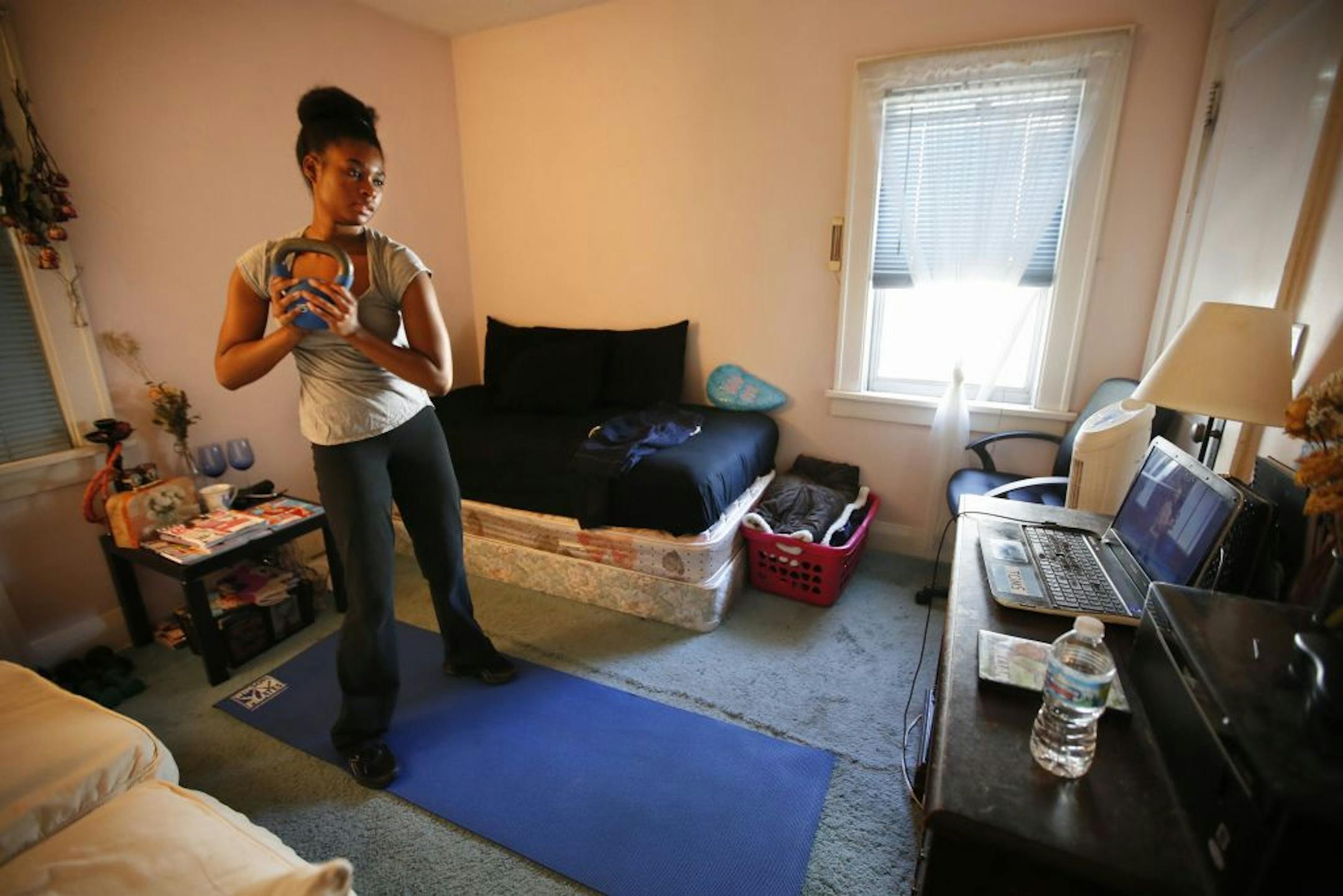
Angelica Carol has heard there are more jobs, but nearly a year after she graduated in communications from the University of St. Thomas, she still finds the market pretty lean. A part-time promotions job at area restaurants for the Minnesota Vikings is not enough for the 23-year-old to rent her own place, so she remains living in her parents' home and sleeping in her old room on her twin bed.

"I'm not sure if it's the economy," she said. "People say ... there are more jobs out there to be had. I'm not seeing it. I'm looking every day on LinkedIn, Craigslist, the St. Thomas jobs board, and I'm just not seeing a lot of things that are a fit for me."

After five years at the University of Wisconsin-River Falls, Linzi Hansen said she is ready to test the job market. She said she hopes all of her efforts, including two part-time marketing jobs in western Wisconsin and a waitressing job in Afton now, will give her an edge.

"Everybody is doing what's expected," said Hansen, who hopes to find a marketing job in Fort Collins, Colo., where she has friends. "You have to do something to make an employer want to hire you."

Jobs are available for young adults who understand that networking is critical and that they must pursue internships and summer jobs that align with their career goals, said Torrion Amie, director of advising and counseling at Normandale Community College in Bloomington.

His message about economic realities shocked some of the freshmen students in his classroom Wednesday morning.

"Half an hour later, I got six e-mails saying, 'Hey, I need to come talk to you,'" he said. "And I'm e-mailing back: 'Yes, you do.'"

Jobs in students' areas of interest are harder to come by, though. Metro State University in St. Paul has reported a dip in students finding jobs in their related areas of study. Those who do find related jobs need six months of searching on average before they get hired.

Patient parents

That sounds familiar to Sheila Schoon of Frazee, Minn., who said her daughter's full-time job isn't related to the veterinary technician degree she recently earned and doesn't pay enough for her to move out. Schoon said in hindsight it might have been a mistake to rush her daughter straight from high school into college.

Carol is now facing the same dilemma, whether to turn her career hunt toward other professions. She wonders whether she should have stuck it out in one of her internships or ignored people who persuaded her to change her focus in college from journalism to general communications.

Her parents have been patient, she said, but she knows they want her to expand her search for work. She applied for a dream marketing position at a large company but recently sent applications for retail and administrative jobs as well. The path to her preferred career, she said, might just require a start somewhere unexpected and then some hard work.

"If you're washing cars at a car wash, maybe a year from whenever you start you'll be running the marketing for that company," she said. "It's about working your way up."

Jeremy Olson • 612-673-7744

With only a part-time job almost a year after she graduated from the University of St. Thomas, Angelica Carol can't afford her own place.
With only a part-time job almost a year after she graduated from the University of St. Thomas, Angelica Carol can’t afford her own place. (Star Tribune/The Minnesota Star Tribune)
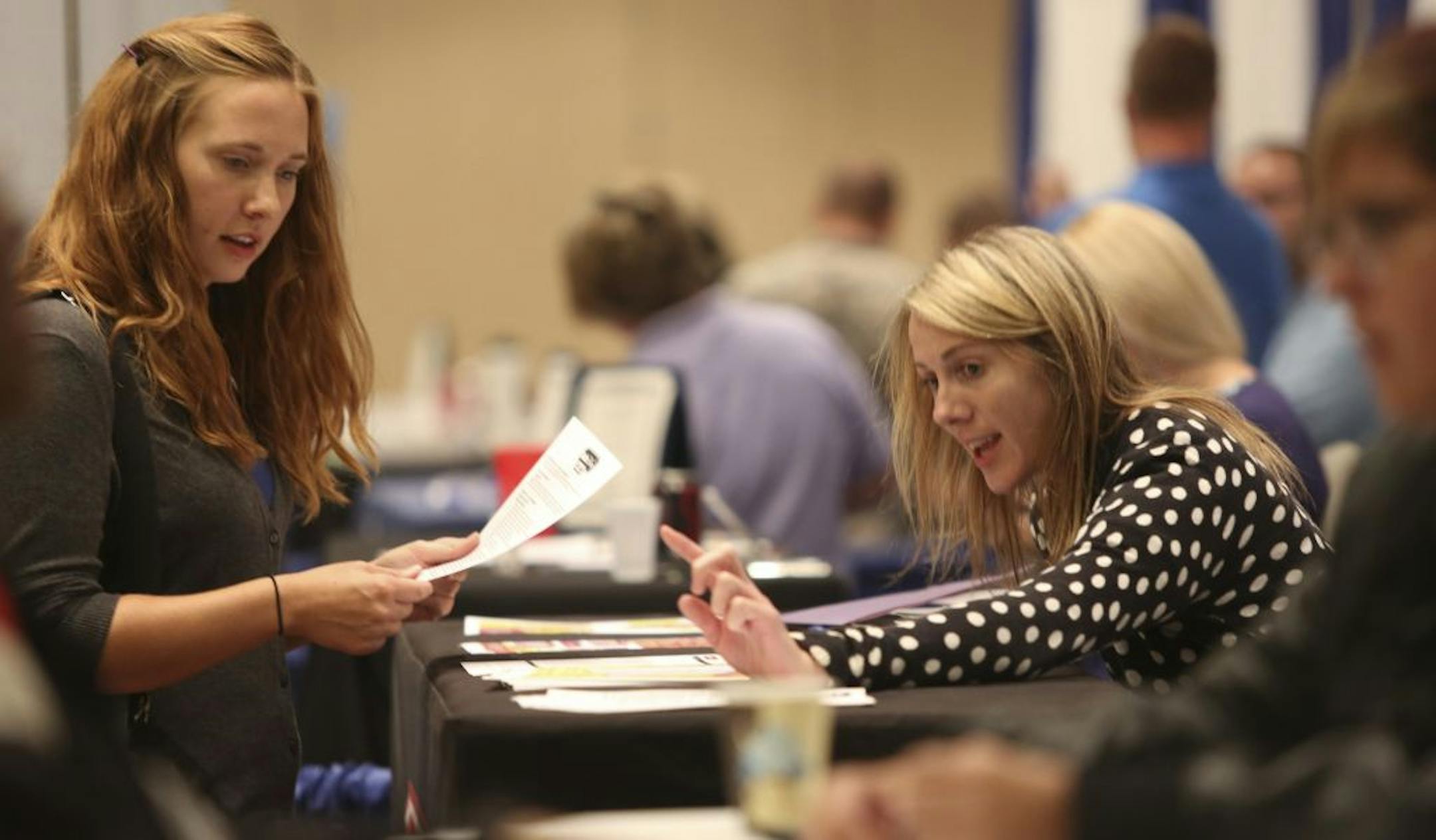
Brittany Paulson, left, of Minneapolis, talked with Kate Fisher, promotions manager for Radio Disney, at a job fair Wednesday at the Minneapolis Convention Center. The 24-year-old Paulson has a part-time job and has been looking for full-time work for a year. Unlike the majority of Minnesotans ages 18 to 24, Paulson can pay for an apartment of her own.
Brittany Paulson, left, of Minneapolis, talked with Kate Fisher, promotions manager for Radio Disney, at a job fair Wednesday at the Minneapolis Convention Center. The 24-year-old Paulson has a part-time job and has been looking for full-time work for a year. Unlike the majority of Minnesotans ages 18 to 24, Paulson can pay for an apartment of her own. (Star Tribune/The Minnesota Star Tribune)
about the writer

about the writer

Jeremy Olson

Reporter

Jeremy Olson is a Pulitzer Prize-winning reporter covering health care for the Star Tribune. Trained in investigative and computer-assisted reporting, Olson has covered politics, social services, and family issues.

See Moreicon

More from No Section

See More
FILE -- A rent deposit slot at an apartment complex in Tucker, Ga., on July 21, 2020. As an eviction crisis has seemed increasingly likely this summer, everyone in the housing market has made the same plea to Washington: Send money — lots of it — that would keep renters in their homes and landlords afloat. (Melissa Golden/The New York Times) ORG XMIT: XNYT58
Melissa Golden/The New York Times

It’s too soon to tell how much the immigration crackdown is to blame.