

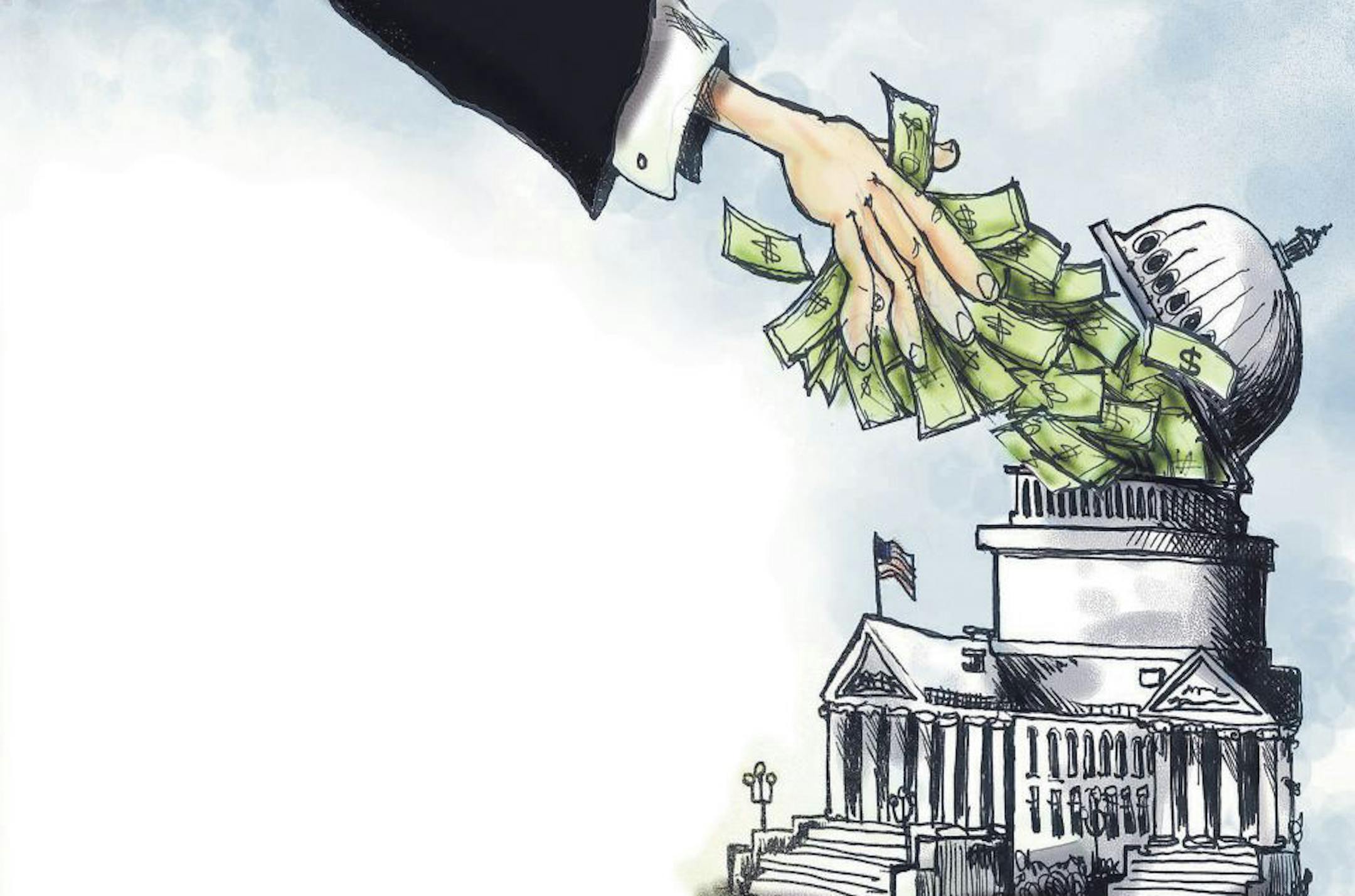
The federal Disclose Act is back in play, and none too soon, as newly empowered super PACs strut their stuff in the ugliest Republican primaries in recent memory.
Senate Democrats last week reintroduced the act in the same simplified form introduced earlier in the House. The basic aim is to build in at least some accountability for the super PACs, which gained traction after the U.S. Supreme Court ruled enigmatically in the Citizens United case that corporations are people for the purposes of political contributions. (Invite one to dinner this weekend.)
Since the court made it all but impossible to regulate corporate influence on campaigns, the only thing left is requiring swift and thorough disclosure. At least voters could find out instantly who's behind those ads slamming Mitt Romney for being a health care sympathizer and Gingrich for being Newt. Then they can weigh the value of the hits.
The Disclose Act would require reporting of contributions within 24 hours, force major donors to be named in ads and -- this is huge -- require corporations and other groups, such as labor unions, to tell shareholders and members whom or what they're supporting.
It's hard to imagine politicians voting against public disclosure in an election year. And it's hard to imagine that most Republicans still are thrilled with their new corporate "people," given this primary season. But we've been surprised before.
The Sunlight Foundation is marshaling support for the Disclose Act. Check it out. It'll need some help.


