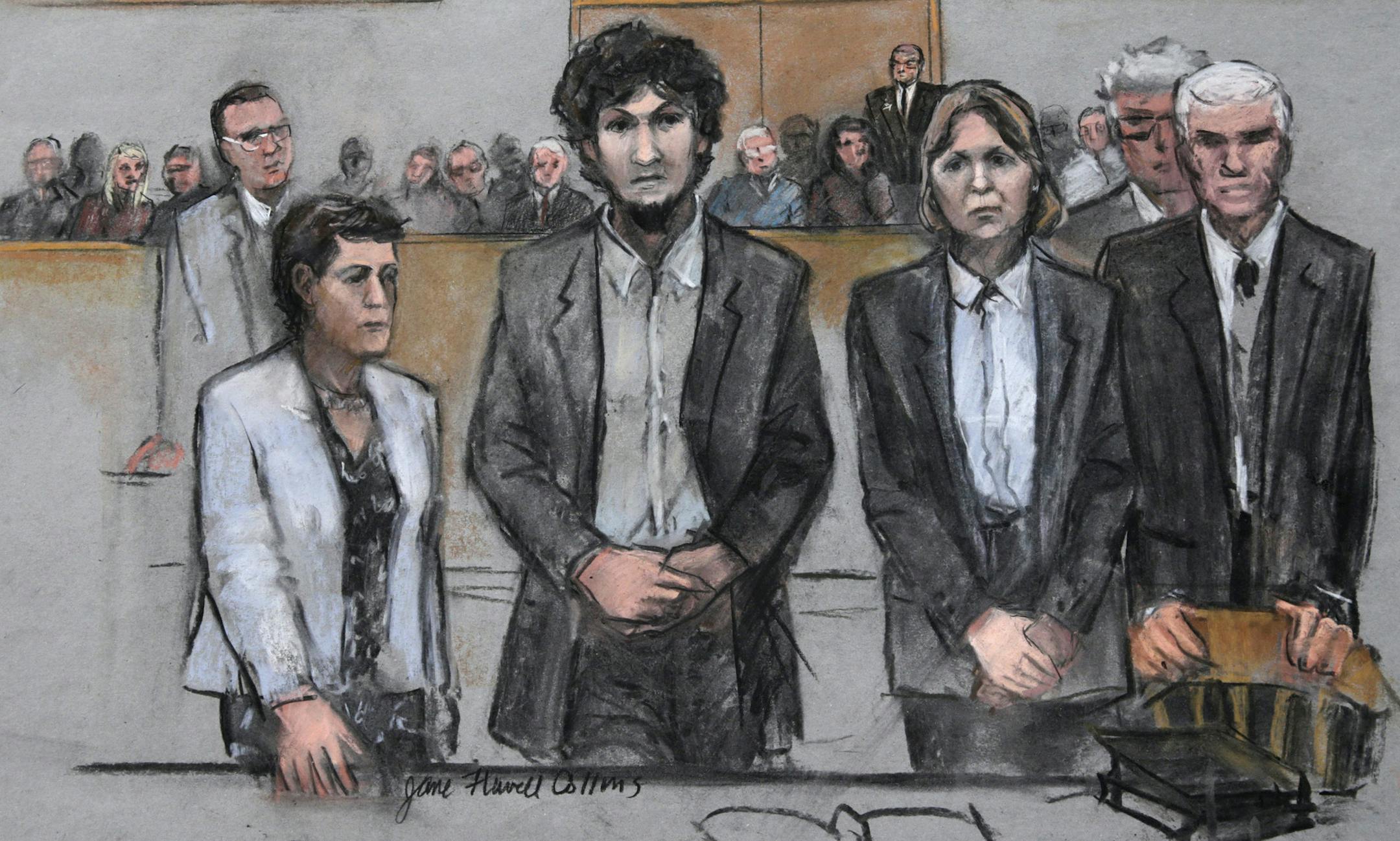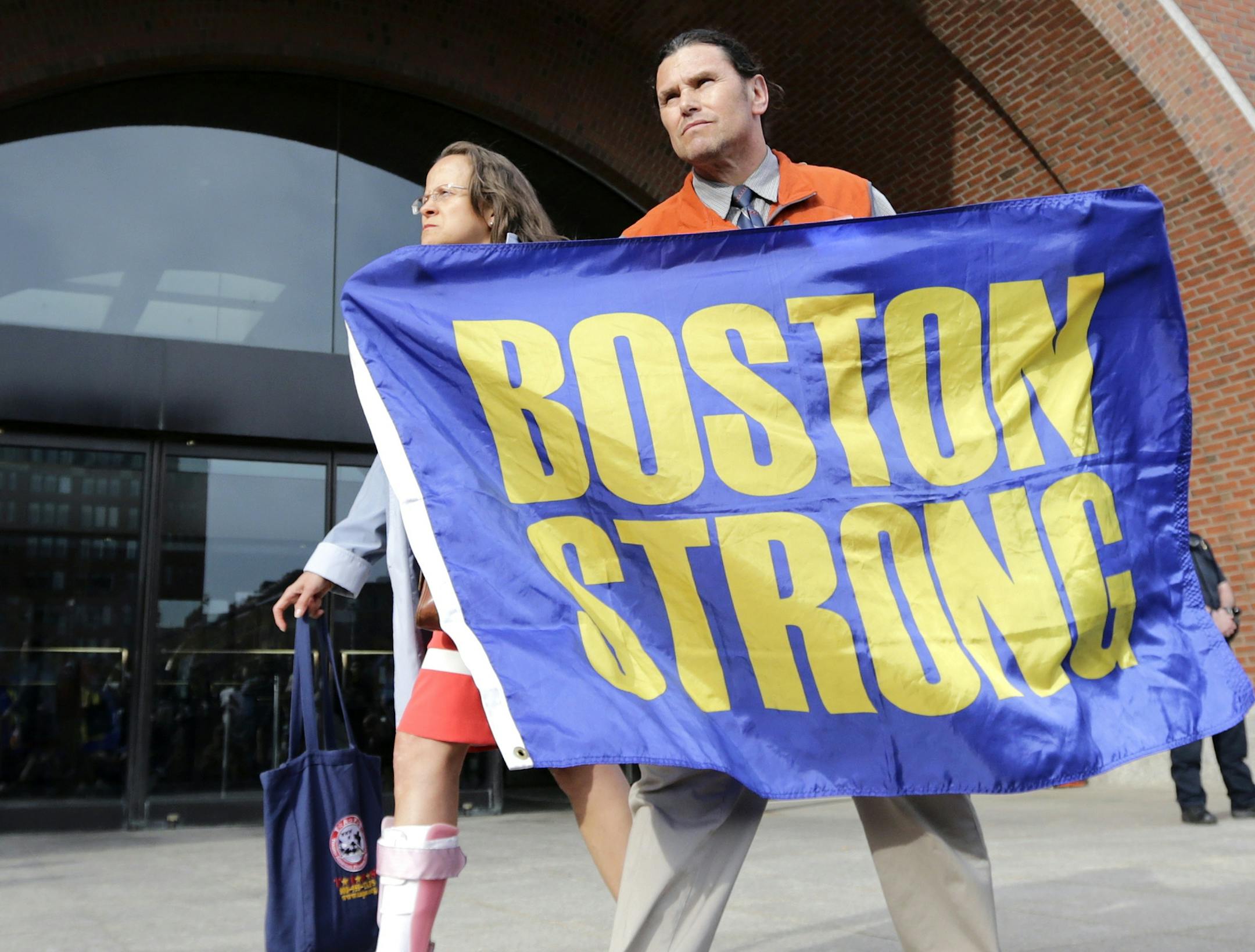
BOSTON – In a sweeping rejection of the defense case, a federal jury on Friday condemned Dzhokhar Tsarnaev to death for his role in the 2013 Boston Marathon bombings.
The jury found that death was the appropriate punishment for six of 17 capital counts — all six related to Tsarnaev's planting of a pressure-cooker bomb, which his lawyers never disputed. Tsarnaev sat stone-faced as the verdict was announced.
At the same time, the jury rejected the centerpiece of the defense argument, that he was under the influence of his older brother, Tamerlan, a self-radicalized jihadi. Nor did it believe that being locked away in the supermax prison in Colorado would sufficiently restrict Tsarnaev's communications with the outside world.
Only two of the 12 jurors said on the verdict form that they believed he had expressed sorrow and remorse for his actions, a stinging rebuke to Sister Helen Prejean, a Roman Catholic nun who had testified for the defense that Tsarnaev was "genuinely sorry" for what he had done.
The bombings transformed the marathon, a cherished rite of spring, from a sunny holiday on Boylston Street to a smoky battlefield scene, with shrapnel flying, bodies dismembered and blood saturating the sidewalks; three people were killed, while 17 people lost at least one leg. More than 240 others sustained serious injuries, some of them life-altering.
The packed courtroom was silent throughout the proceedings — warned before the judge and jury entered that any outburst would amount to contempt of court.
When the jury returned, the forewoman passed an envelope to the judge. Jurors remained standing while the clerk read aloud the 24-page verdict form that they had filled out. It took 20 minutes.
It was not clear until the end that the sentence was death, though signs along the way pointed in that direction.