

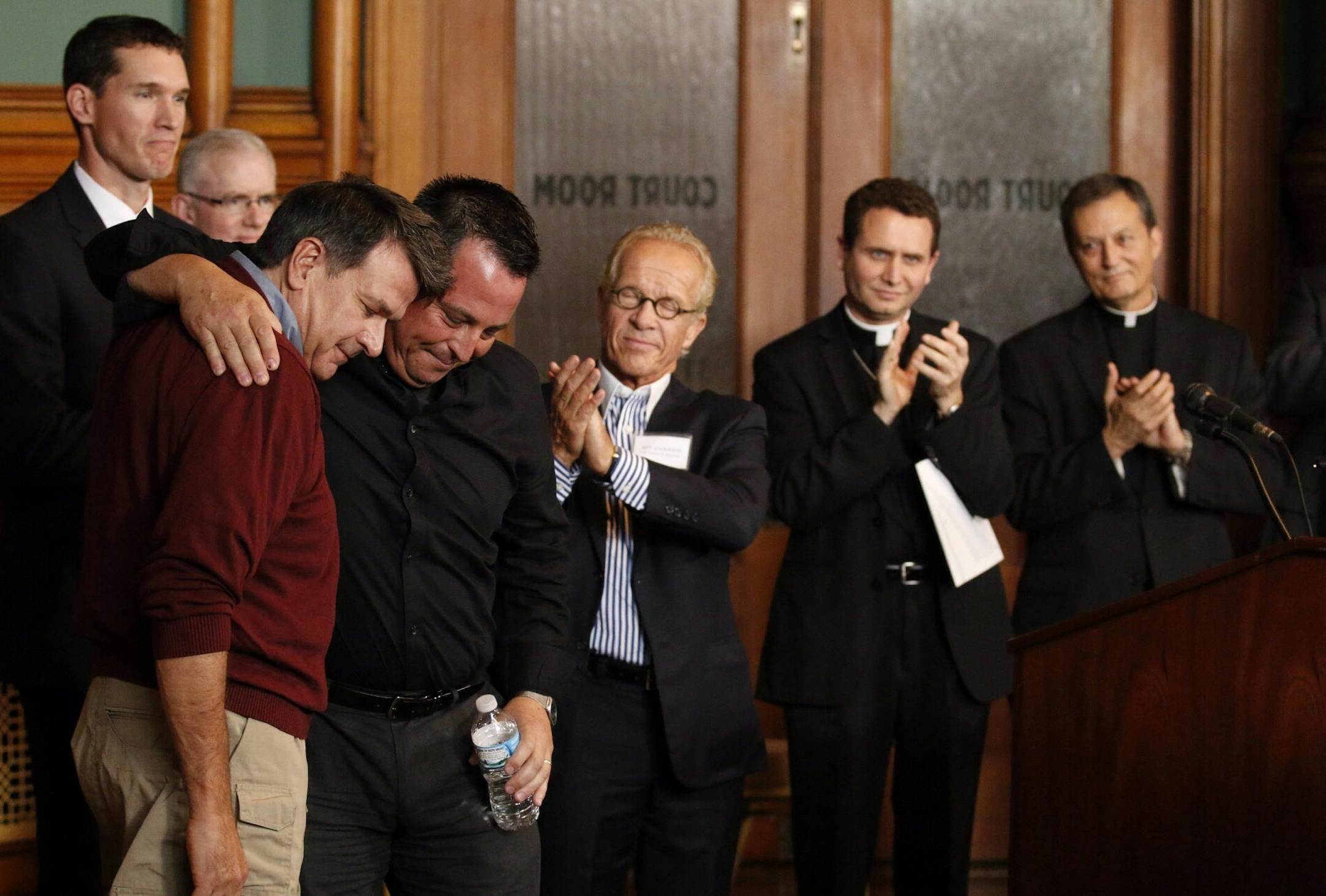
The historic settlement between the Twin Cities archdiocese and Minnesota's top clergy abuse attorney was set in motion on a sunny afternoon in July. That's when the phone rang in attorney Jeff Anderson's office.
"I said, 'You don't know me, but I've been retained by the archdiocese to talk to you,' " recalled Minneapolis attorney Charles Rogers. "Jeff said that in 30 years, he'd had no meaningful experience with the archdiocese outside the courtroom. I said, 'I'd like to try to change that.' "
That conversation pried loose the rigid antagonism between the Archdiocese of St. Paul and Minneapolis and the attorney who has been representing clergy abuse victims for decades. Three months and dozens of meetings later — some including the vicar general — a global settlement was reached that few could have predicted.
"I would have given it a slim to no chance [of settlement]," said Anderson, referring to the lawsuit behind the deal. "Everything the archdiocese was doing was the same old way. Minimalization and denial. As soon as they got some new players and some new views, it started to get momentum."
That momentum, for the church, was propelled by the daunting economic realities of continual litigation, the eroding trust of parishioners and clergy, and a new strategic priority of "victims first,'' archdiocese officials said.
"By the necessity of the courtroom, one of the defense arguments is to discredit [the victim],'' said Vicar General Charles Lachowitzer. "The kind of adversarial litigious relationship was not victims first.''
The new strategy was accompanied by unprecedented contact between victims and church officials. Both Archbishop John Nienstedt and Lachowitzer met with victims and heard their painful stories.
The experience of the Milwaukee Diocese, which declared bankruptcy in 2011 and still has not reached settlements, also informed the church's decision to mediate. "The more common ground we can find before restitution, the easier, shorter and less expensive any process will be," Lachowitzer said.


