

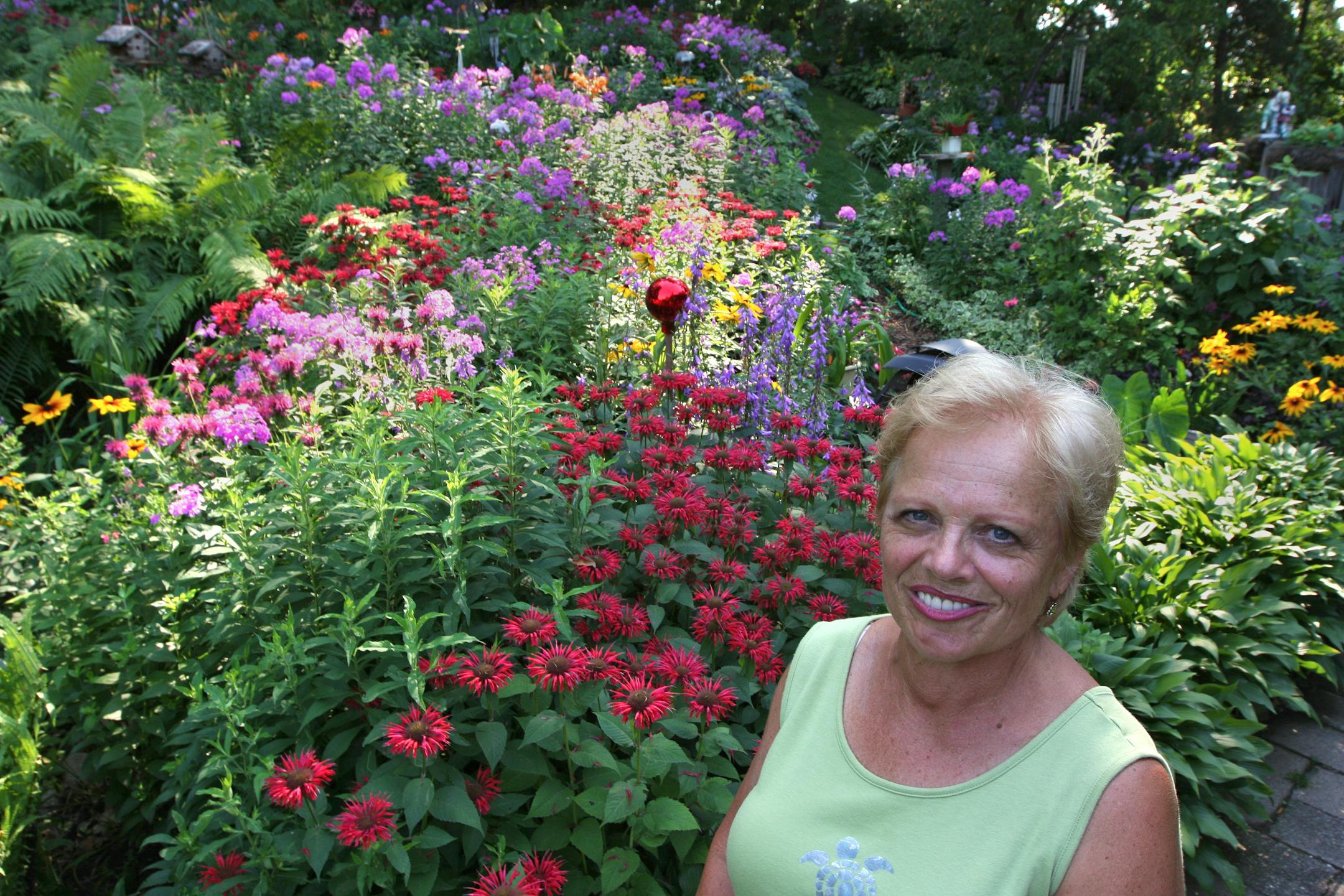
The fragrant phlox spilling down the slope of Lucy Pacieznik's back yard in Apple Valley have their emotional roots in a forced labor camp in Germany, where her Ukrainian mother first held her as a newborn while imprisoned in 1943.
After World War II, the family of six feared returning to Russia under Stalin, so they made their way to Brazil, where young Lucy remembers her mother spending long hours in the garden. "It was a place where my mother could relax, cry, sing, pray -- forget her hardship."
Pacieznik's garden began under happier circumstances about 35 years ago, yet it's also a place where a person can contemplate, where grandchildren can play, and where birds, bees and butterflies know no hardship.
The dense masses of hosta, day lilies, ferns, bee balm, cannas, four o'clocks, elephant ears and shiso rub companionable shoulders against the oaks and willows that provide both shade and a sense of structure. A grass path appears as a green horseshoe, curving from one end to the other, something like the flight of her favorite hummingbird.
"He comes and goes, flying in this sort of C shape, back and forth, as if wondering, 'Where shall I start?'" Pacieznik said.
Visitors to Pacieznik's garden start at the driveway, bowled over by the sheer square yardage of phlox in subtly shifting hues of pink. The mass is a long way from her first attempt at gardening, decades ago, when she carefully planted tulip bulbs in a straight, evenly spaced row. She began exploring bushier perennials that would cover territory and be economical. "I began on the budget, what with three kids and a husband who was a tailor," she said. Chrysanthemums were lovely, but so late to bloom. Then she discovered phlox, learning when to deadhead it to encourage another bloom, and sometimes a third.
The phlox have since spread to stunning, albeit sprawling, effect. She knows she should divide them, but at 64, isn't sure she wants to tackle the roots. Nor do the flowers seem to mind.
"I just cut them back, mulch them a bit and say, 'Grow another year.' And they do."


