

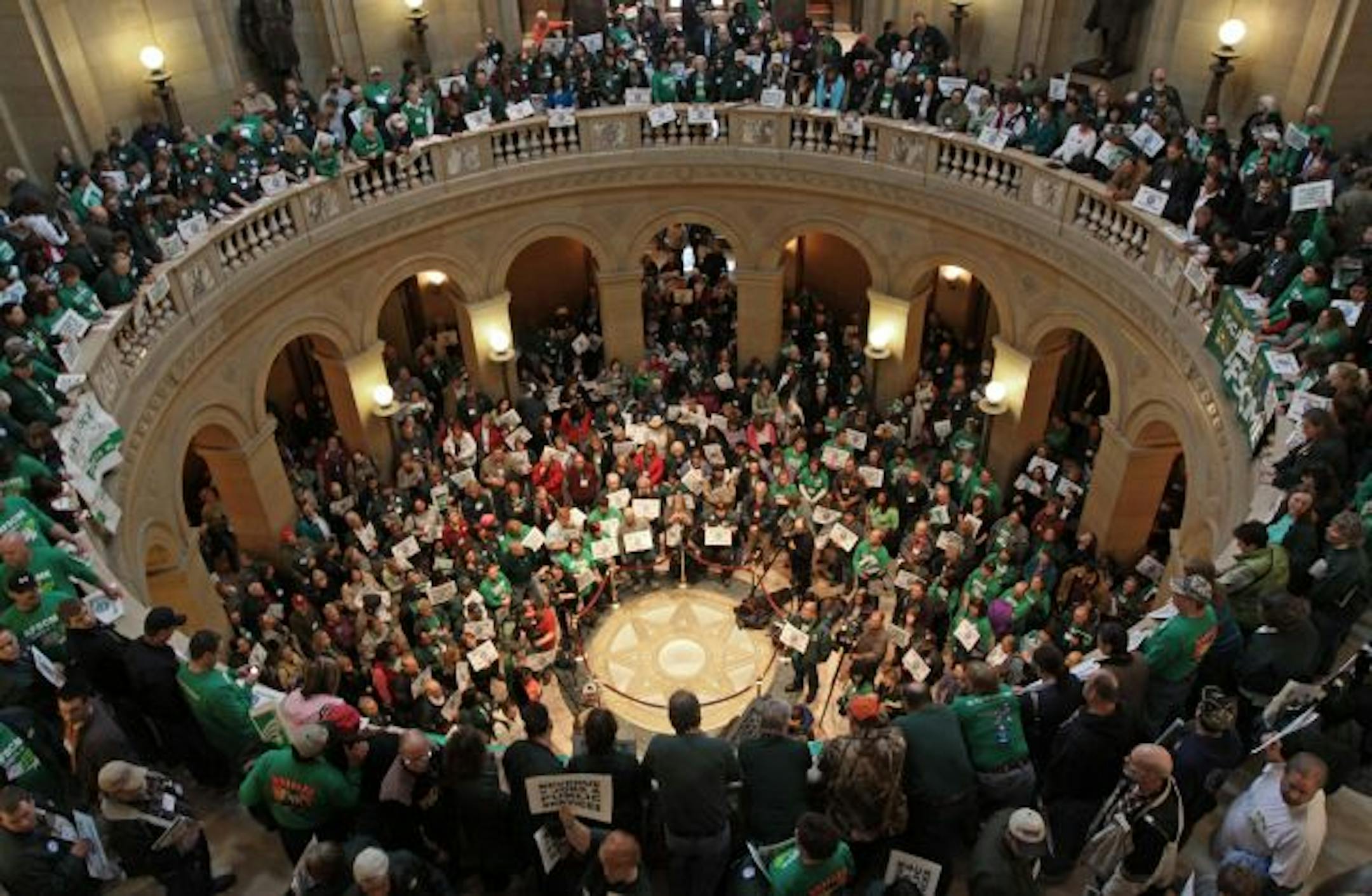
Minnesota's government shutdown -- the longest in U.S. history -- may soon be over. The breakthrough came on July 14, when Gov. Mark Dayton announced he was taking higher taxes -- his signature issue -- off the table. Much remains to be done before the deal is wrapped up. But now is the moment to reflect on what happened, and why.
For the left, especially government employee unions, the stakes in Minnesota's budget battle were momentous. Raising taxes is at the heart of the progressive agenda. More tax money is essential if government is to continue its rapid expansion, which they ardently desire.
But in recent months, the left has repeatedly struck out on that front. In New York and California, among the nation's most liberal states, Democratic governors have slashed services and spending to balance their budgets, without raising taxes. The same debate is underway at the federal level, in the pitched battle over the debt ceiling.
Here in Minnesota, the left's challenge was to muscle Dayton's bloated budget and new taxes through a GOP-controlled Legislature. They had to succeed to prove the national tide has not turned inexorably against ever-expanding government.
Progressive forces hauled out their biggest guns to win the battle here. An organization called Alliance for a Better Minnesota (ABM) led the charge for a phalanx of hyperactivist groups. ABM's name may conjure up images of your local, public-spirited Kiwanis Club. In fact, it's a state affiliate of the 16-member ProgressNow network, which describes itself as a 24/7 communications hub for progressive groups and issues.
ABM is lavishly funded by Big Labor --AFL-CIO, AFSCME, SEIU and Education Minnesota -- and by Dayton family members and other über-wealthy liberals. In the 2010 election, the organization poured $5 million into attack ads targeting Dayton's opponent, Tom Emmer, and helped launch a boycott of Target Corp. to scare off corporations nationwide from supporting conservative candidates.
When the budget impasse arose in late May, ABM and its union allies instantly mobilized. Within hours of the regular legislative session's end, ABM announced an ad buy of up to $1 million to promote Dayton's budget policies across the state.
ABM and the unions used hardball, campaign-style tactics -- unprecedented in a nonelection year -- in an attempt to alarm the people of Minnesota and to pressure GOP legislators. The coordinated strategy included robocalls from union phone banks out of Washington, D.C.; "community meetings" to ambush and intimidate GOP legislators, and literature drops and door-knocking sweeps in districts represented by Republicans perceived as vulnerable.


