

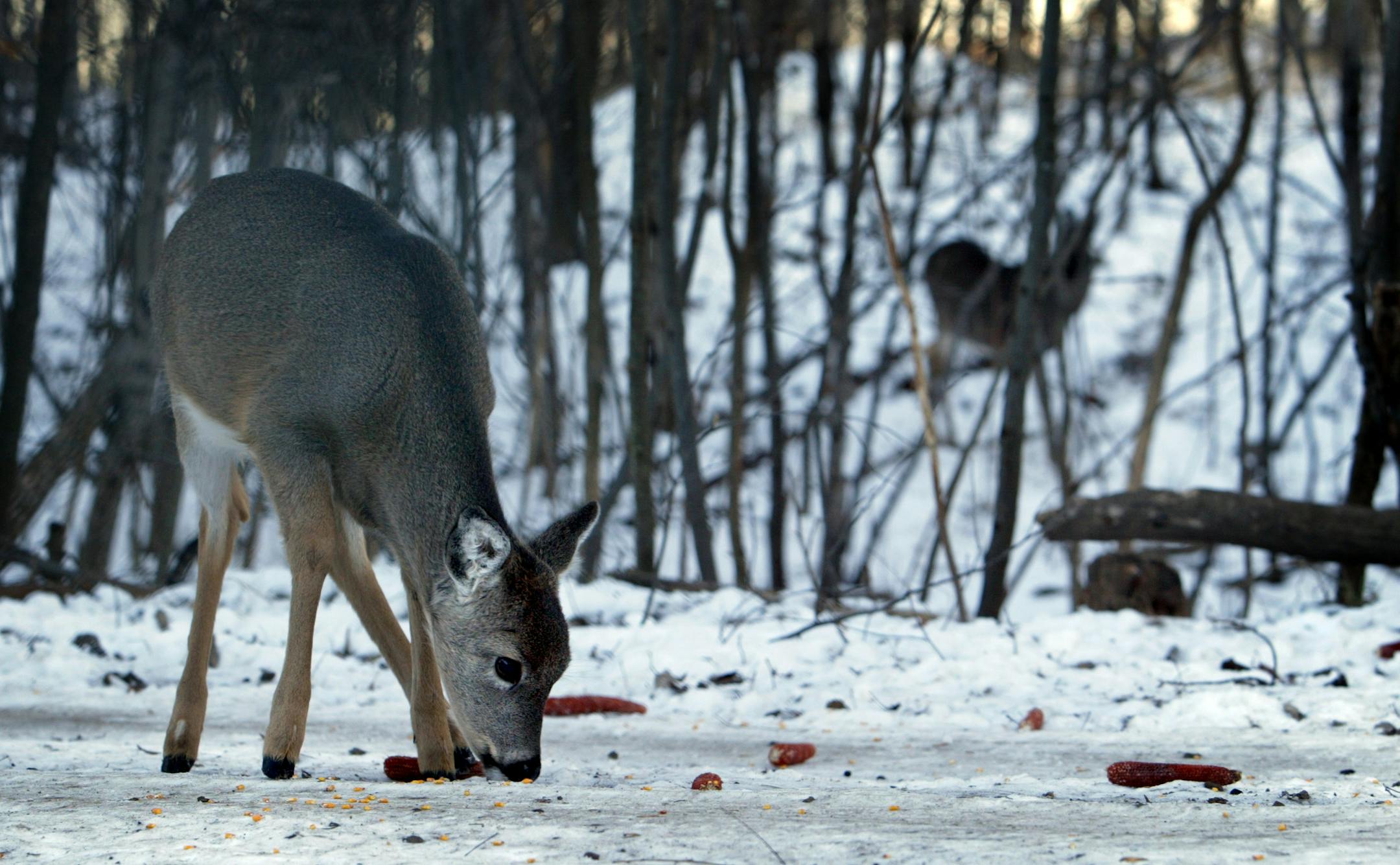
Two things are certain in Minnesota during a tough winter like one the state is experiencing: Some deer are going to die. And the debate over whether to feed deer artificially, particularly in northern Minnesota, in an attempt to minimize losses to the whitetail population will surface.
Such is the case now, as some northern Minnesotans, led by the Minnesota Deer Hunters Association (MDHA), are asking the Department of Natural Resources to initiate a deer feeding program.
"If the DNR doesn't allow it, I think it would be shortsighted,'' said Mark Johnson, executive director of the MDHA, headquartered in Grand Rapids. "The public concern in northern Minnesota for our low deer numbers is already intense. No one wants to lose any more animals.''
So far, however, the DNR is holding fast to its position that deer feeding is ineffective and potentially problematic.
"In recent years we've controlled bovine TB in northwest Minnesota and chronic wasting disease in the southeast, and we've invested more than $10 million battling those diseases,'' said Michelle Carstensen, DNR wildlife health program supervisor.
"Feeding deer, because it concentrates animals and brings them into close contact with one another, runs the risk of causing the same problems again.''
The decision whether to feed deer probably won't hinge on money availability. For the past 15 years, 50 cents of every deer-hunting license has been assigned to a special deer-feeding fund — an account with a name and purpose that were amended in 2004 so its money also could be spent for CWD and TB studies and eradication.
The fund holds about $800,000.


