

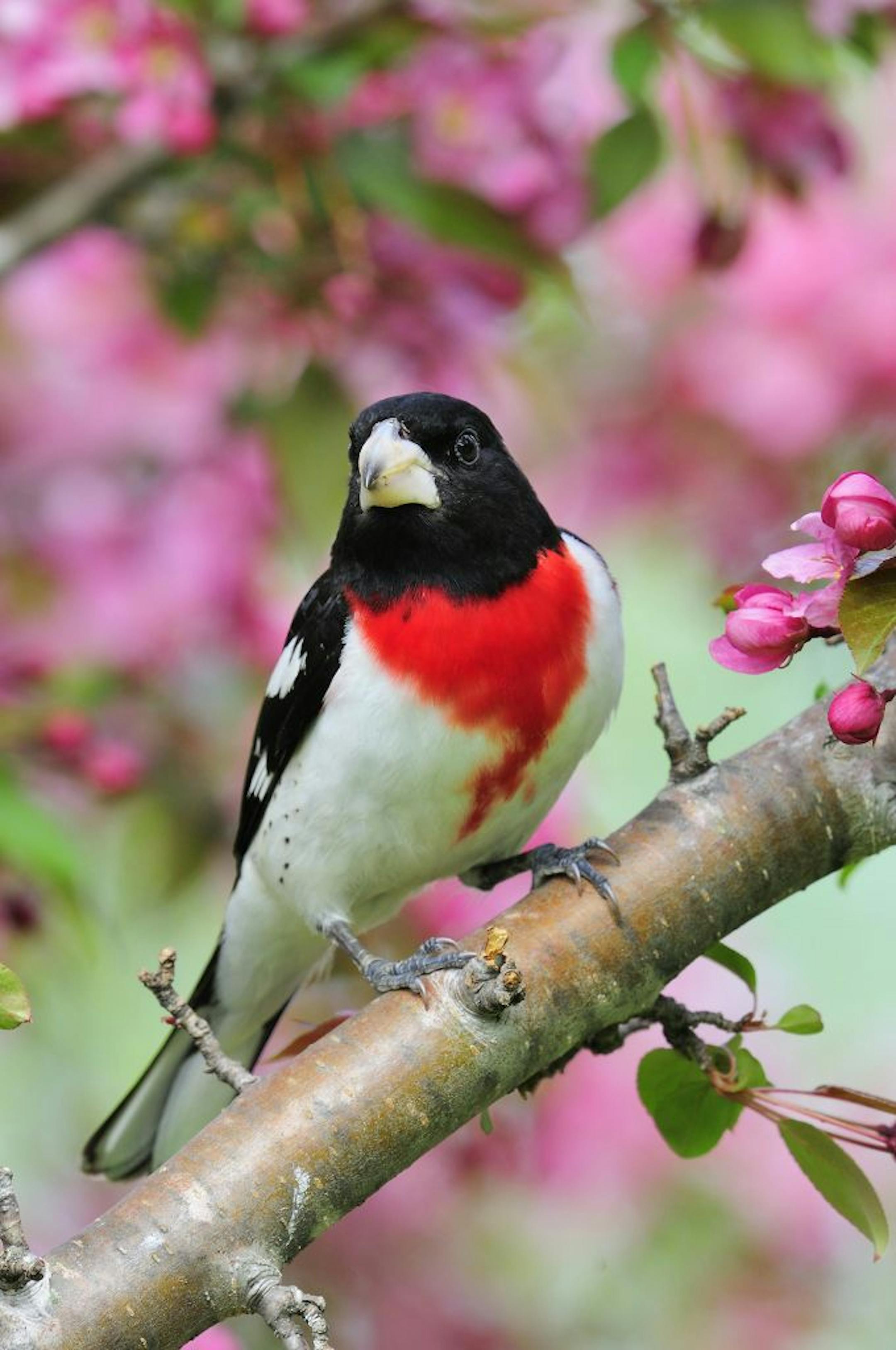
BRAINERD - For a brief period each spring, colorful songbirds gather. Some are migrating -- en route to the north -- while others are busy staking out nesting territories. The males, of course, are singing, and flashing their vibrant breeding plumages, showing off to the females and warning other males to stay away.
At the same time many species of trees are in bloom, including plum, lilac and crab apples. This provides an opportunity to visually combine showy blossoms and vivid birds, a delight for birders, and a chance for a photographer to capture, perhaps, the ultimate image.
At least in my mind.
Each spring I have such visions: an orange and black Baltimore oriole perched among the pink or white blossoms of a backyard crab apple tree; a male indigo bunting, singing from among the white flowers of a serviceberry bush, chanting loudly that he can out-blue even a bluebird; a male rose-breasted grosbeak sitting contentedly in a crab apple tree adorned with pink blossoms.
Capturing such images is not easy. It requires some forethought along with a bit of luck. I prefer images taken during the first three hours of the morning, in full sun, or hazy sunshine. Other photographers may disagree. On rare occasions, the light illuminates birds "just right" under medium overcast, but those days are few.
By far the best chance to attain my optimal feathered visions occurs on cool, calm, sunny mornings following the passing of a cold front. When nighttime temperatures fall, usually with a north wind, come sunrise insects are often low to the ground where the air warms first. Sometimes, if a person is lucky, he or she can witness the trees "dripping" with birds when they gather to hunt the insects. A day later, or even hours later, the birds might be gone.
Trees don't stay in bloom forever, and sometimes the entire blossoming event is over before I have a chance to take advantage of the combination of an influx of birds, a good weather day, and plants in full bloom.
Wind is a bird photographer's nemesis. Wispy branches stirred by spring breezes whip back and forth, making a sharp photo impossible. Birds are usually less active and more skittish on windy days.


