

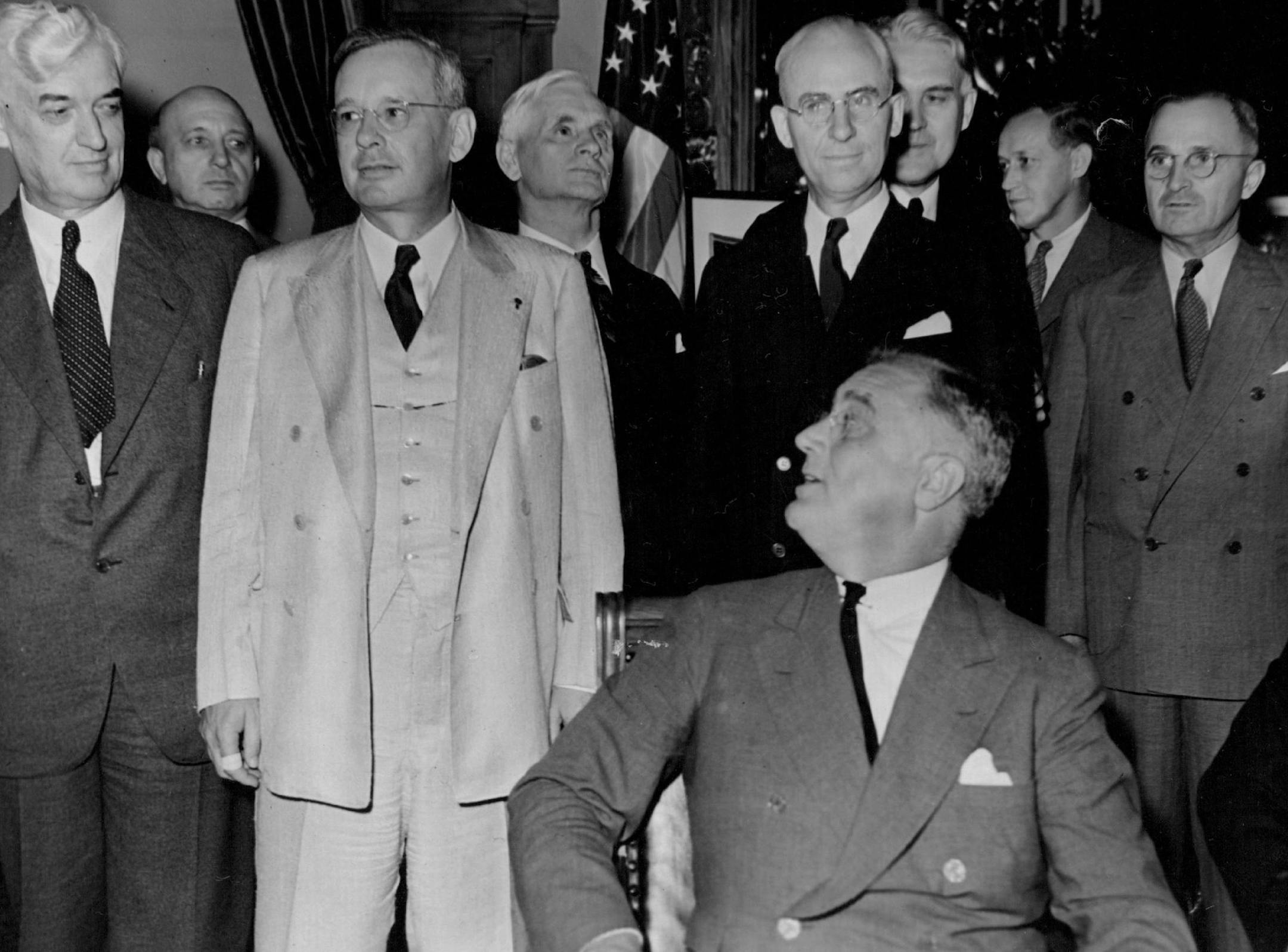
The "Curious Minnesota" feature is a great addition to the Star Tribune. I was thrilled to see in the Jan. 26 installment that someone wanted to know why Democrats are called DFLers in Minnesota. With apologies to Heather Brown at WCCO, good question! Unfortunately, the explanation provided in last Sunday's paper completely missed the mark. The 1944 merger of the Democratic and Farmer-Labor parties was a political marriage of convenience, but the engagement began eight years earlier. In 1936, President Franklin Roosevelt was running for re-election and faced two serious challengers — Republican Alf Landon and Union Party candidate William Lemke of North Dakota. Fearing that Minnesotans might be swayed by Lemke's populist appeal (thus helping Landon secure Minnesota's 11 electoral votes), Roosevelt helped orchestrate a deal that became known as the Minnesota Fusion. Here's how it worked: The Democratic nominees for governor (Fred Curtis) and the U.S. Senate (Patrick Delaney) agreed to withdraw from their races in Minnesota one month before the general election. That gave their Farmer-Labor opponents much better odds of prevailing over the Republican candidates in November, which they proceeded to do. In return, Minnesota's Farmer-Labor Party encouraged its members to back Roosevelt for a second term. Smelling a rat from halfway across the country, Arthur Krock of the New York Times wrote, "Minnesota Democrats and the President have strange bedfellows in the Farmer-Laborites, but the President's chance of carrying the State is much improved." Roosevelt swept Minnesota and the nation in a landslide, proving that if you can't beat 'em, join 'em!
Steve Werle, Minneapolis
The writer is a history teacher.
TRADE POLICY
Short-term pain, but we'll one day appreciate Trump's intervention
A retired farmer (Readers Write, Jan. 26) asserts that China will default on its trade deal with President Donald Trump because it has defaulted on deals in the past.
This is a fatalist view. Yes, our trade arrangement with China has been one-sided. This is the main reason Trump ran — to correct these trade deals. If they renege now, he'll put the tariffs on again. The Chinese need trade with the U.S. more than we need it with them. Their plants produce all the trinkets we buy. They need to keep these operating. It started with U.S. companies moving their production to China, closing their plants and laying off workers. The products then came into the States without any tax or upcharge. These companies then sold these items into the market to Home Depot/Target/Walmart, etc., for less than what it would have cost if they were paying U.S. workers to make them. Good deal for us consumers, right? China was not required to buy an even amount from the United States. Hence, China was ahead some $650 billion in trade. So, Trump put tariffs on these items coming in to price them as if they were made here. He gives this tariff money to the farmers because China has cut back on purchases of agricultural items to punish Trump.
It now raises the question, "How did the U.S. farmers get so dependent on China's agricultural purchases?" Did some politicians benefit from all this China production? And it's not just the farmers that are complaining about this. U.S. companies that moved their manufacturing to China or Mexico are having to pay a tax on those items. Ouch! It's called "coming home to roost." It'll take Trump all eight years to get these uneven trade deals corrected, but in the end, a lot of manufacturing jobs will be created in the United States. That'll make this short-term pain worthwhile.


