

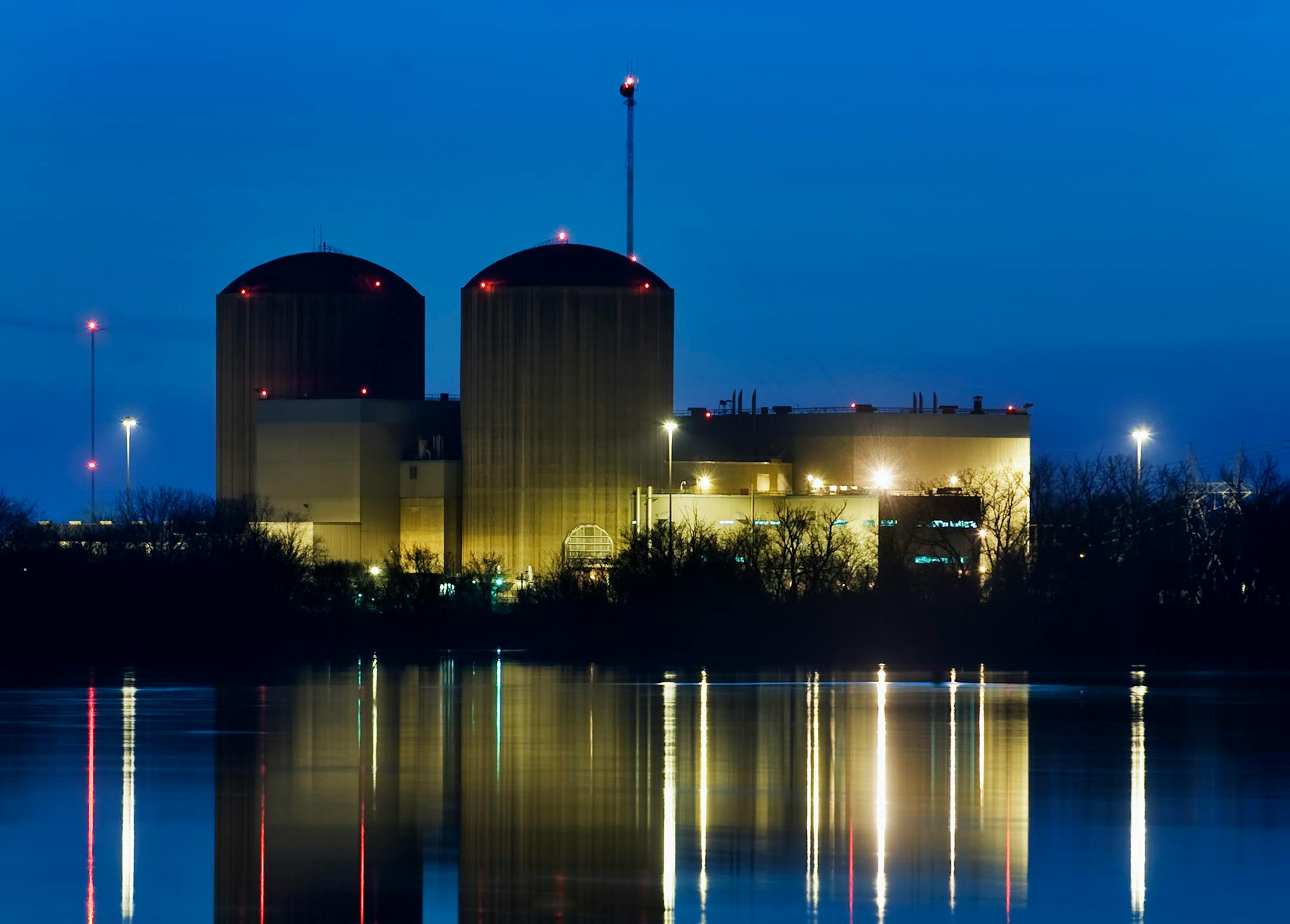
The long debate over storing radioactive waste next to the Prairie Island nuclear power plant is boiling up again with an old question: Is the waste ever going away?
The 882-member Indian tribe whose southeastern Minnesota land adjoins the Prairie Island nuclear power plant is petitioning the federal government for a deeper look at the risks of on-site storage because outdoor casks holding spent fuel rods likely will remain in place for decades longer than ever intended.
"They've said it was temporary," said Ron Johnson, secretary of the Prairie Island Indian Community. "This fuel was supposed to have been removed in the 1990s. We translate that to mean it's probably more of a permanent storage facility."
The federal government has failed for decades to establish a permanent radioactive waste site, forcing the nuclear industry to recognize the reality of long-term, on-site storage.
In June, a federal appeals court acknowledged the problem, striking down new waste-storage rules and ordering regulators to do a more thorough analysis of storing radioactive waste at reactor sites for up to 60 years after a plant shuts down. Since the ruling, citizen and environmental groups have challenged on-site waste storage at 15 other U.S. nuclear power plants before the Nuclear Regulatory Commission's Atomic Safety and Licensing Board.
Now the tribe, some of whose members live within 600 yards of the Prairie Island plant, is raising the issue as the NRC considers a request by Xcel Energy, the plant's owner, to extend the license of its dry cask storage for 40 years. Its current waste-storage license expires in October 2013.
Xcel, a Minneapolis-based utility that serves 1.1 million customers in Minnesota, said it welcomes the tribe's participation in the re-licensing process.
The tribe has hired John Greeves, retired director of NRC's waste management and environmental protection division, as an expert consultant. Greeves said sealed casks used to store spent, highly radioactive fuel rods have leaked at two U.S. plants, in 2000 and 2011, in one case because of corrosion.


