

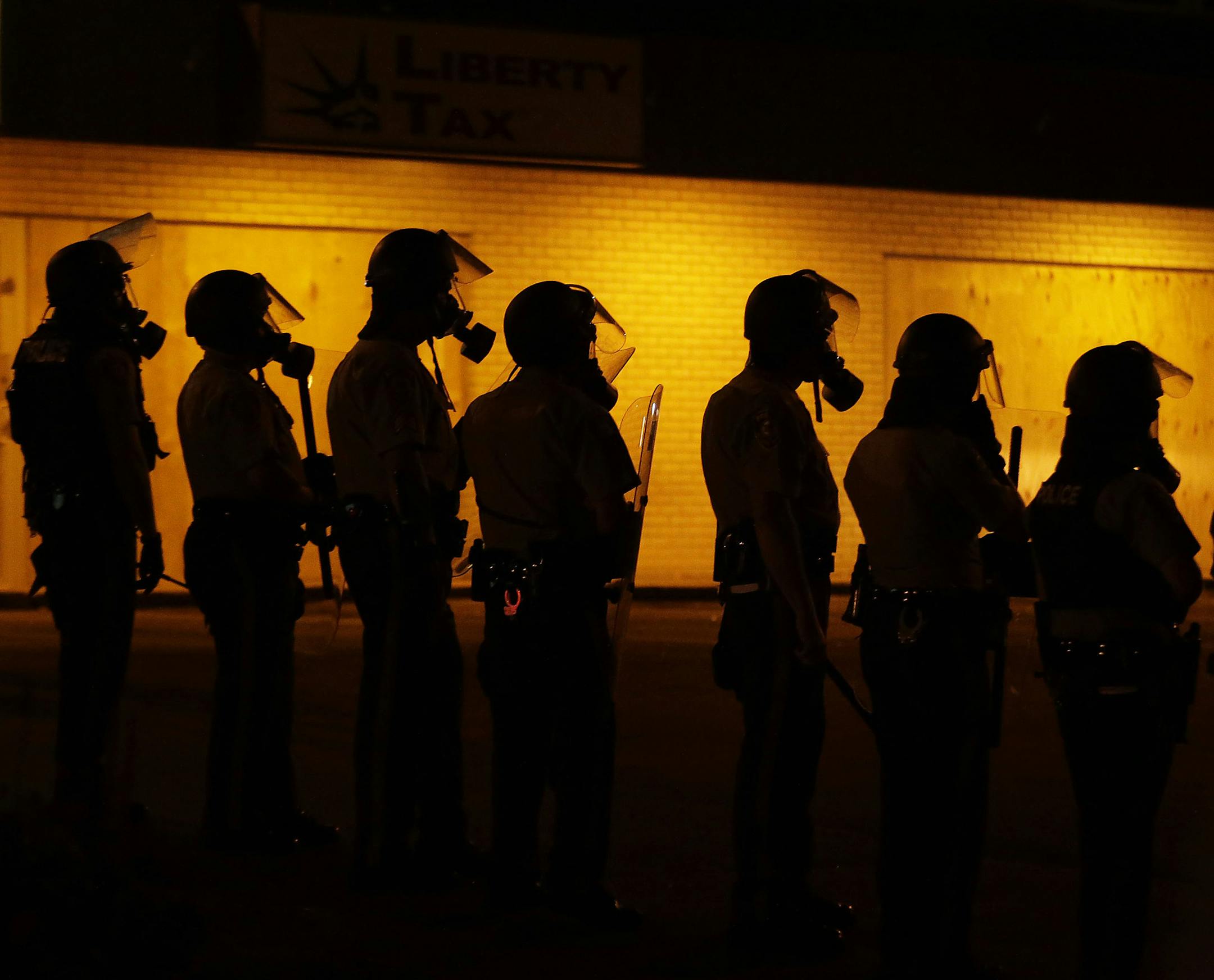
There's an understandable tendency, after a crisis, to look for a quick fix: a new law, a new leader, a new technology that can make sure it never happens again. After prolonged unrest in Ferguson, Mo., where a police officer killed an unarmed teenager, one such fix has been proposed again and again: Make cops wear body-mounted cameras.
The idea is that cameras should help clarify confrontations between police and citizens and reverse the growing imbalance of power between them. But without proper safeguards, cameras could worsen both problems — and create some new ones of their own.
First, the potential for cameras to impartially resolve disputes shouldn't be oversold. Videos often lack critical context, and studies have repeatedly shown that jurors can be misled by variables such as a film's angle or focus, which can unduly sway perceptions of guilt. That cuts both ways: Footage of a protester bumping into a cop, devoid of context, could make life much easier on a prosecutor.
Police cameras are also prone to intentional abuse. With mysterious frequency, they seem to accidentally get switched off or malfunction at critical moments. One obvious remedy is to require that cops always keep them on. But that can be counterproductive. Witnesses and victims may be less forthcoming on camera. Attracting competent officers could become harder if their every interaction is recorded. Crucially, officers may simply avoid engaging certain communities, or avoid areas where confrontations are likely, if they know they're being filmed.
Finally, equipping police with cameras and audio recorders means that they're constantly conducting surveillance on innocent civilians — and potentially storing it all. Police frequently enter private homes and encounter people in medical emergencies who may not want to be filmed. Some officers may be tempted to record people on the basis of race or religion. And some departments have asserted that the public has no right to see such footage.
In short, a policy intended to empower the public and monitor the police could have precisely the opposite effect.
And the idea seems likely to spread. Miami Beach plans to make building inspectors and meter maids wear cameras. Some sages have called for public-school classrooms to be under constant video surveillance. Librarians are public servants, too: Don't the people have a right to know how they wile away the hours among the stacks?
As police departments increasingly experiment with this technology, they should proceed with caution. And the public should maintain a lot of skepticism.


