

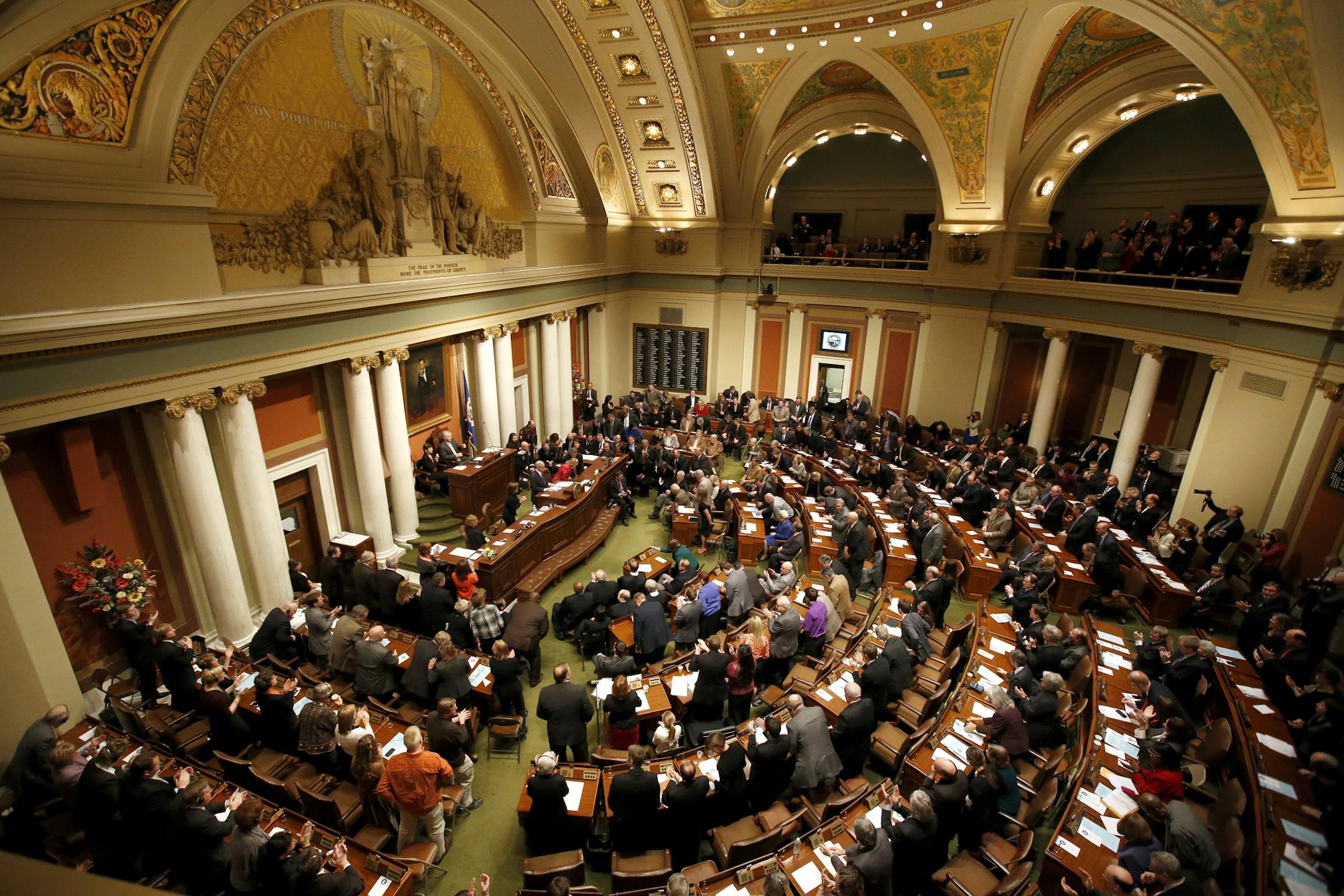
A predictable howl arose from conservative populists three weeks ago when the state Senate's DFL majority tucked a pay raise for state elected officials into a state government spending bill.
Minnesotans who understand the importance of quality government leadership should speak up in response. Members of the 2013 Legislature will be remiss in their stewardship of an essential Minnesota institution — their own — if they fail to raise not only their own salary ($31,140 per year), but also that of the governor ($120,000) and other executive branch officials.
While they're at it, legislators should also replace per diem, which functions like a salary supplement, with reimbursement for documented expenses. And they should consider improving the process by which state pay decisions are made.
Minnesotans ask a lot of state government. They should want it to attract and keep top talent to do its work well. That's increasingly difficult with a salary schedule that has not been adjusted since 1999 and cannot now be altered until 2015. The state Constitution provides that "no increase of compensation shall take effect during the period for which the members of the existing House of Representatives may have been elected."
That constitutional provision likely grew from the same suspicion of self-dealing that inspired hecklers to fuss about salaries with DFL Gov. Mark Dayton in Shakopee on April 29. Nervousness about such criticism is likely behind the House's reluctance to pursue a pay raise this year.
House members should think again. They should consider Senate Majority Leader Tom Bakk's observation that without a pay raise, the Legislature is at risk of being populated primarily by retirees, the independently wealthy, and "people who can't get another job." Each recent election cycle has seen able young legislators opt out of office prematurely because of inadequate compensation.
They should weigh Dayton's report that he's had trouble hiring state agency heads and retaining key agency personnel because their salaries are capped by his $120,000 per year. (Dayton has said he will donate to charity any salary increase he receives.) It's one thing for elected officials, who opt for short-term public service, to be paid salaries below private-sector standards. It's another to demand that career civil servants make the same sacrifice.
Legislators also should know that the legislator-citizen state Compensation Council has been recommending a pay raise for a decade, and did so again this year. Without an increase, "we face the prospect of a Legislature that is not representative of Minnesota's citizenry," wrote council chair Tom Fraser in a March 11 letter accompanying the council's recommendations (see adjacent box).


